Arrived on the previous evening, we headed straight to our hotel in the Qing Zhi Wu district. This area had long been neglected by residents, but the city helped owners renovate the buildings and convert them into hotels. As a result, there’s now a good concentration of accommodation and restaurants in this neighborhood next to the botanical garden, which we visit the very next day.
Day 1 – Botanical Garden and a walk around the university
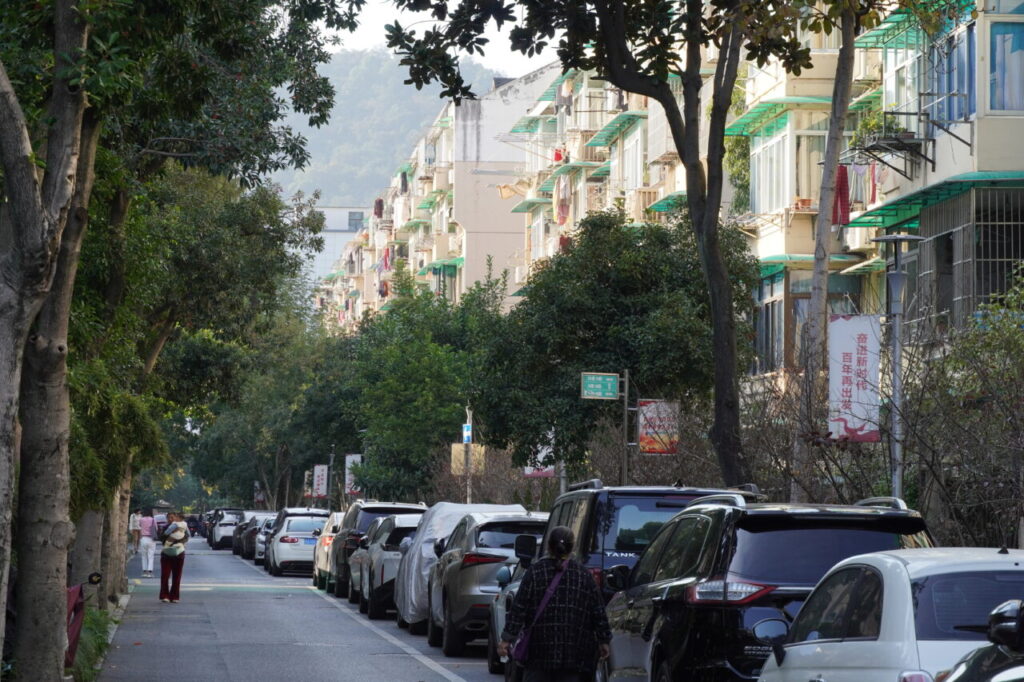
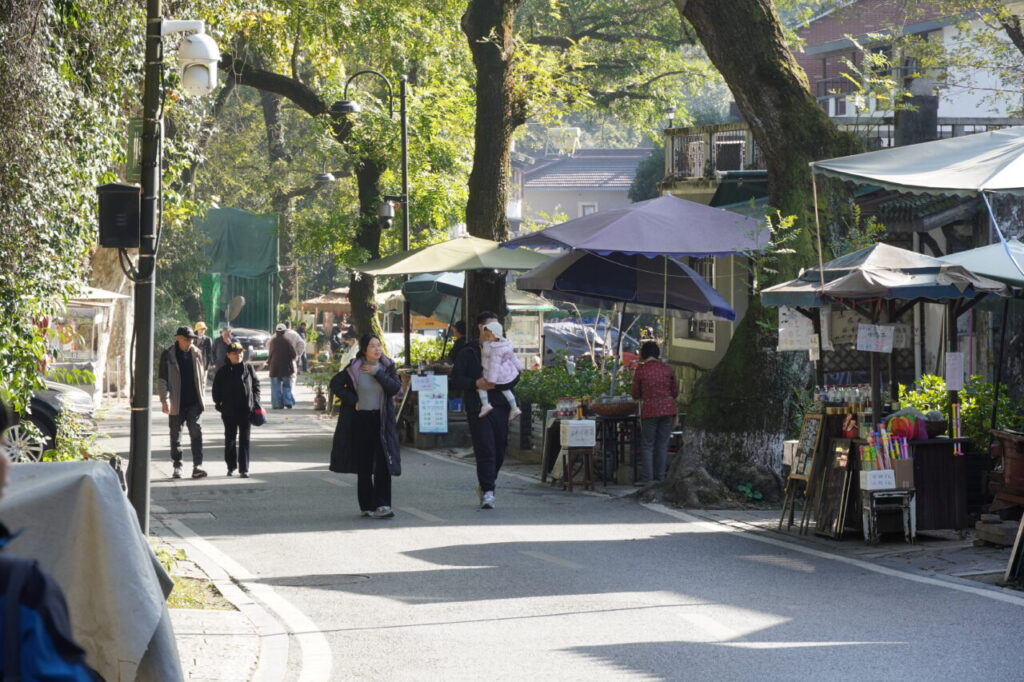
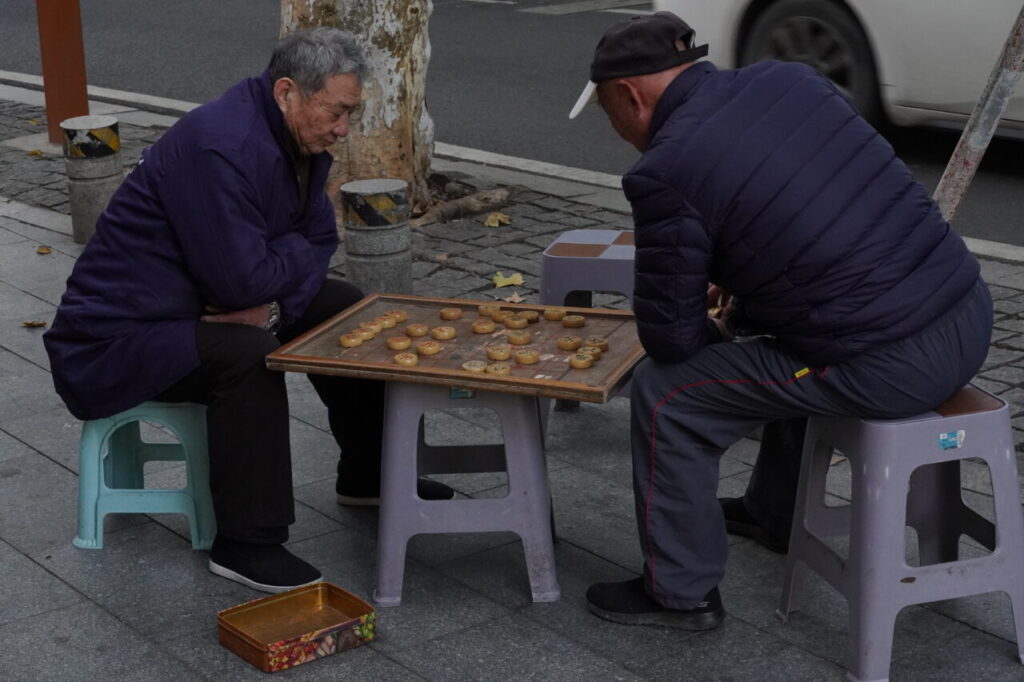
The street leading to the botanical garden’s north entrance is lively. Cars and scooters are parked everywhere—along the roadside or on half the sidewalks—much like the rest of the city.
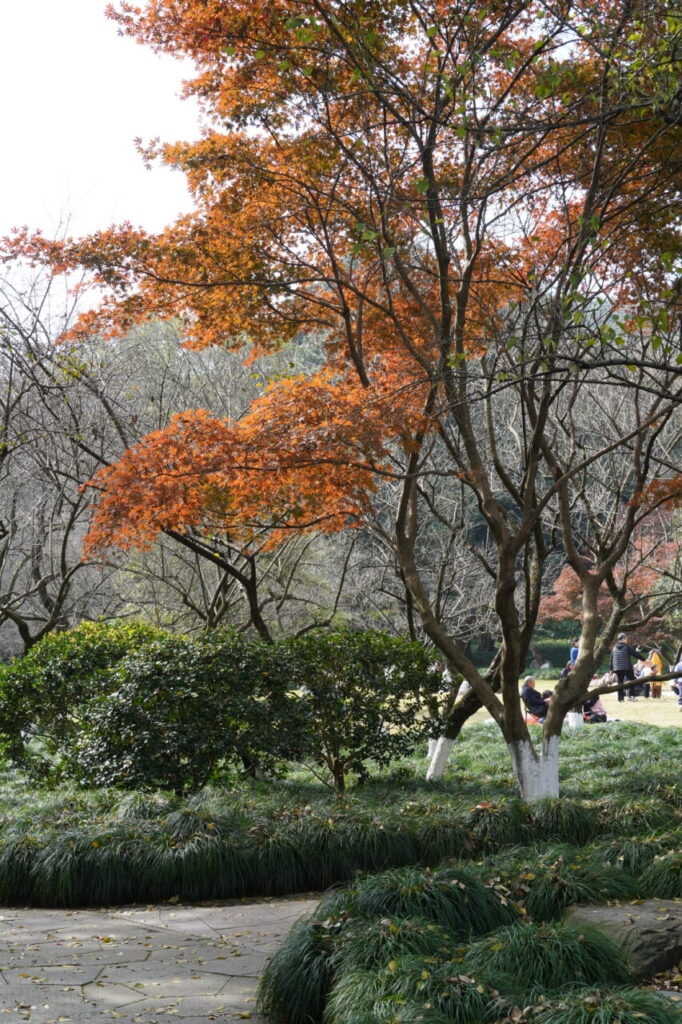
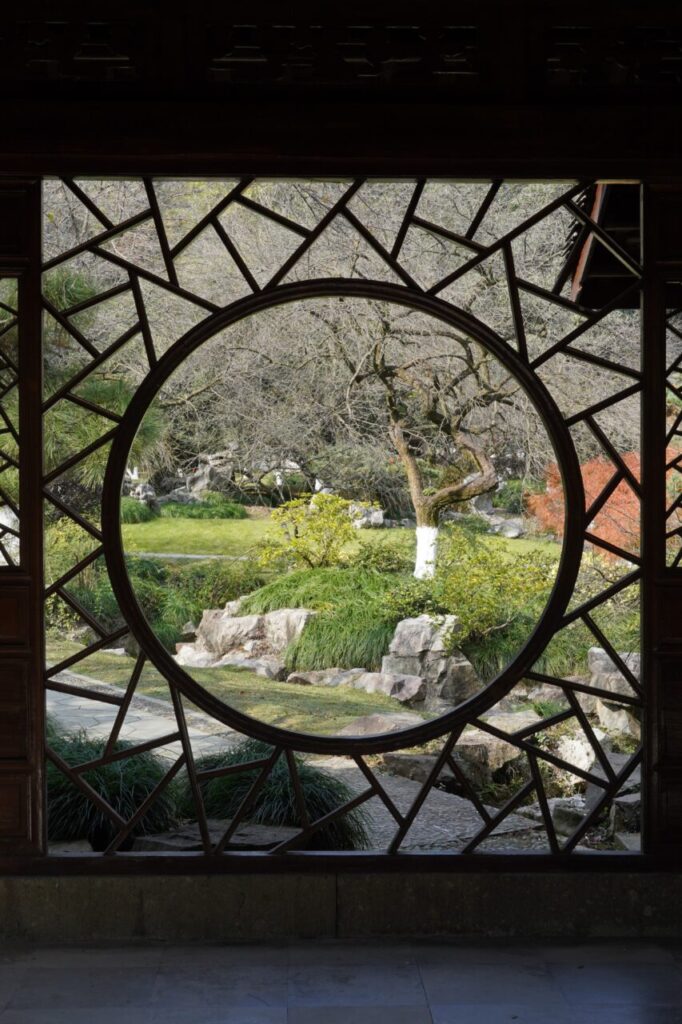
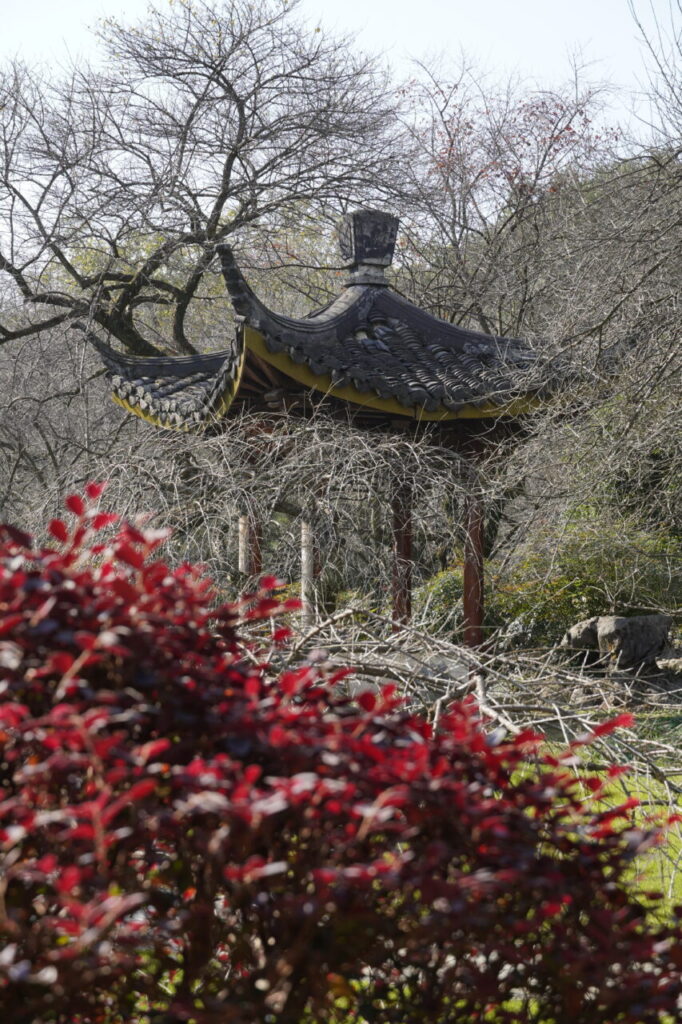
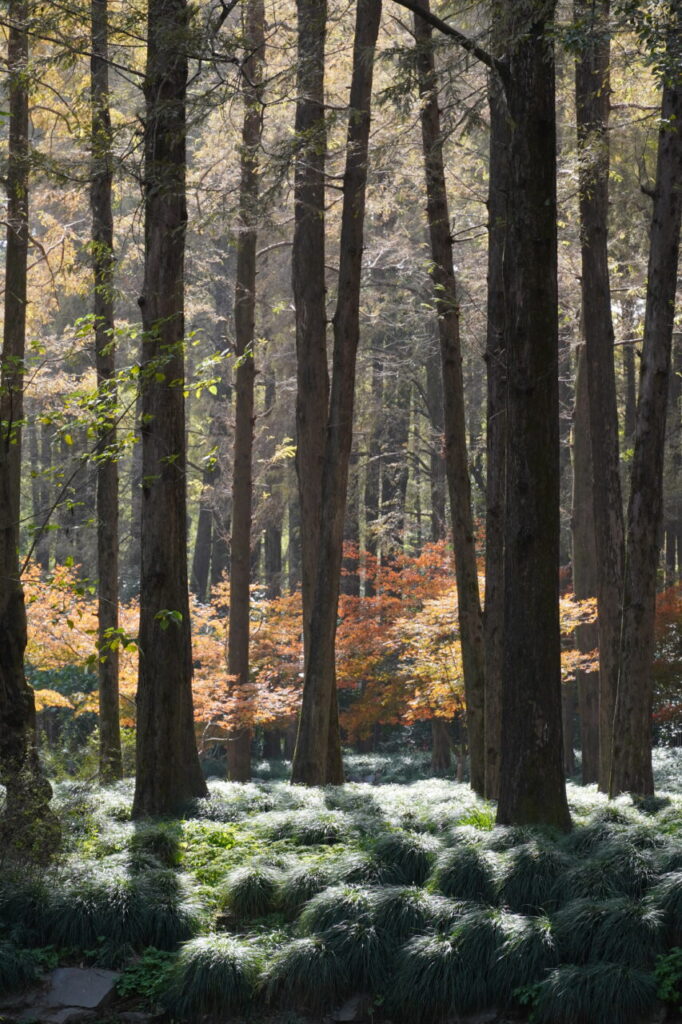
The garden itself feels very peaceful by comparison, and it’s huge! There are plenty of walkers along the main paths but far fewer people elsewhere. It’s well maintained and offers some lovely perspectives. In Lingfeng Tanmei Park, for example, with its bare plum trees (best seen at the end of winter!) and scattered pavilions. At the bottom of a small valley, you can stop for a meal in a beautifully renovated old building.
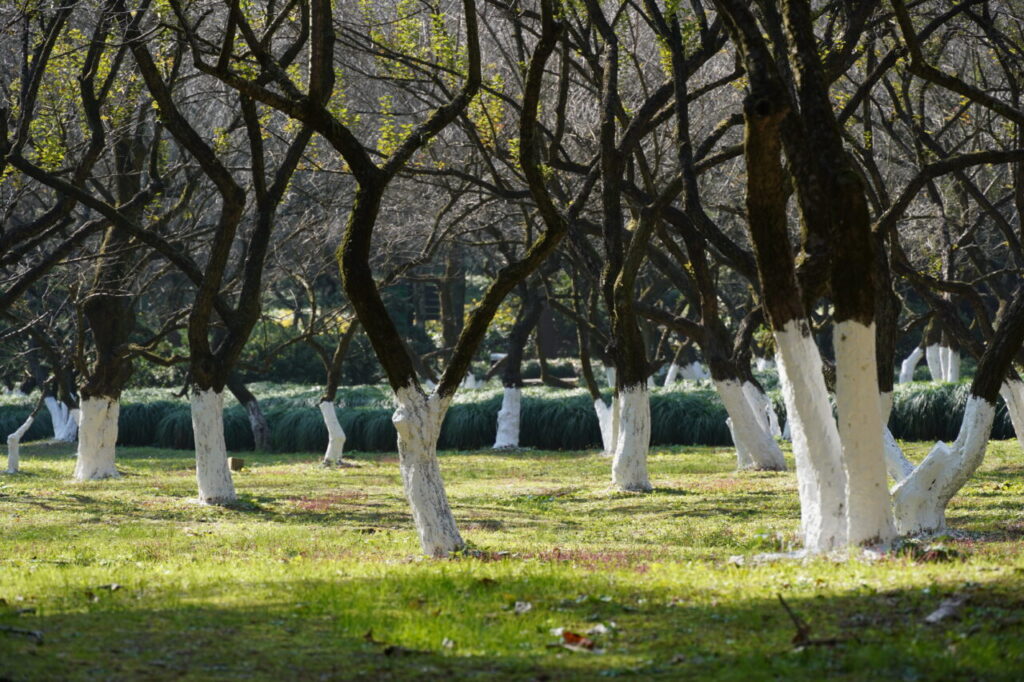
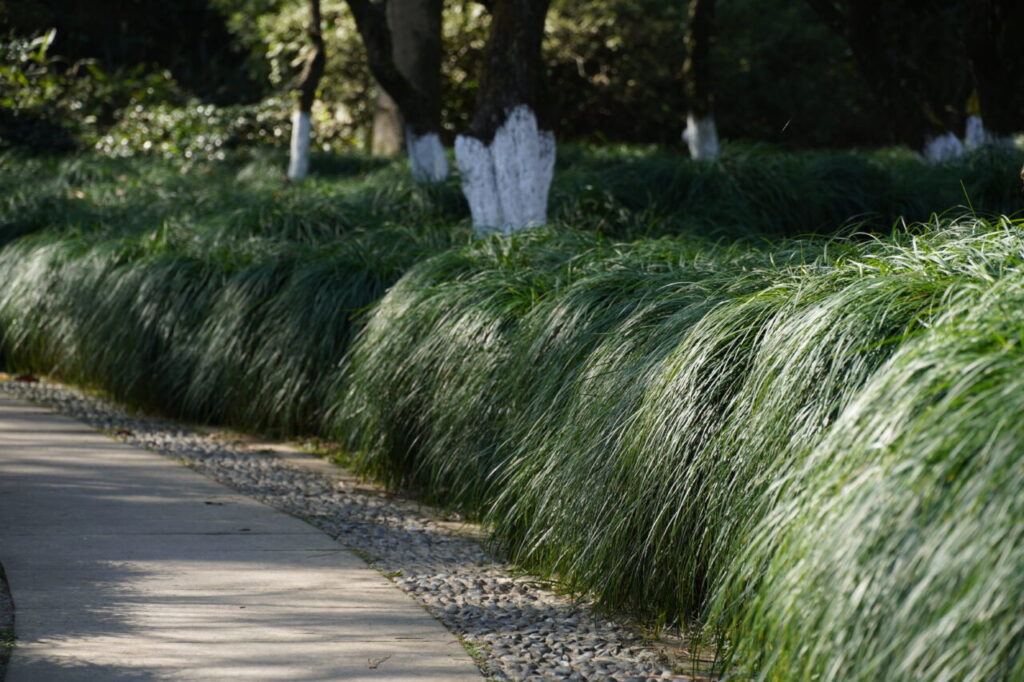
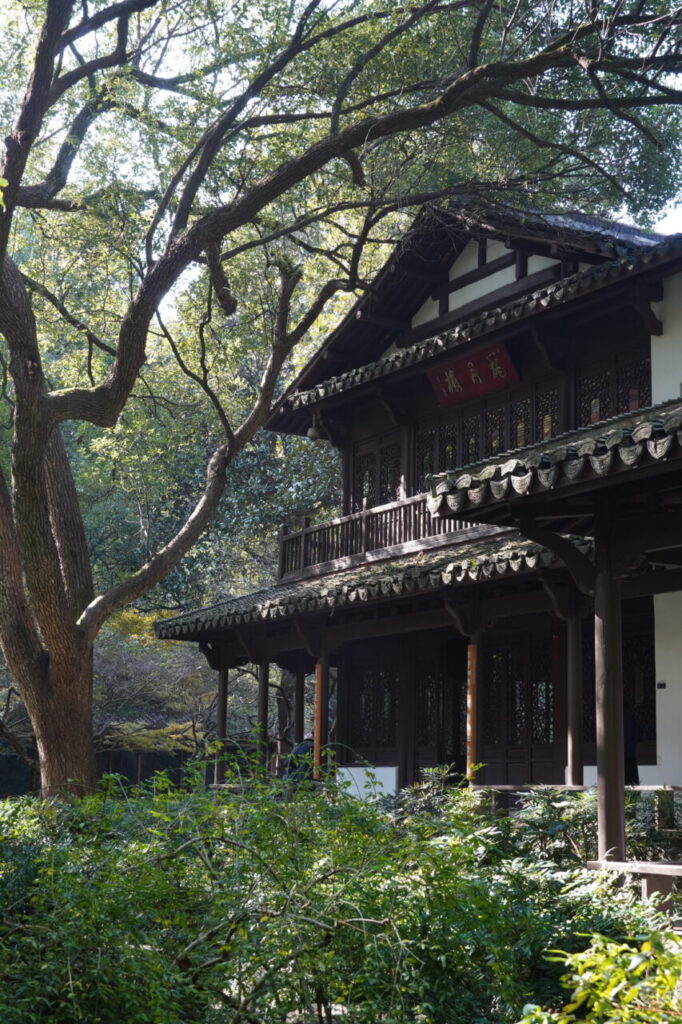
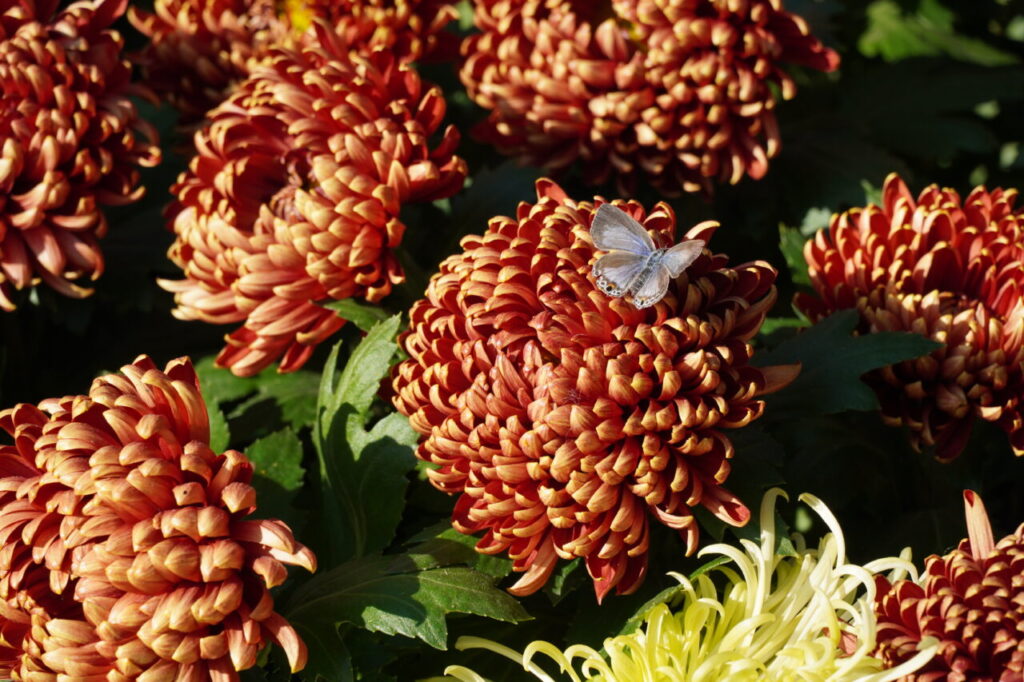
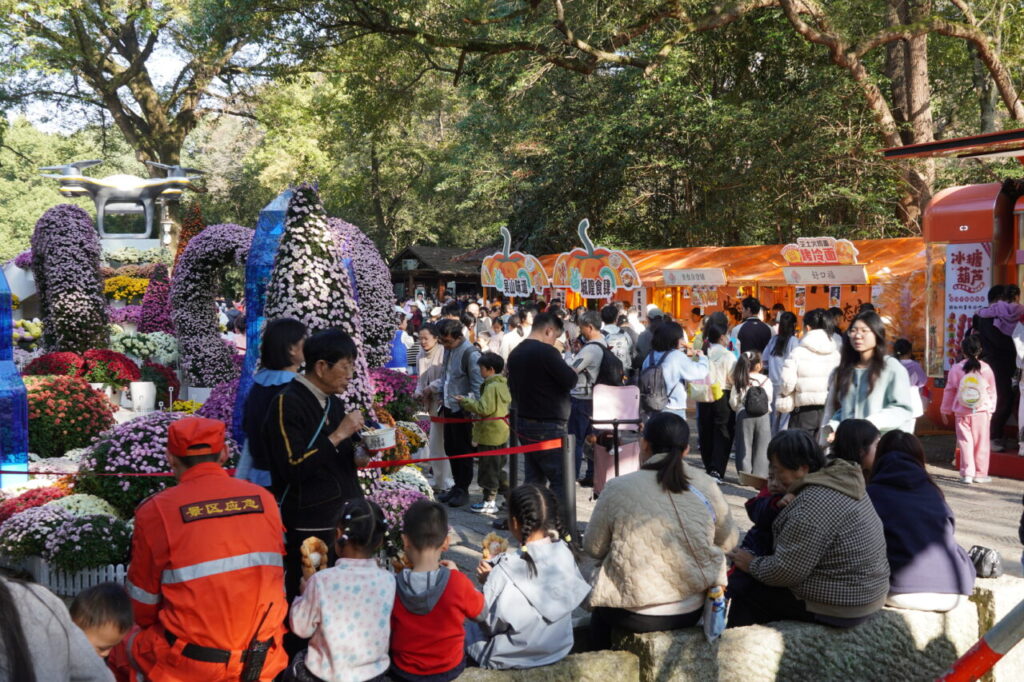
The central part of the botanical garden is packed with people. There’s an event dedicated to chrysanthemums, and visitors have turned out in force. It’s time to leave and escape the crowd. We pass through a bamboo forest and find ourselves back in the city. A quick stop at the local market halls, then we continue our walk through a residential neighborhood.
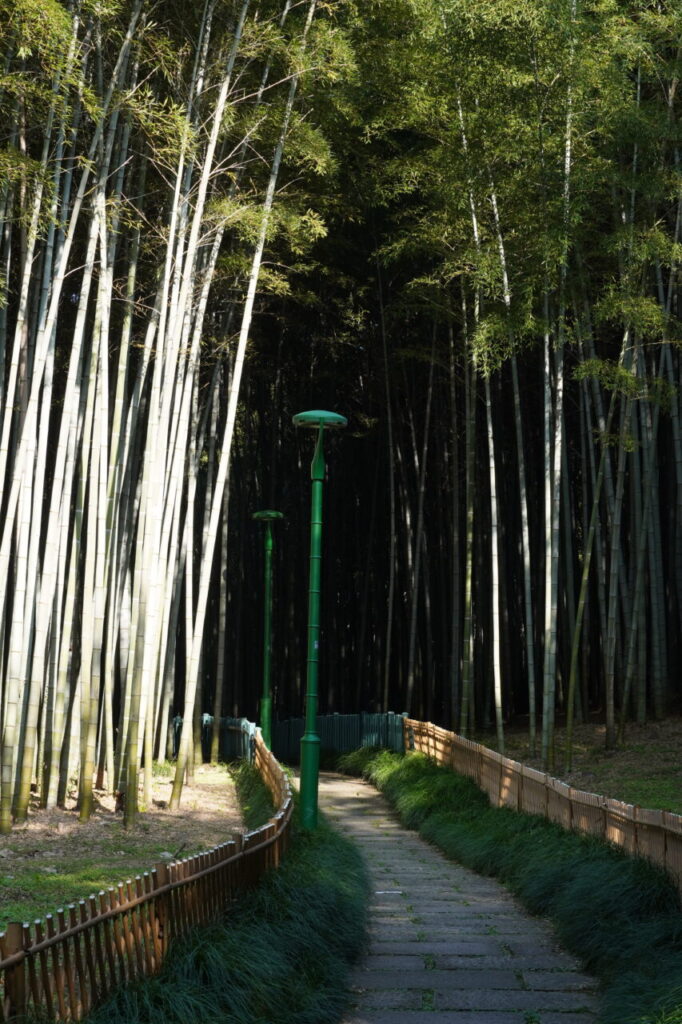
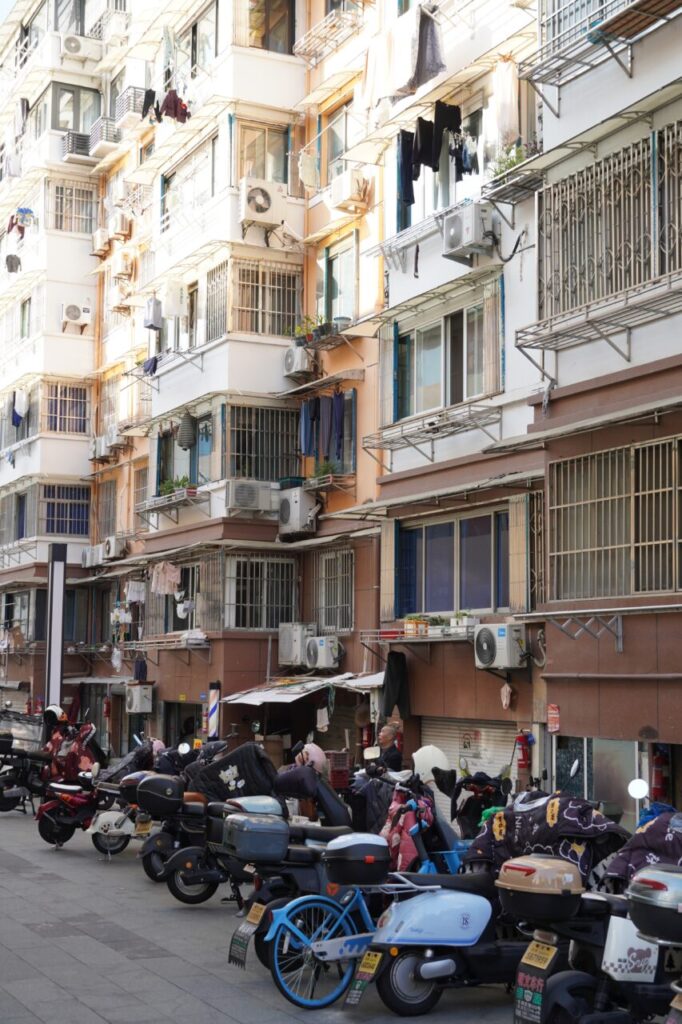
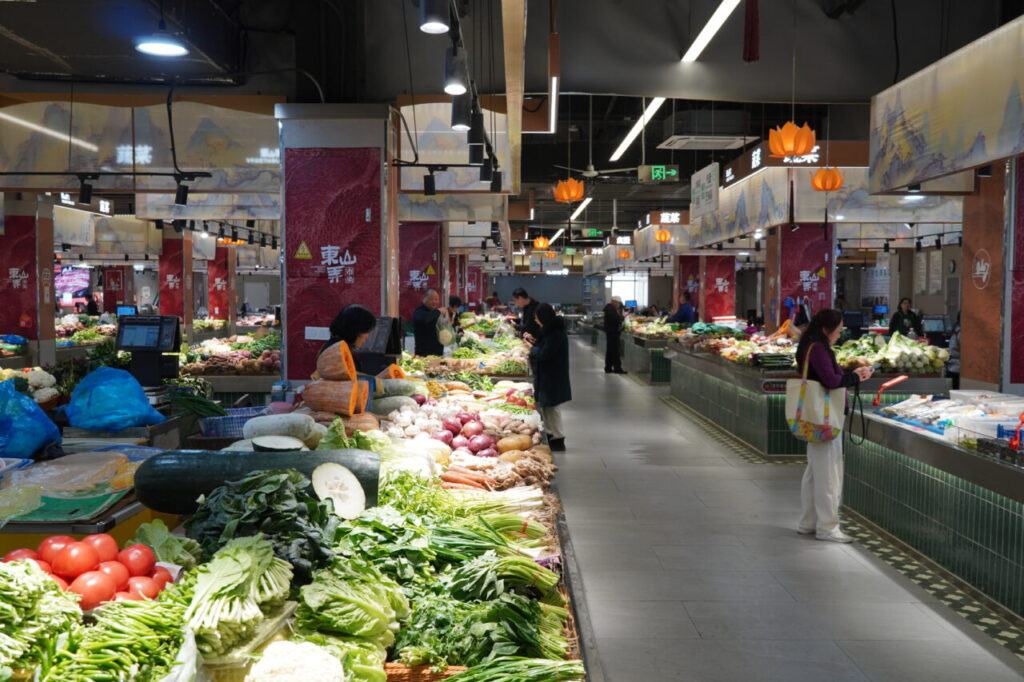
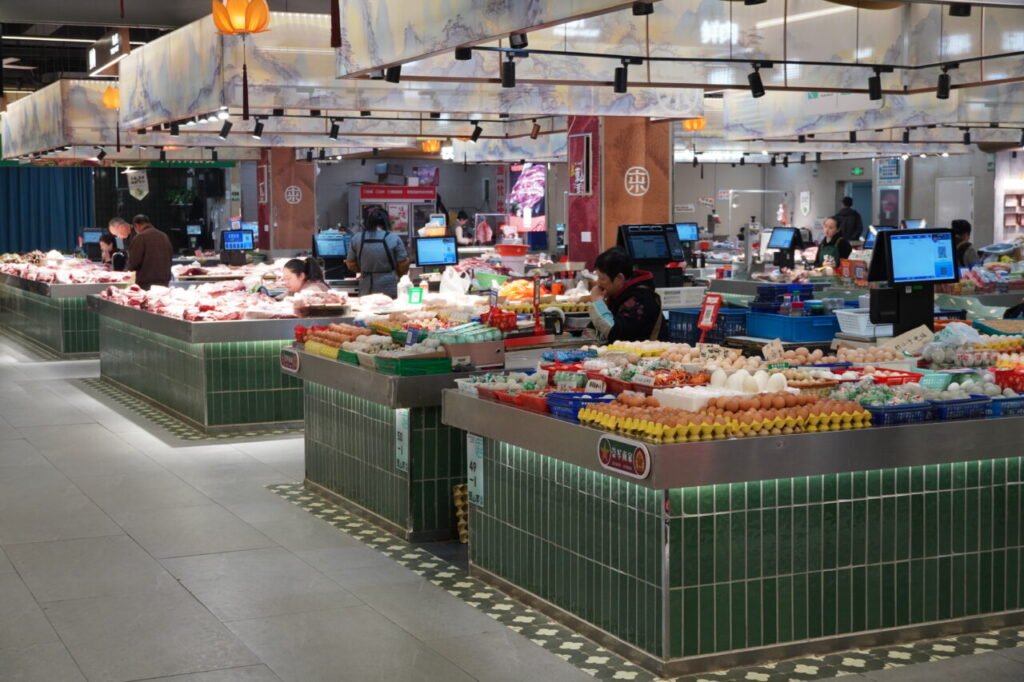
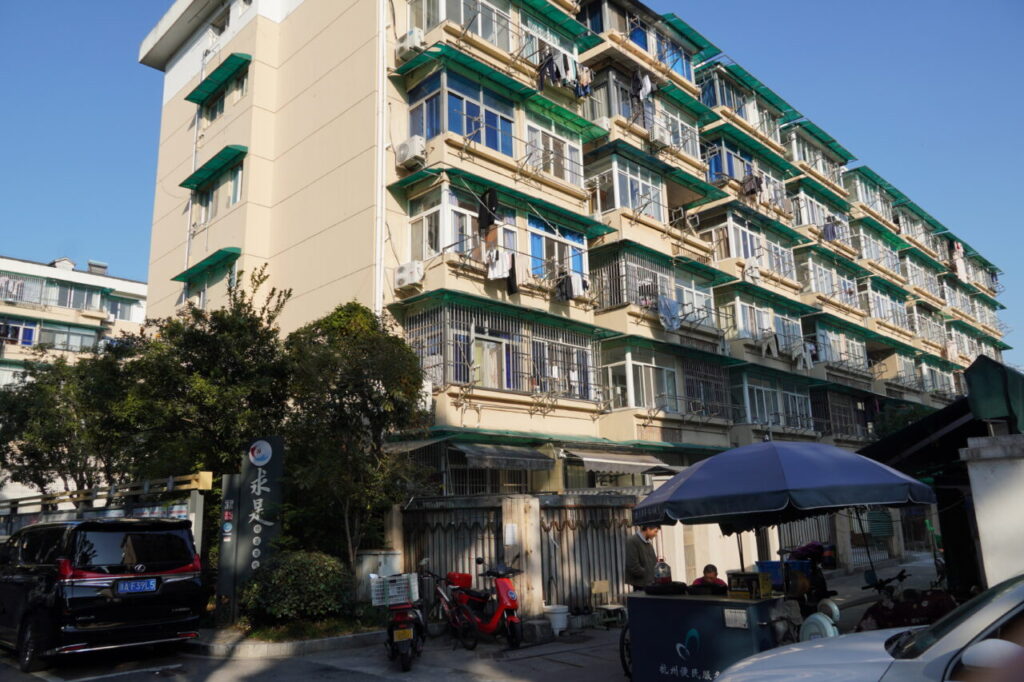
Here, the blocks defined by major roads form “private” residential compounds. Each one has a consistent architectural style. Entrances are guarded (non-resident vehicles are allowed but only for a limited time), sometimes with barrier gates. Inside, there are dozens of apartment buildings, schools, shops, restaurants, and so on. Traffic is therefore limited, as is speed, and people often walk right in the middle of the street. In short, life doesn’t really happen on the main avenues but within these “communities”.
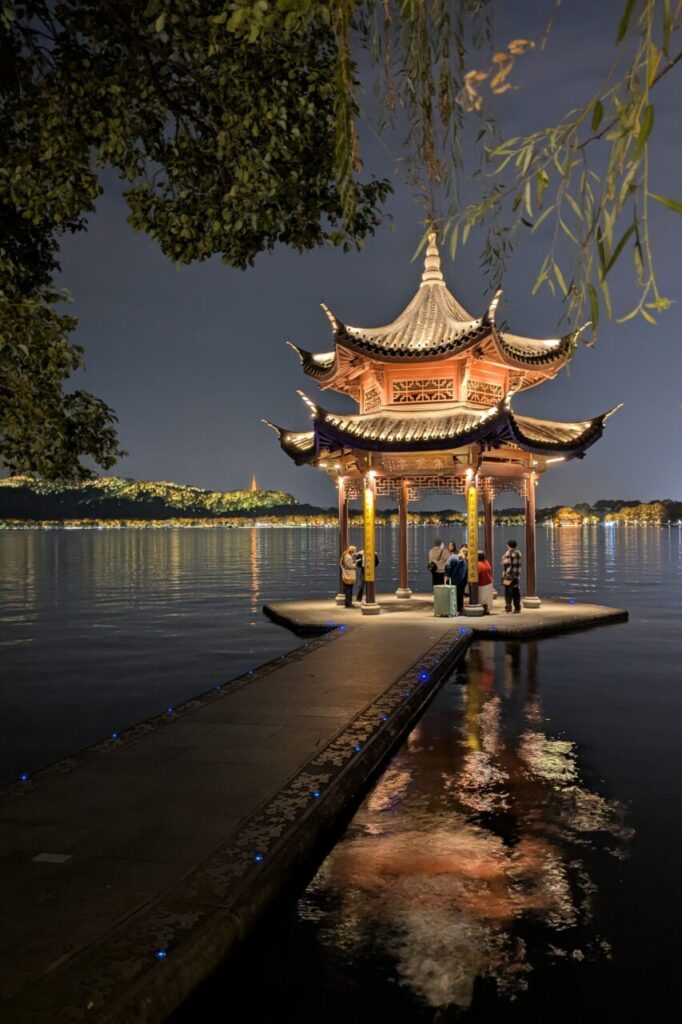
In the evening, we head downtown for a concert of film music, then take a short walk along the shores of the West Lake.
Day 2 – Lingyin and Taoguang temples, Yongfu monastery
We take the bus to visit Lingyin Temple, one of the “largest and most prosperous Buddhist temples in China.” It really is vast, with enough to keep us busy for the entire day.
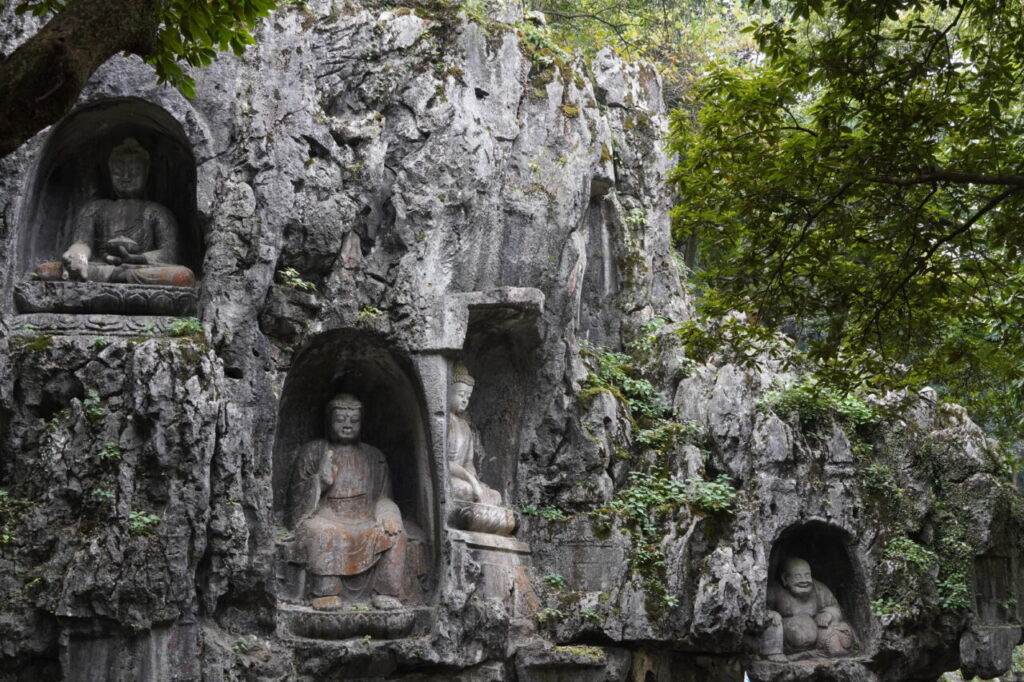
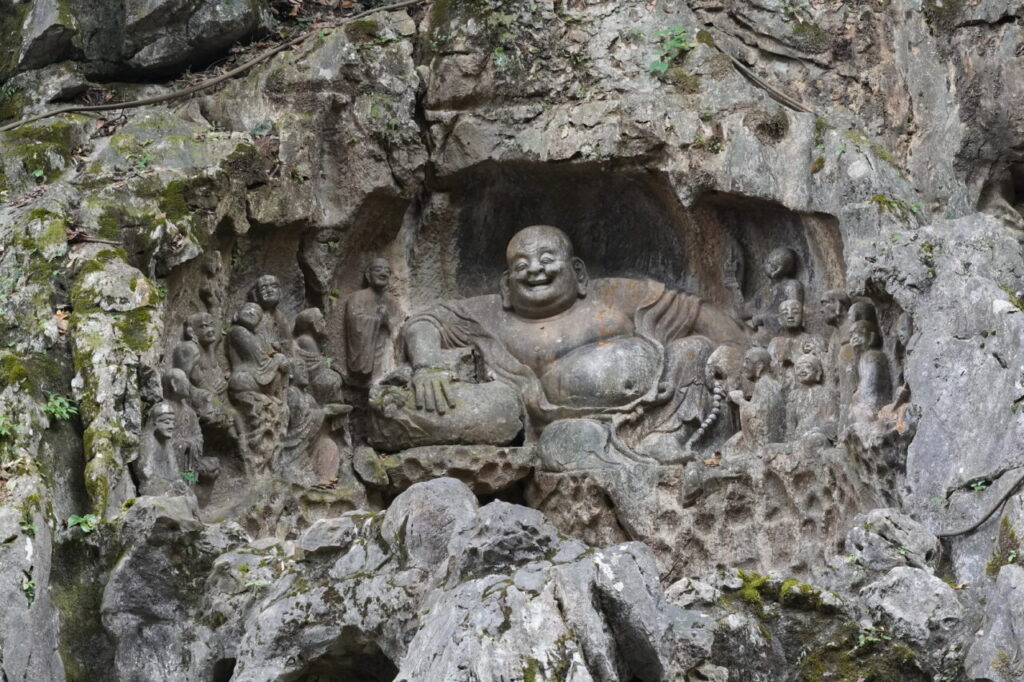
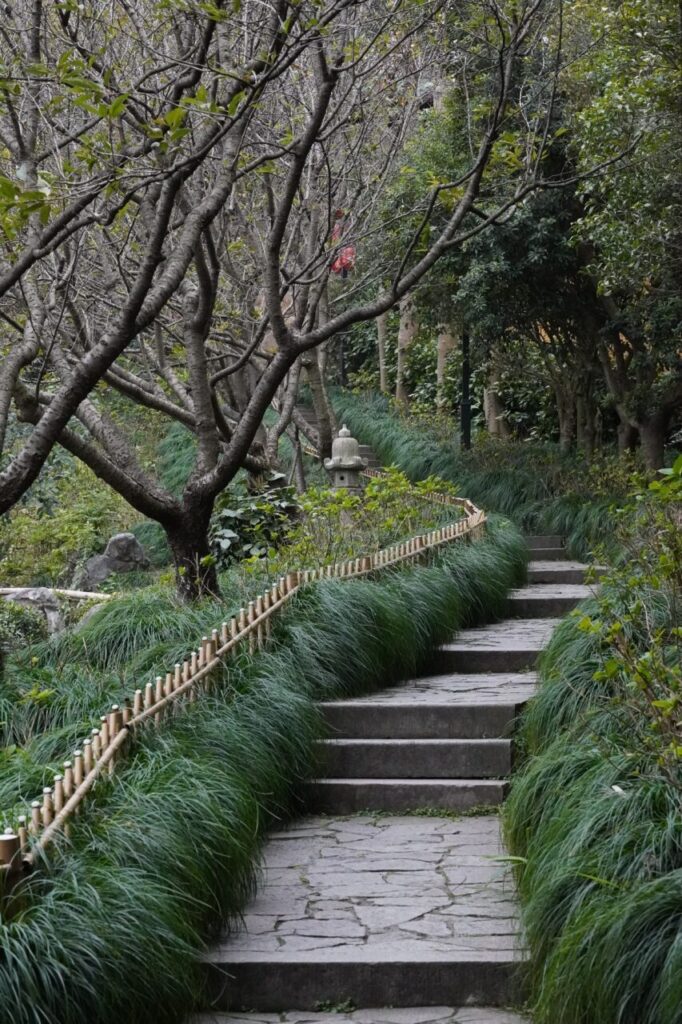
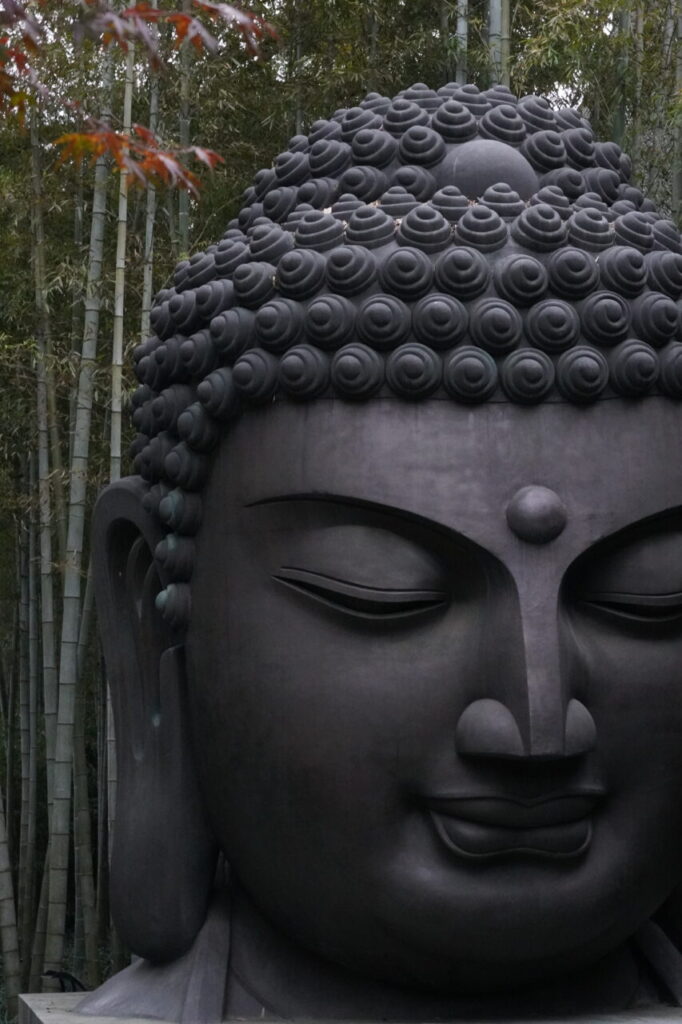
We first follow a paved path beneath the trees leading to the Feilai Feng caves, famous for their Buddhist sculptures carved directly into the rock, most of them several centuries old. The site’s emblem is a cheerful, friendly-looking Buddha.
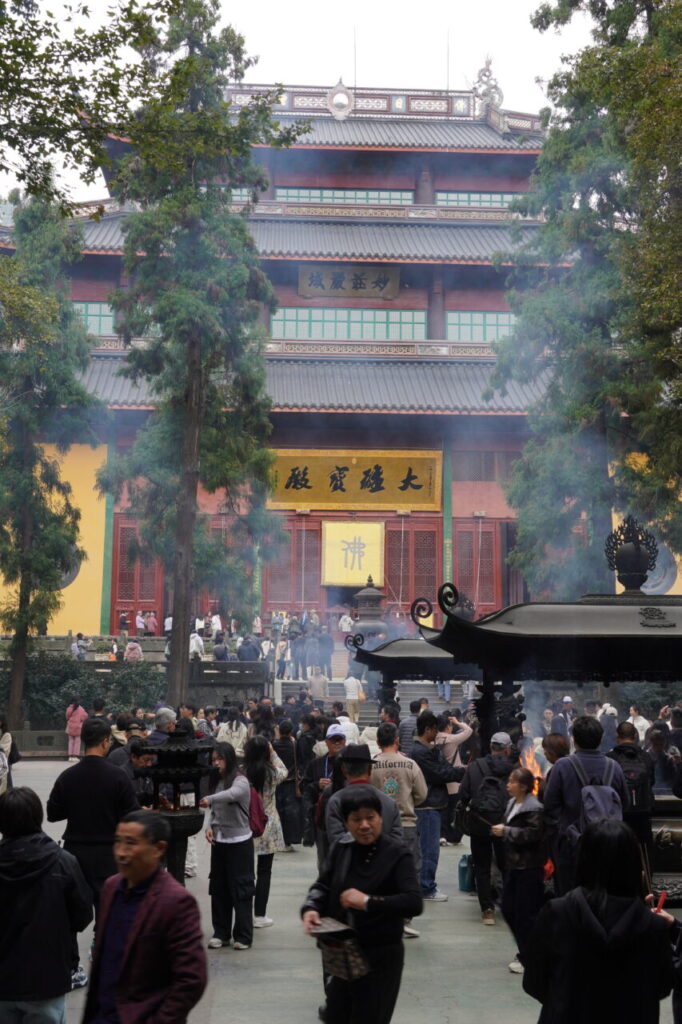
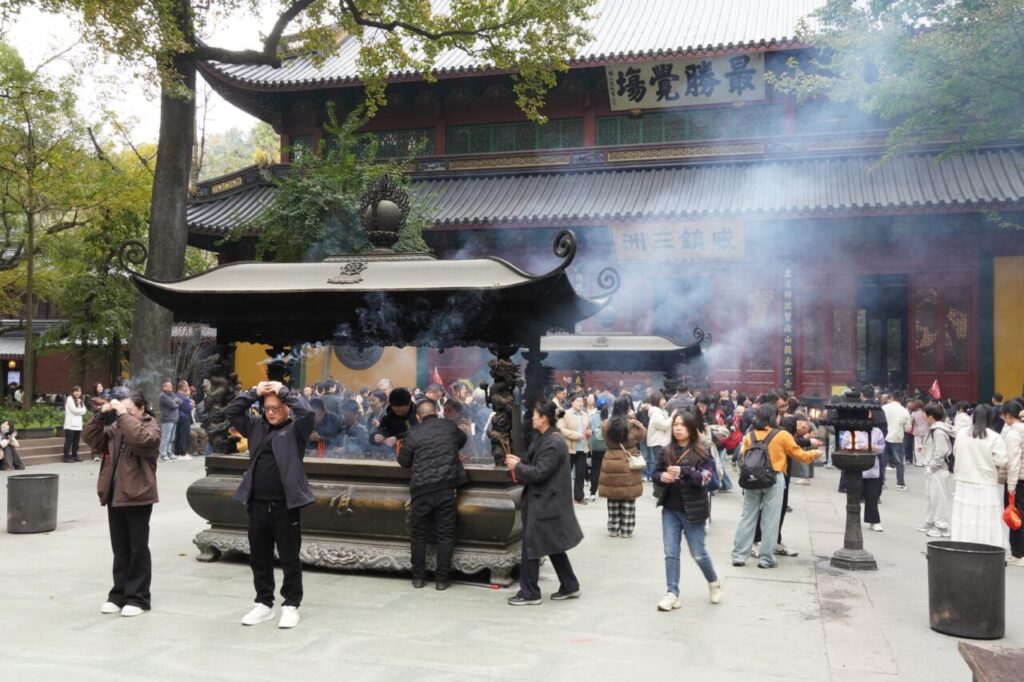
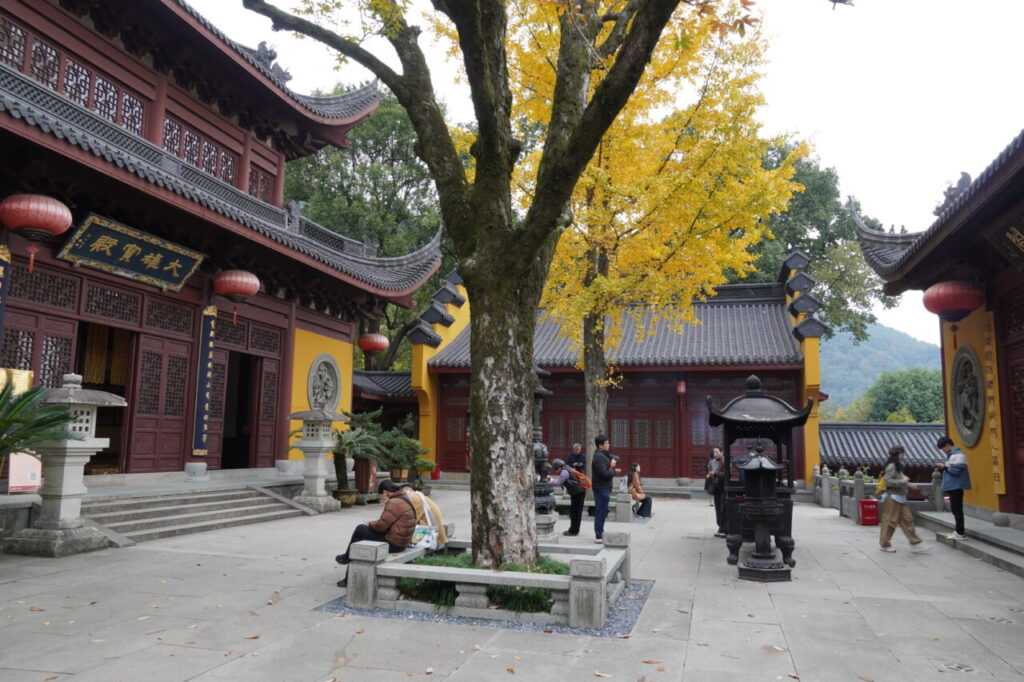
We then pass through the enclosure wall of Lingyin Temple and arrive in a courtyard surrounded by immense pavilions. Incense burns at the center. On either side are planted areas with trees where squirrels and birds forage for food. There are quite a few people, yet the atmosphere is very relaxing.
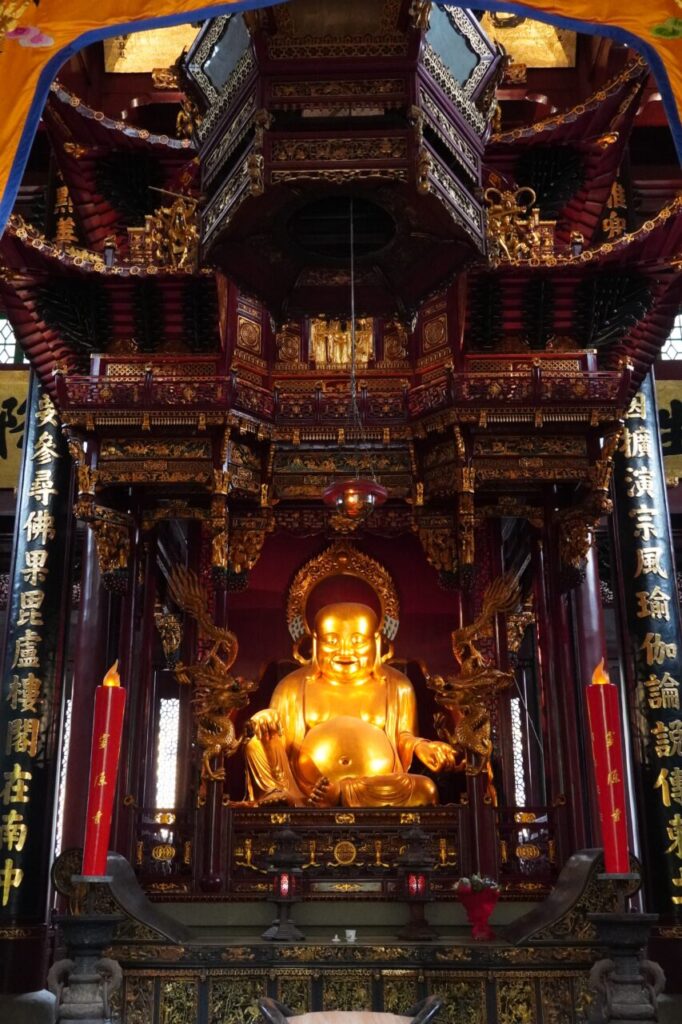
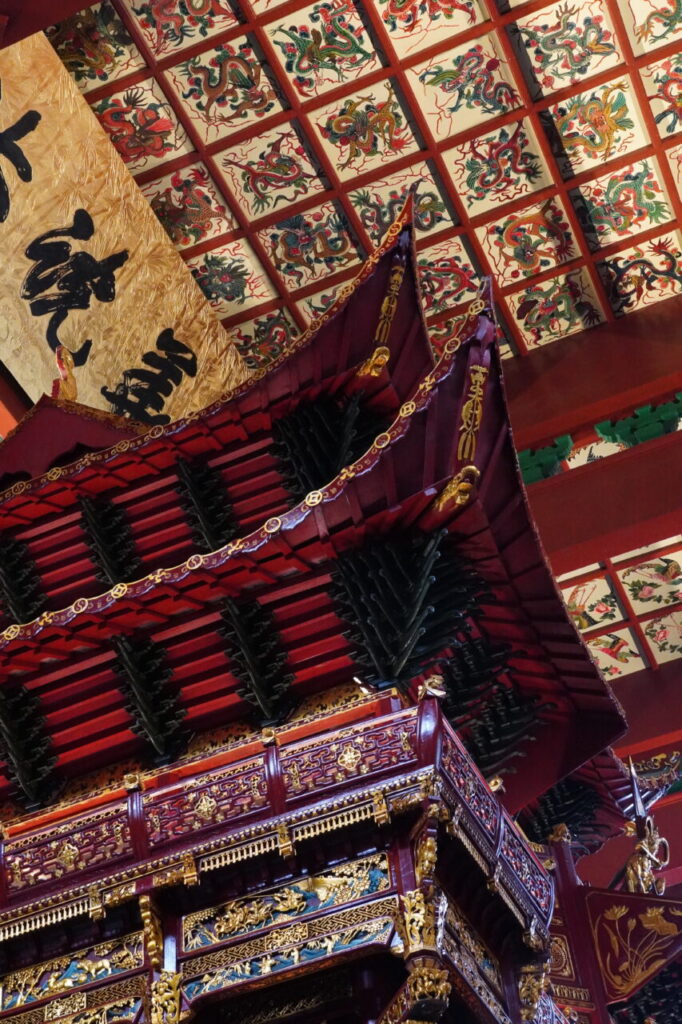
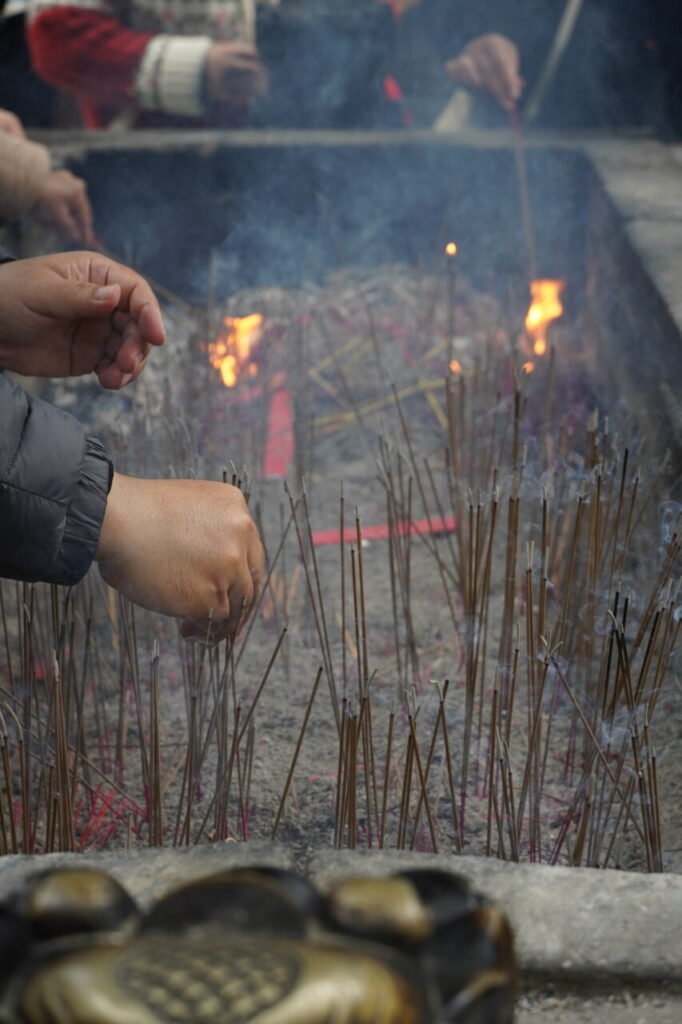
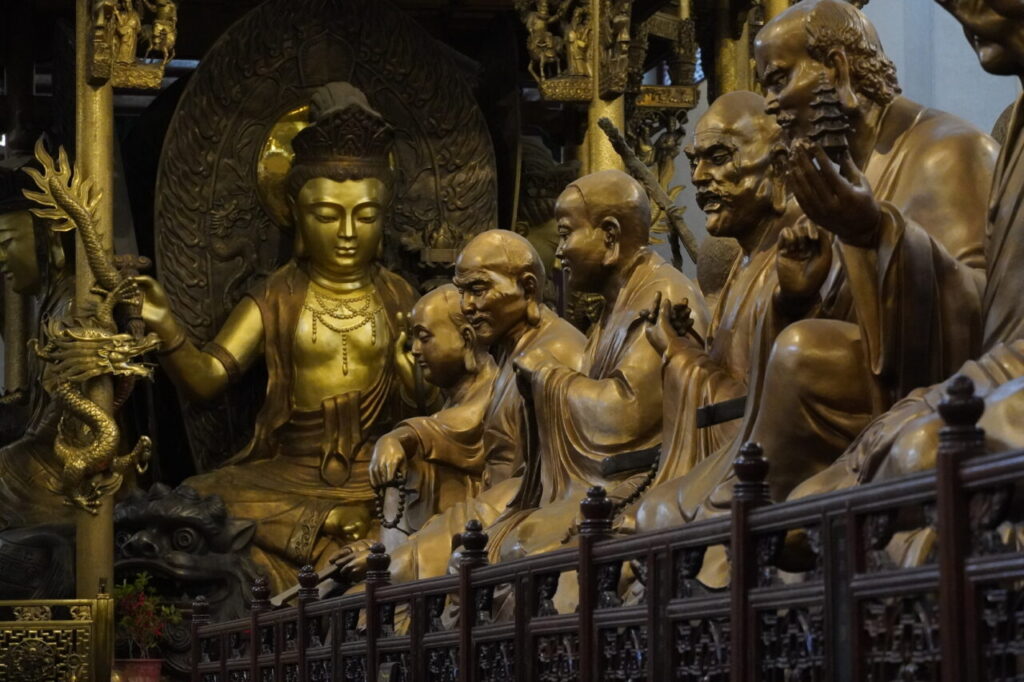
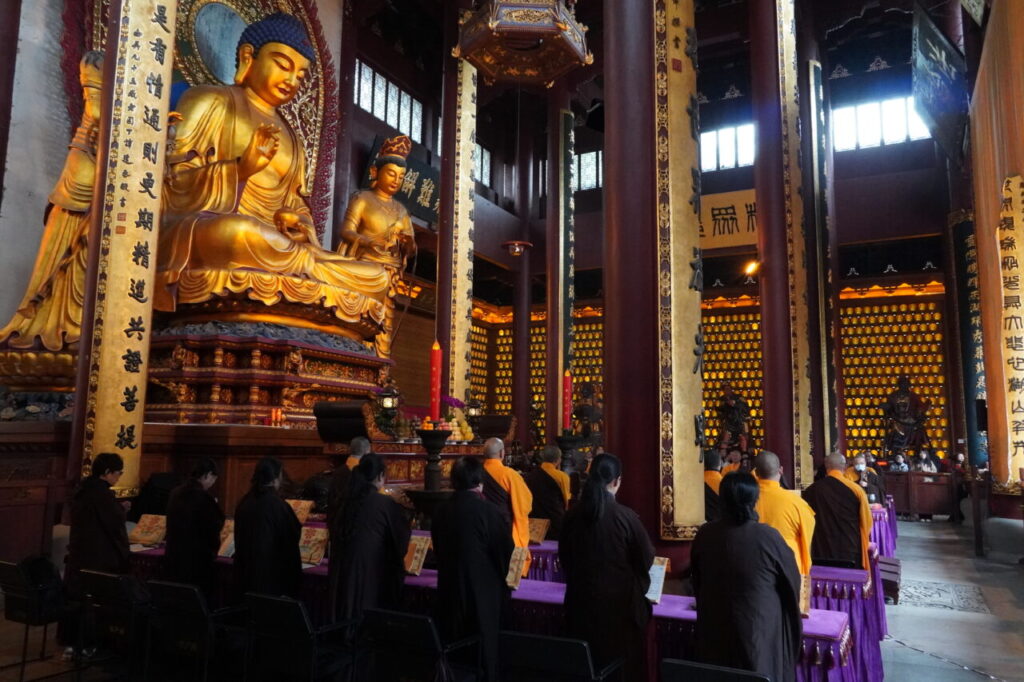
We visit two secondary pavilions, then begin the ascent by passing through the main hall, which houses an enormous Buddha. Everything is richly decorated and impressive. We exit at the back, climb a few steps to another, slightly smaller pavilion—more statues, more decorations. Then more steps, another pavilion, slightly smaller again… and then yet another!
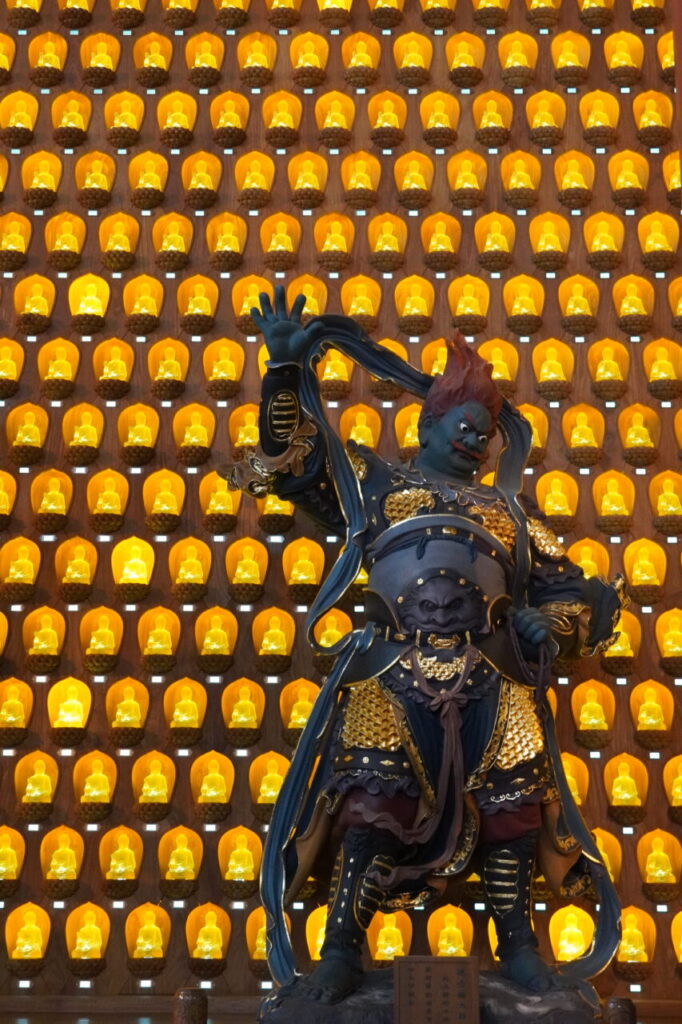
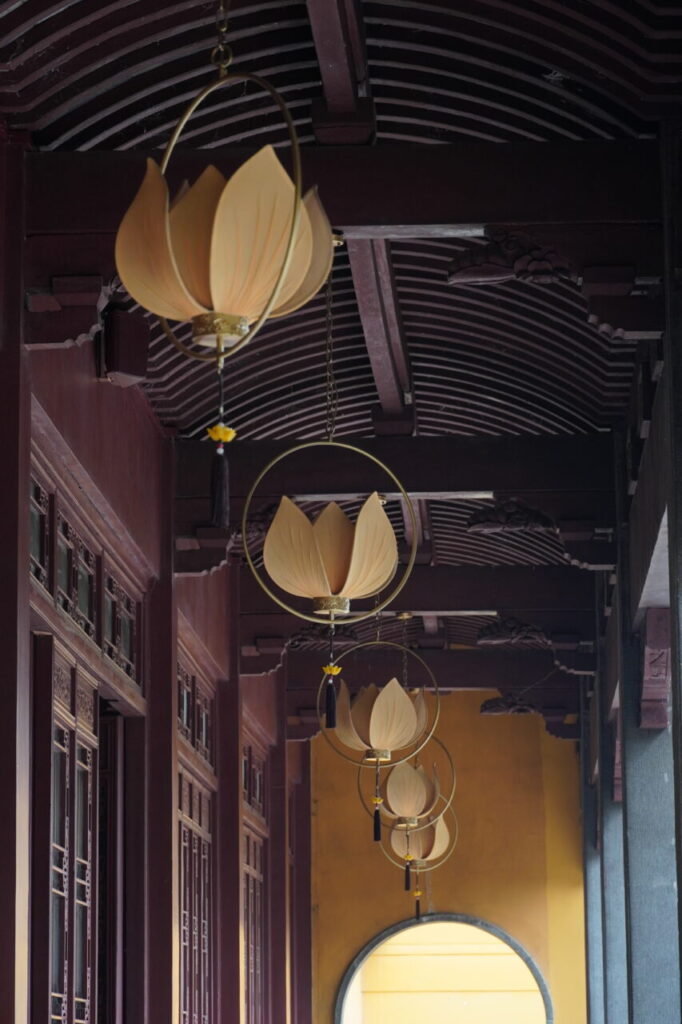
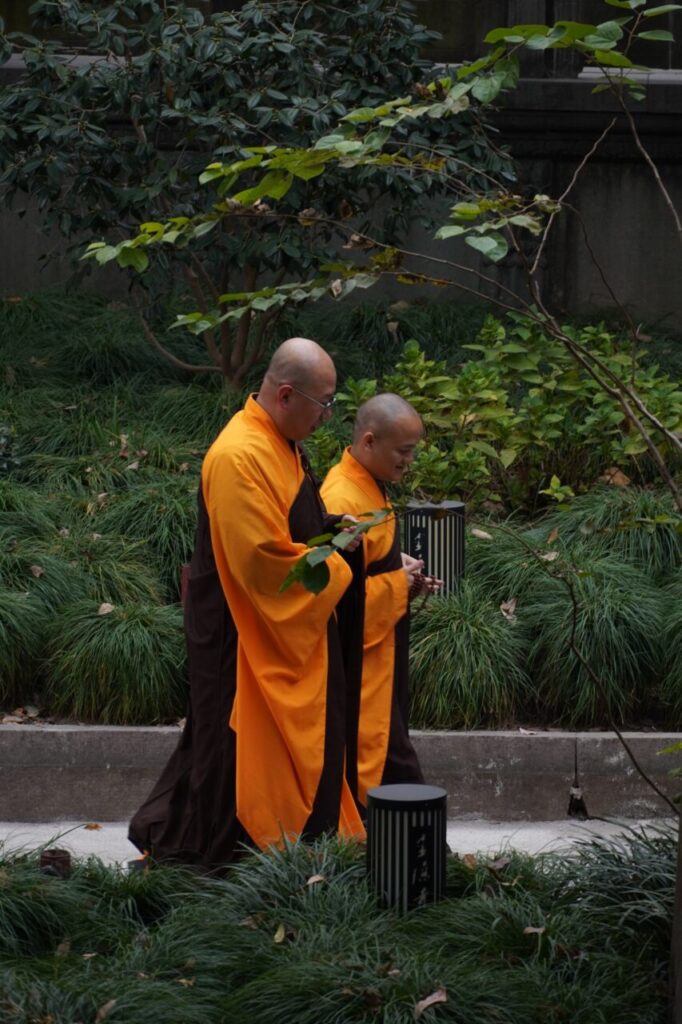
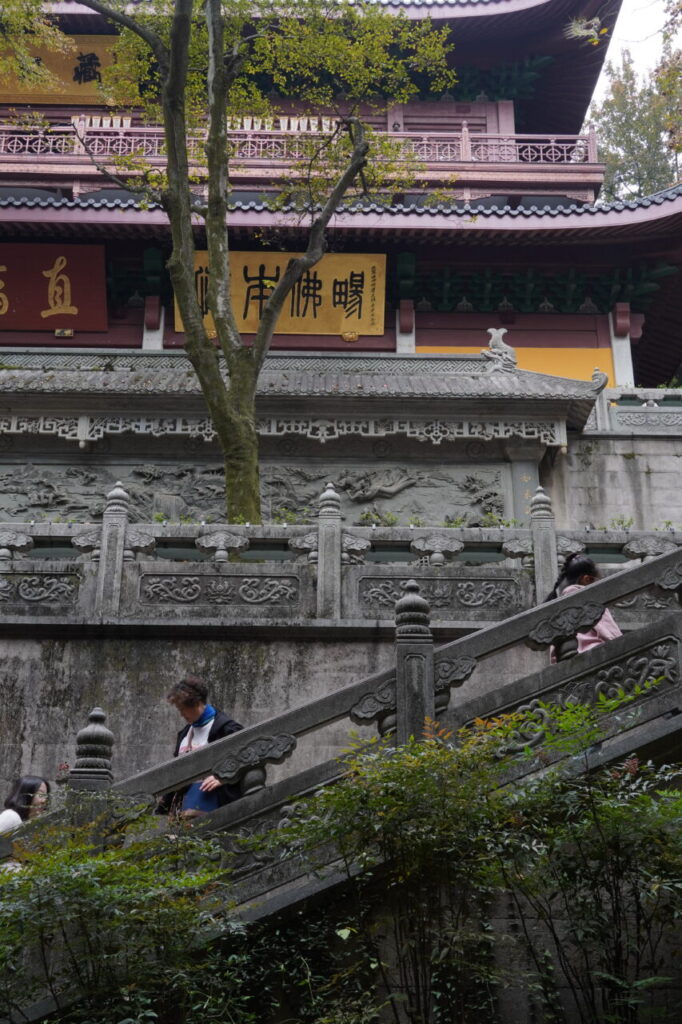
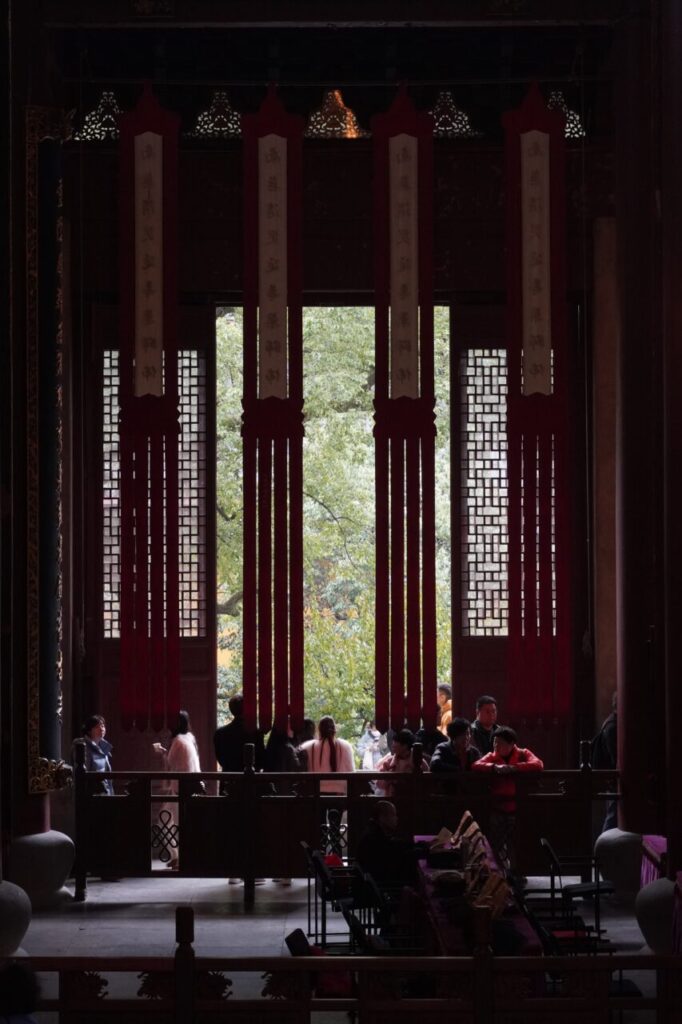
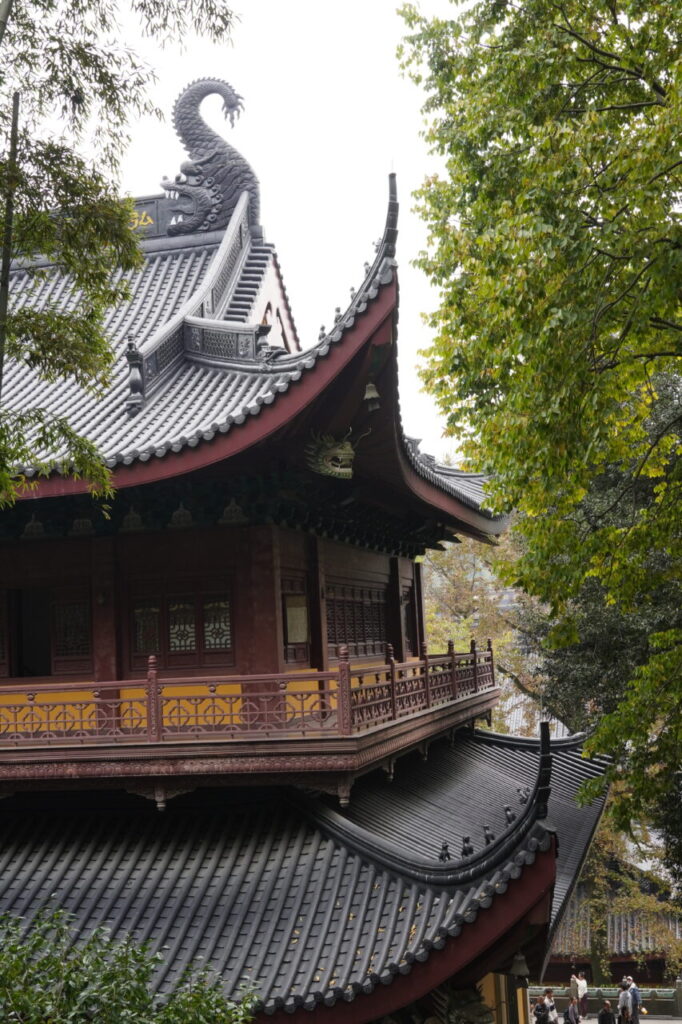
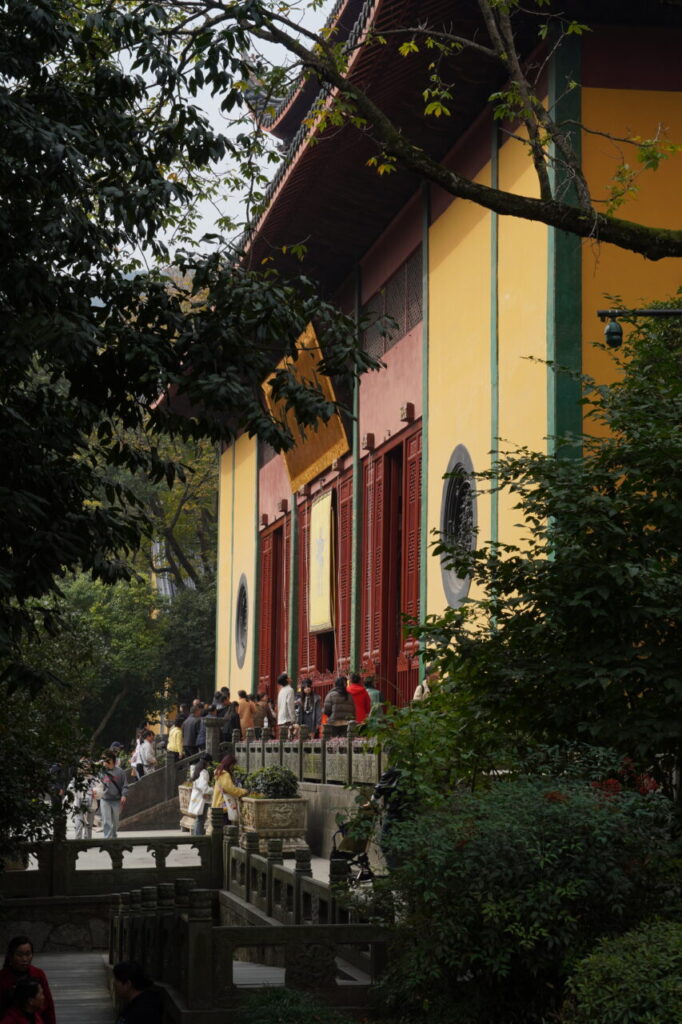
The descent is quicker. We head into a nearby valley and eat some doufu gan (spiced tofu) to regain our strength. We climb up to Taoguang Temple for lunch, walk around the site, then head back down.
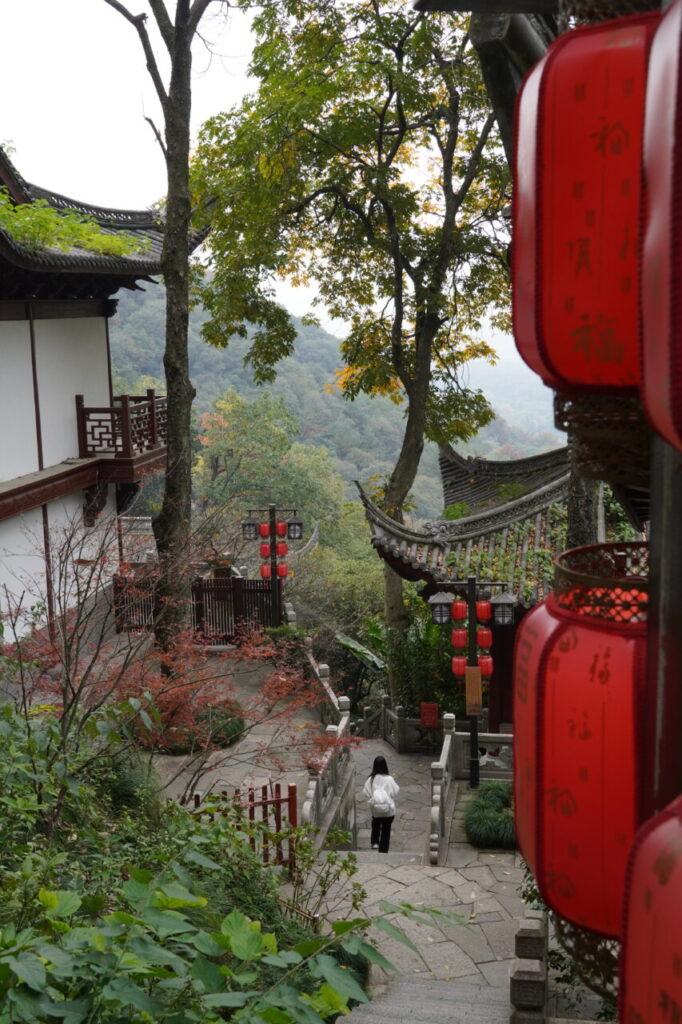
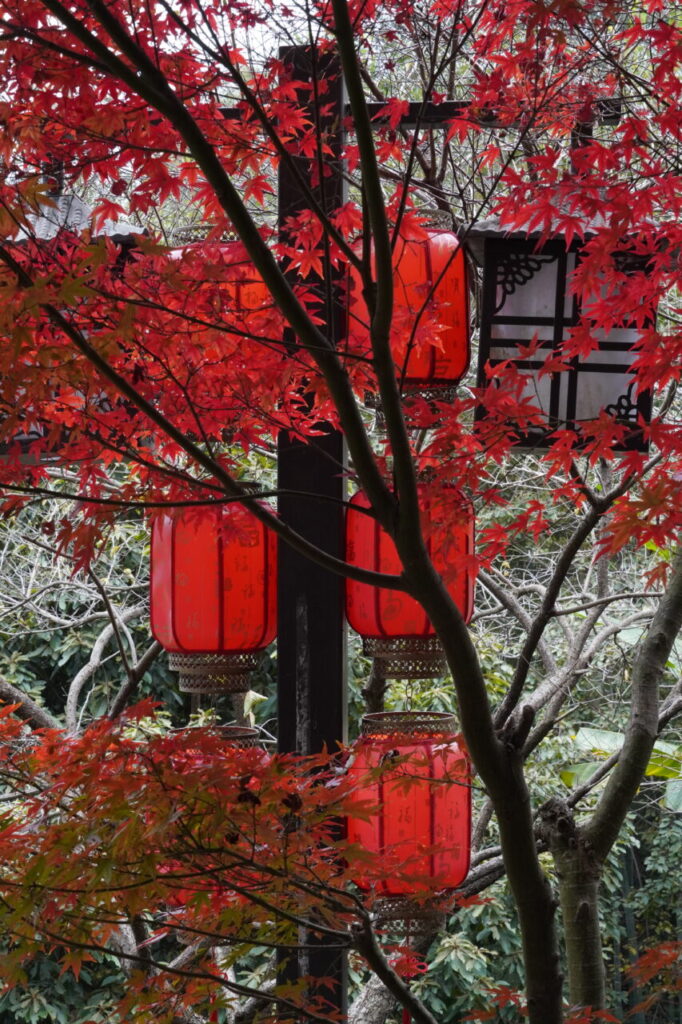
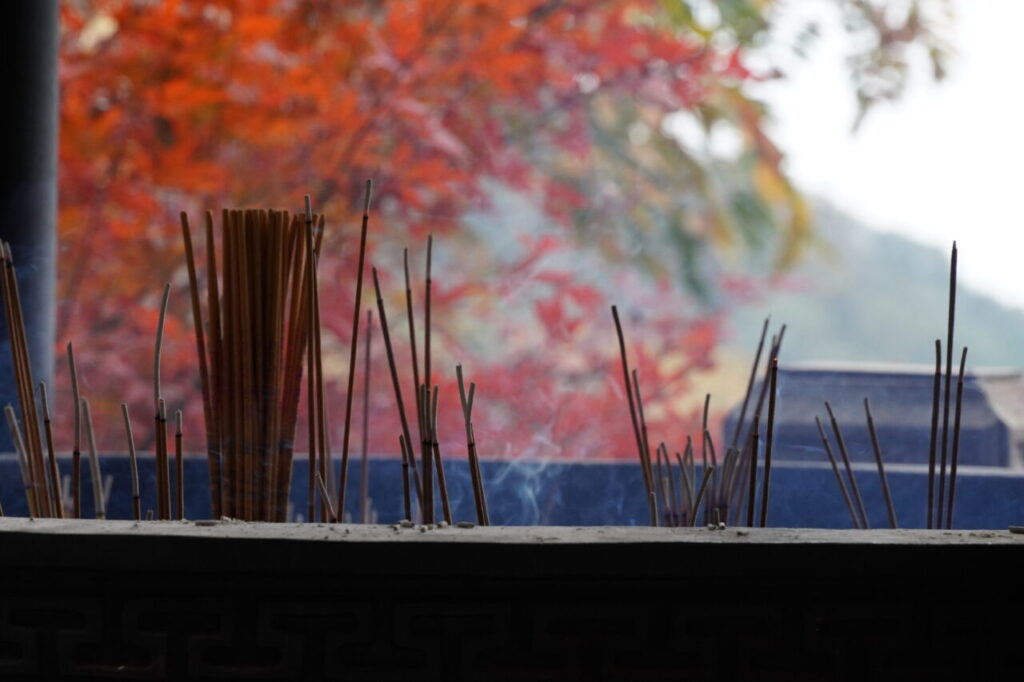
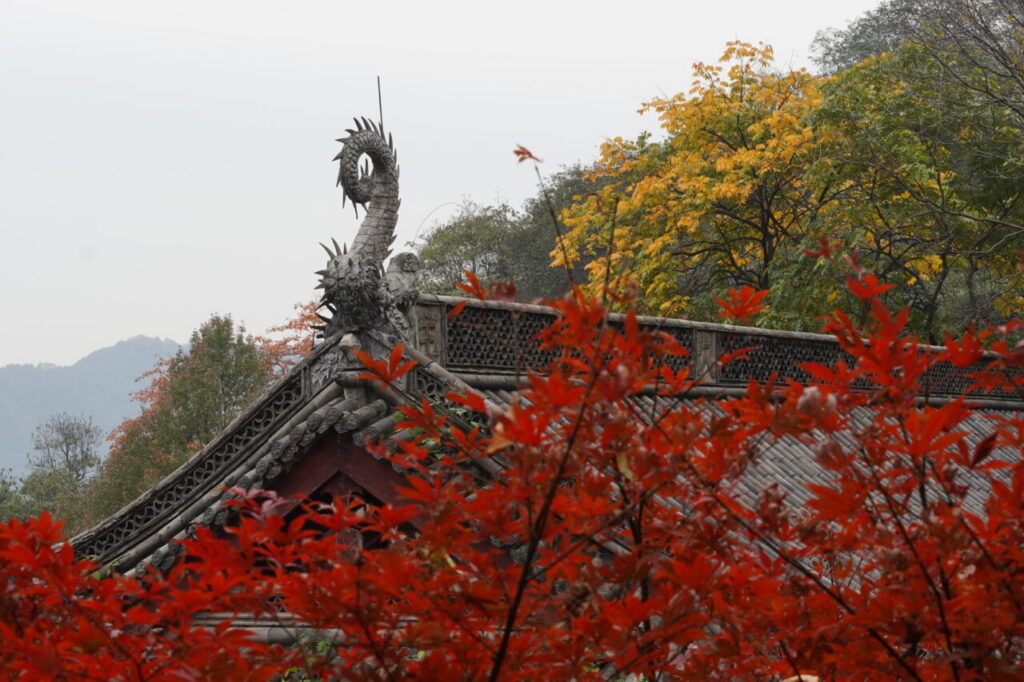
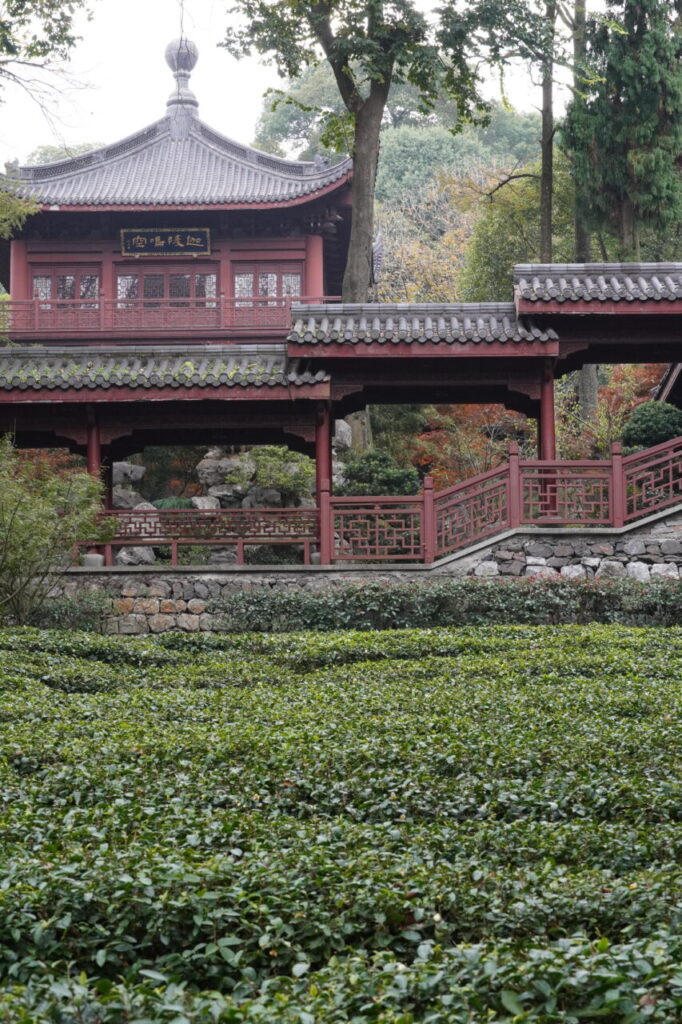
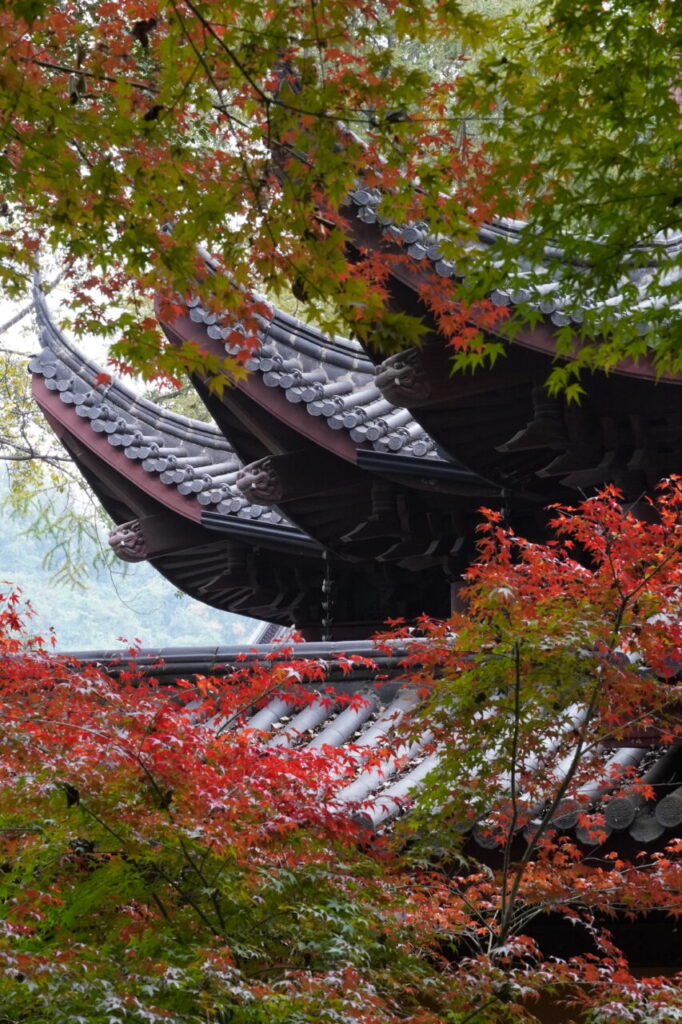
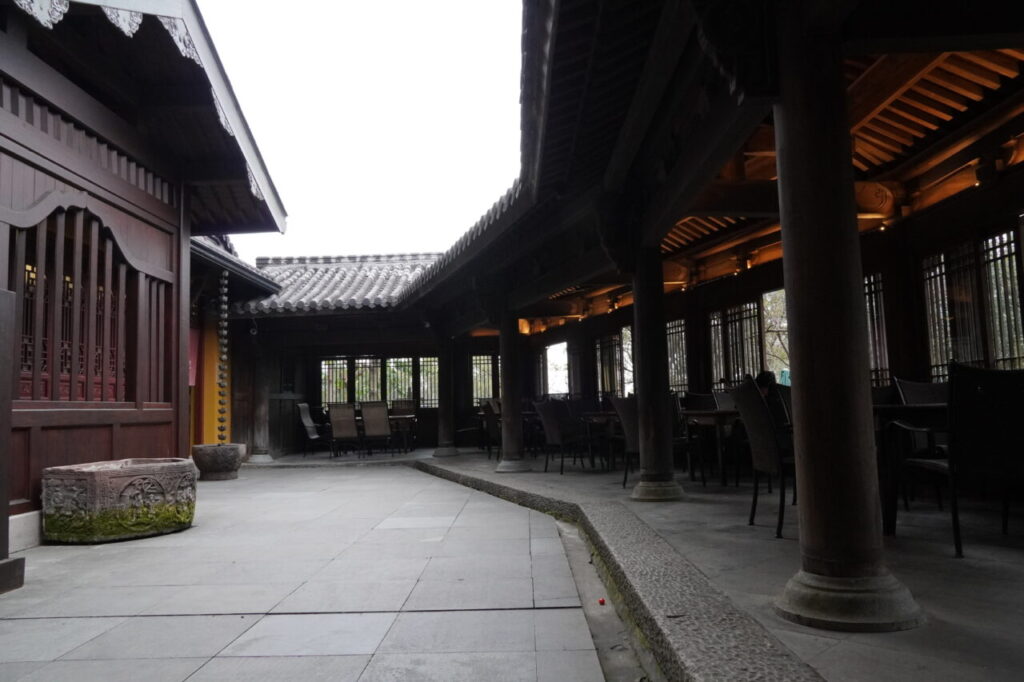
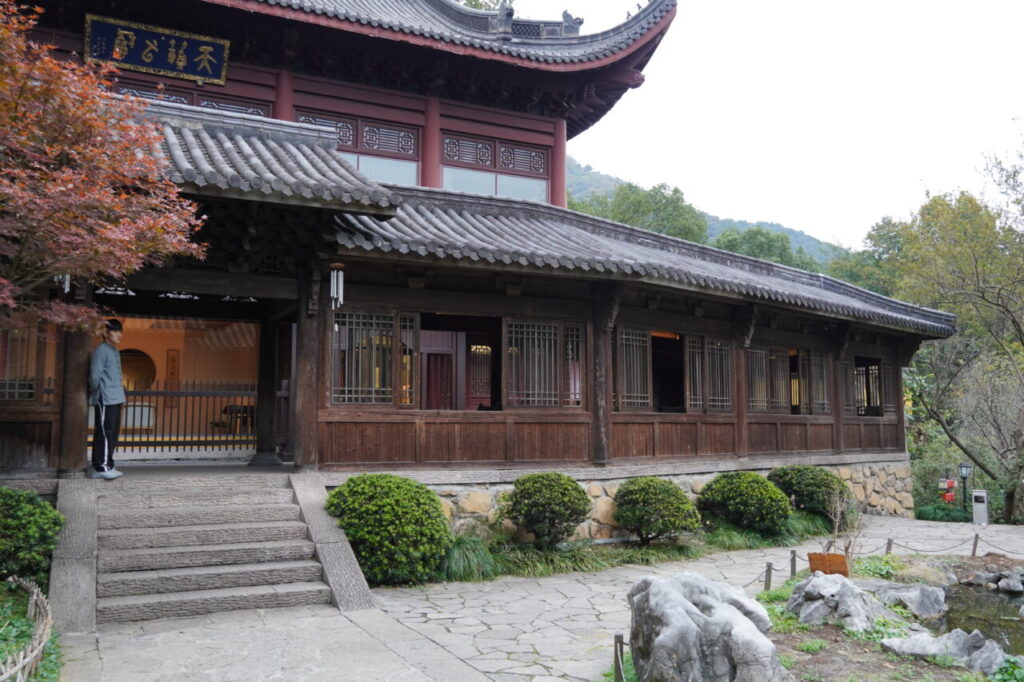
A third valley awaits us, leading to Yongfu monastery—a peaceful complex of pavilions and tea fields. Time seems to stand still here. The yellow and vermilion buildings blend into the surrounding forest. From the highest terrace, we catch a glimpse of West Lake. Further down, we take a break, cut off from the world, to taste the local tea.
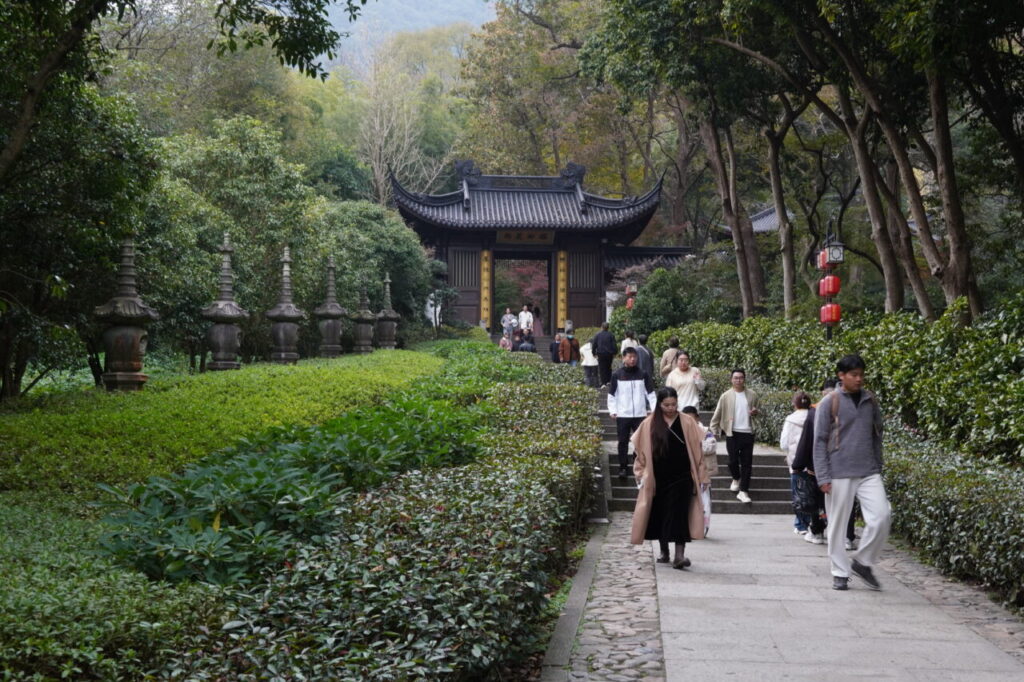
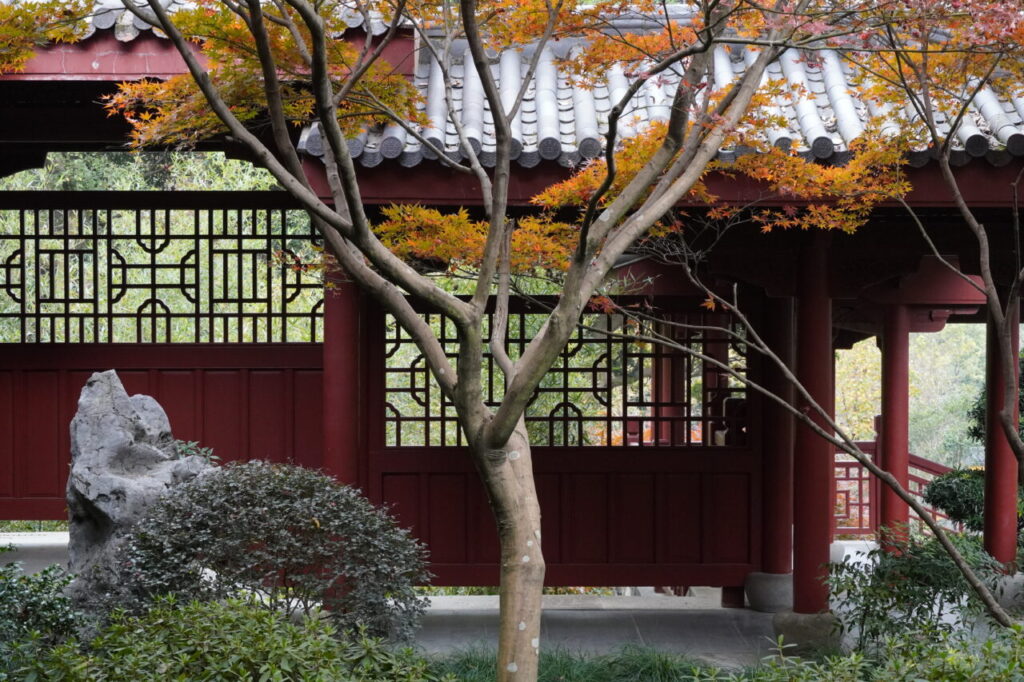
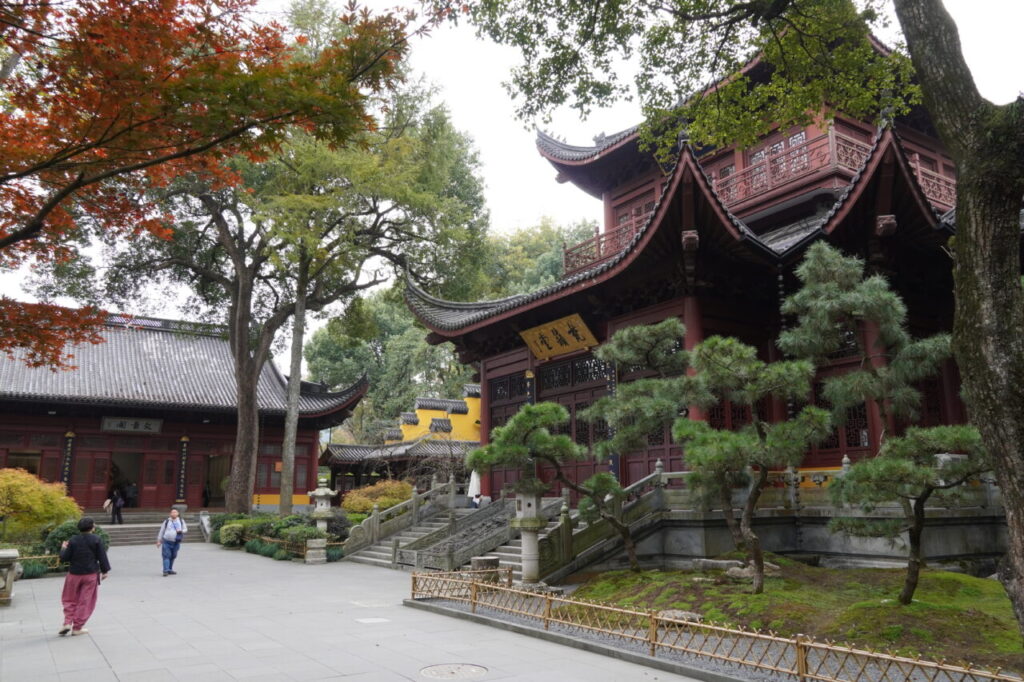
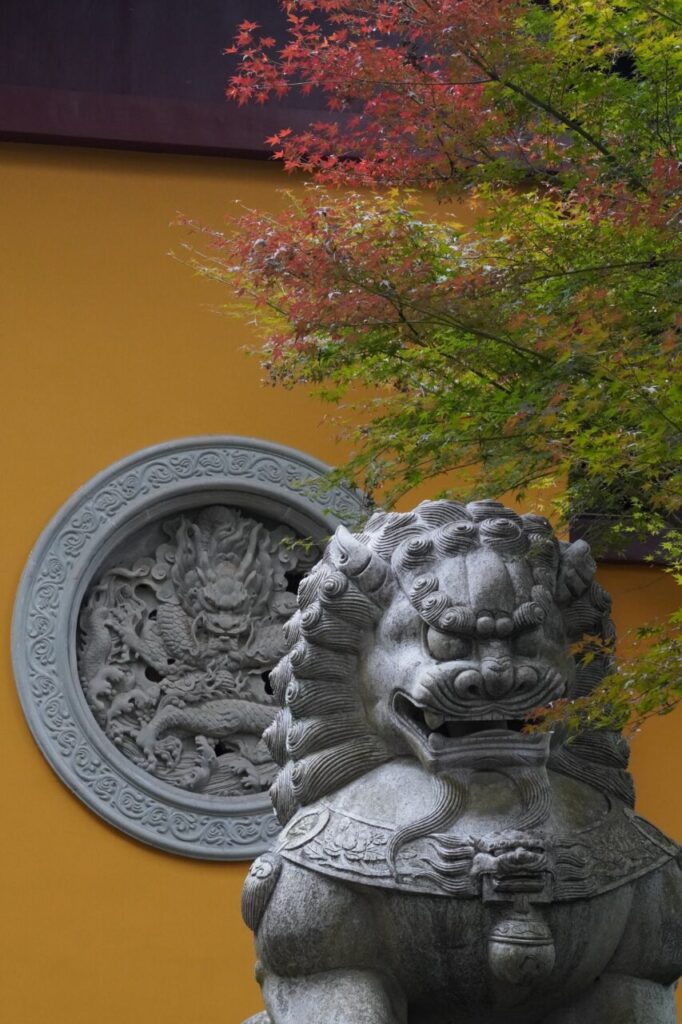
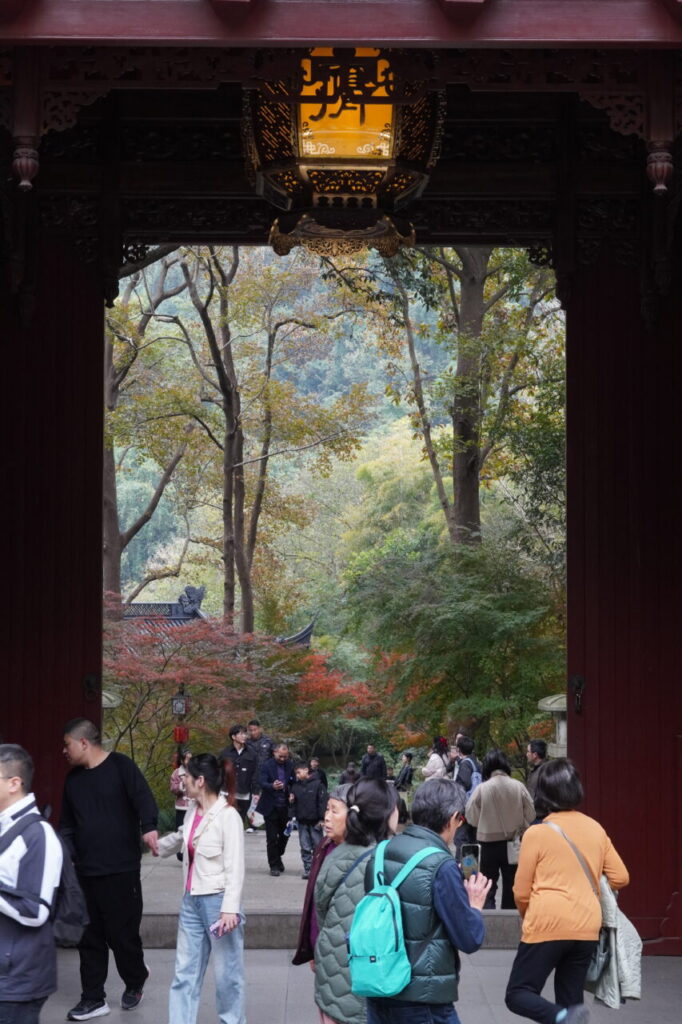
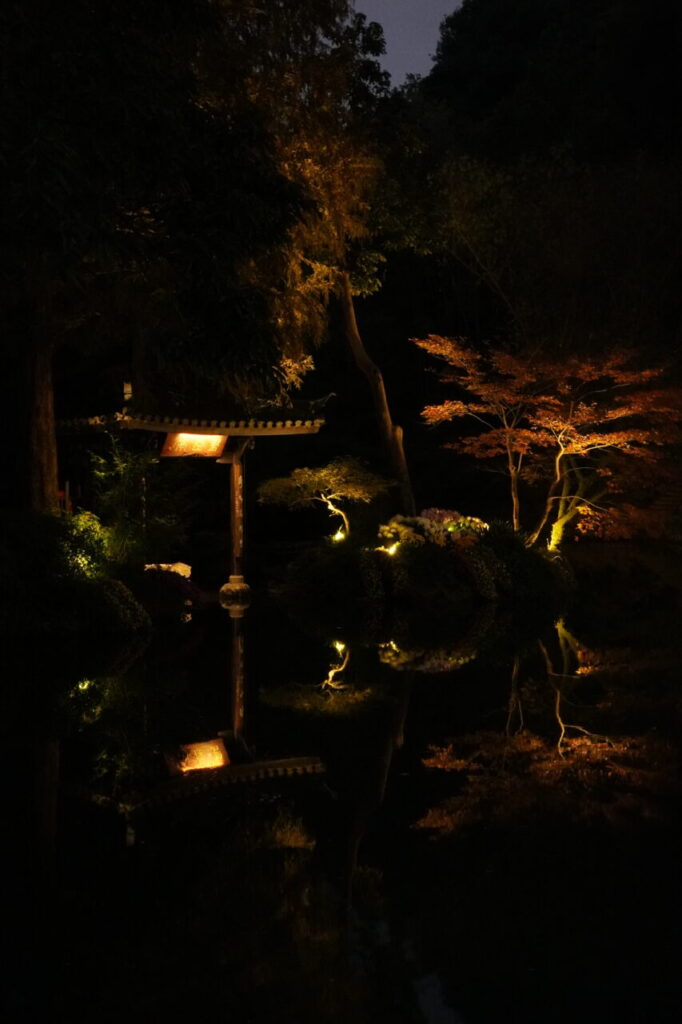
Bus ride back, then a quick nighttime visit to the botanical garden.
Day 3 – West Lake
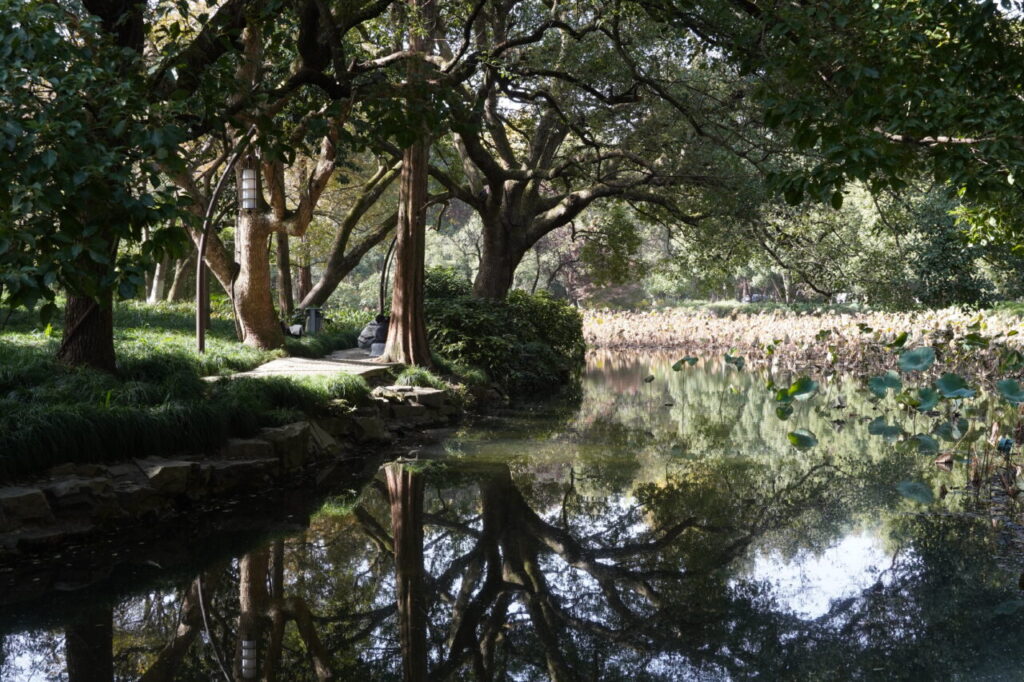
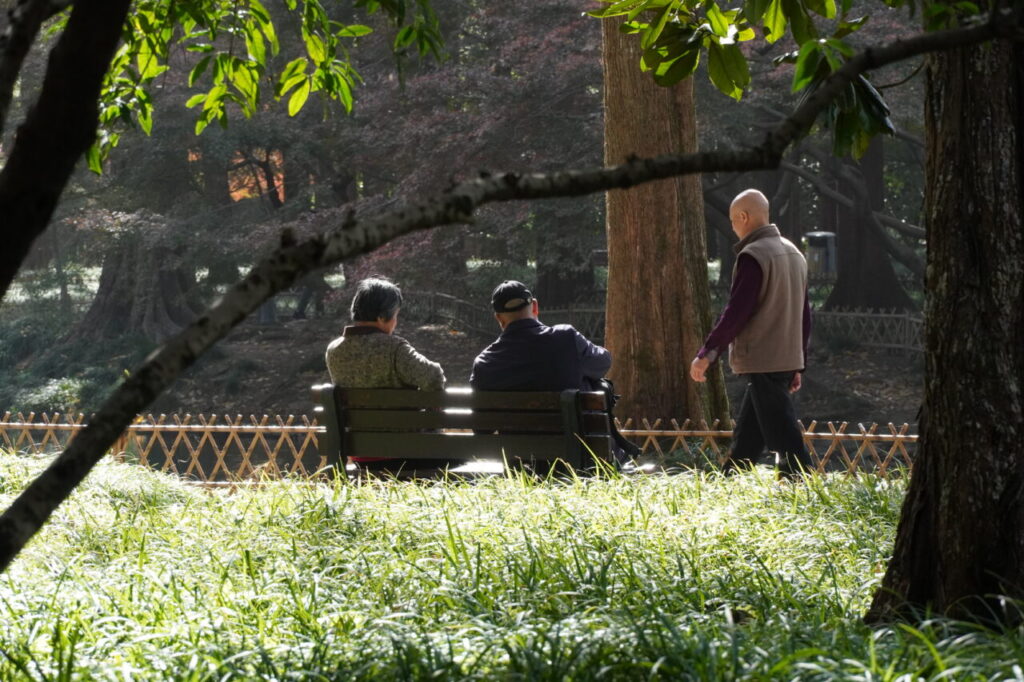
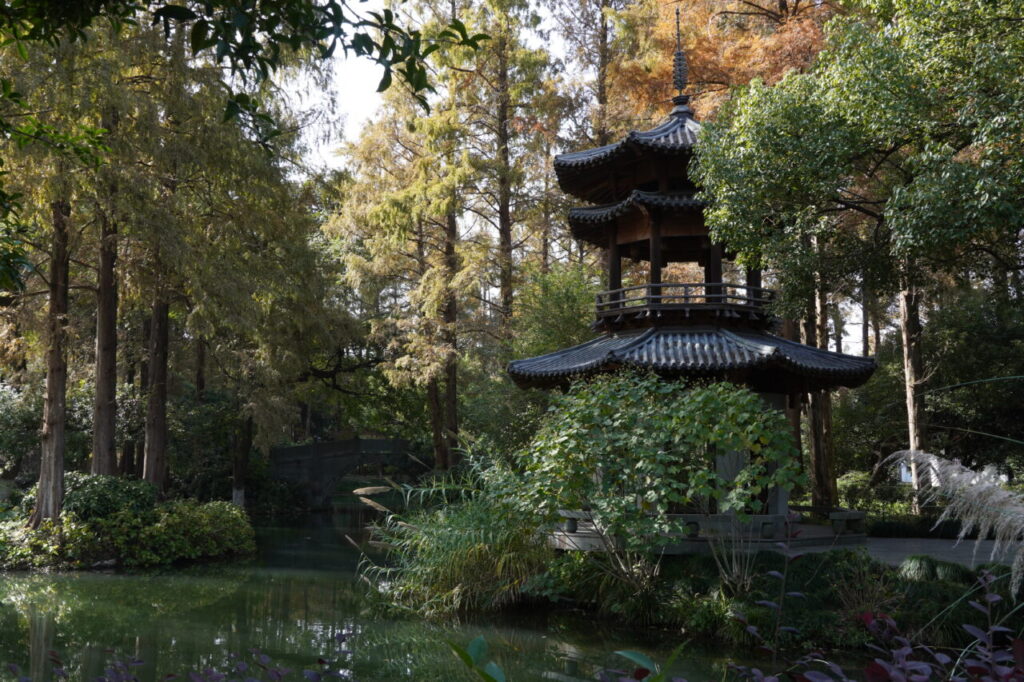
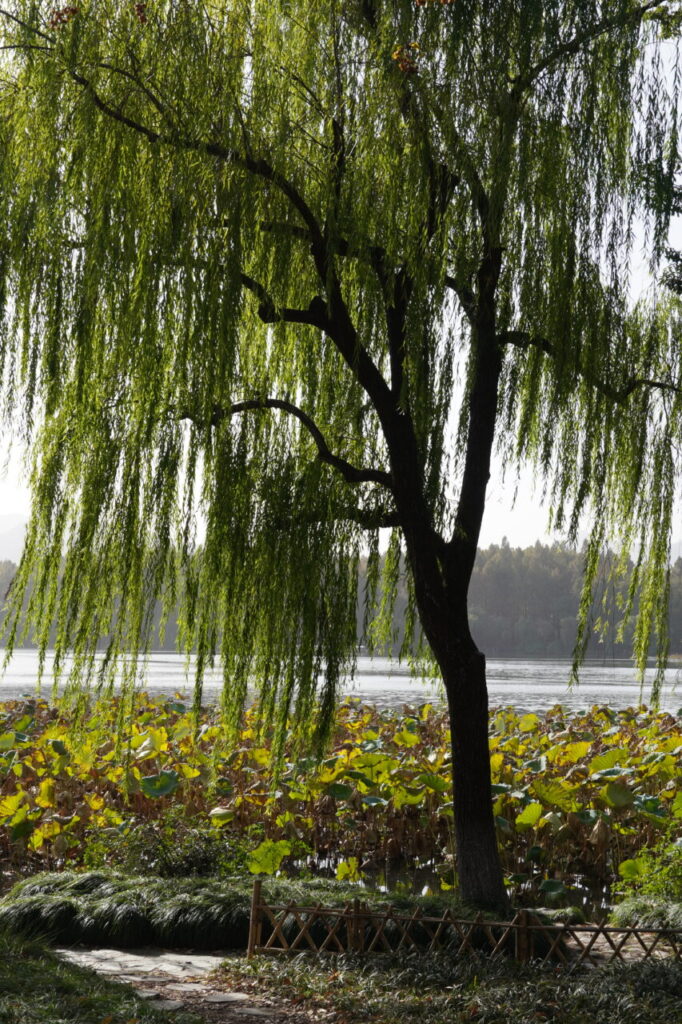
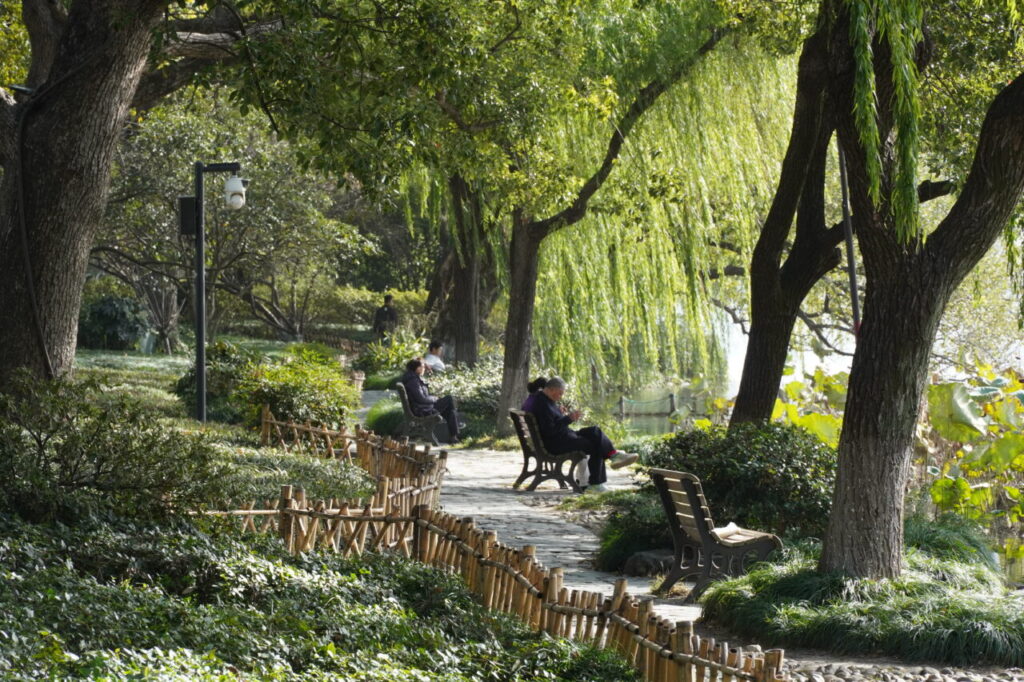
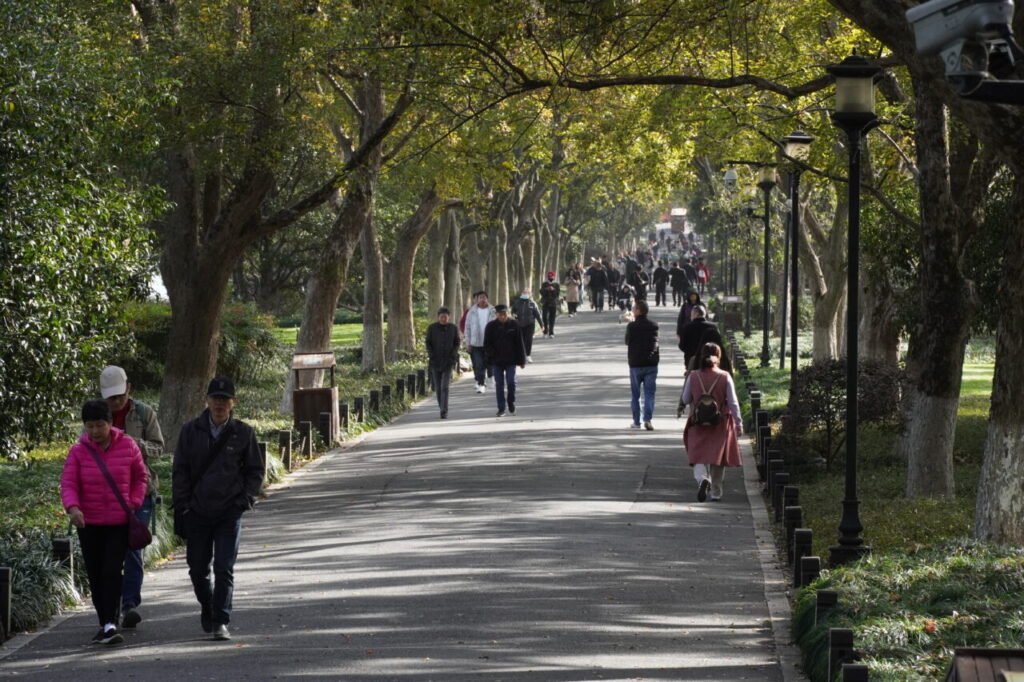
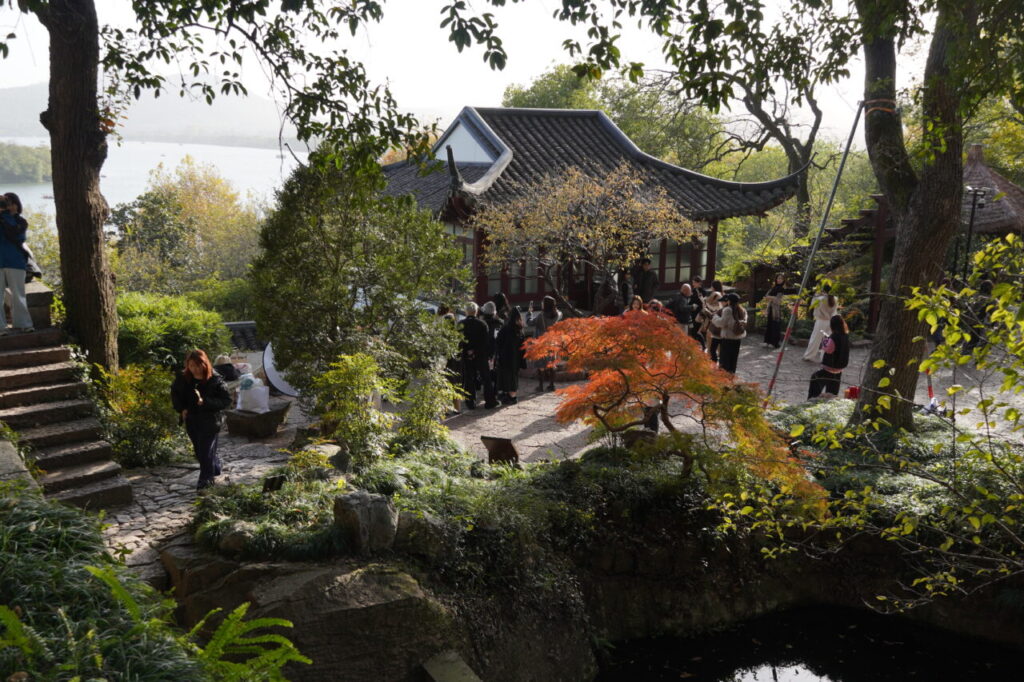
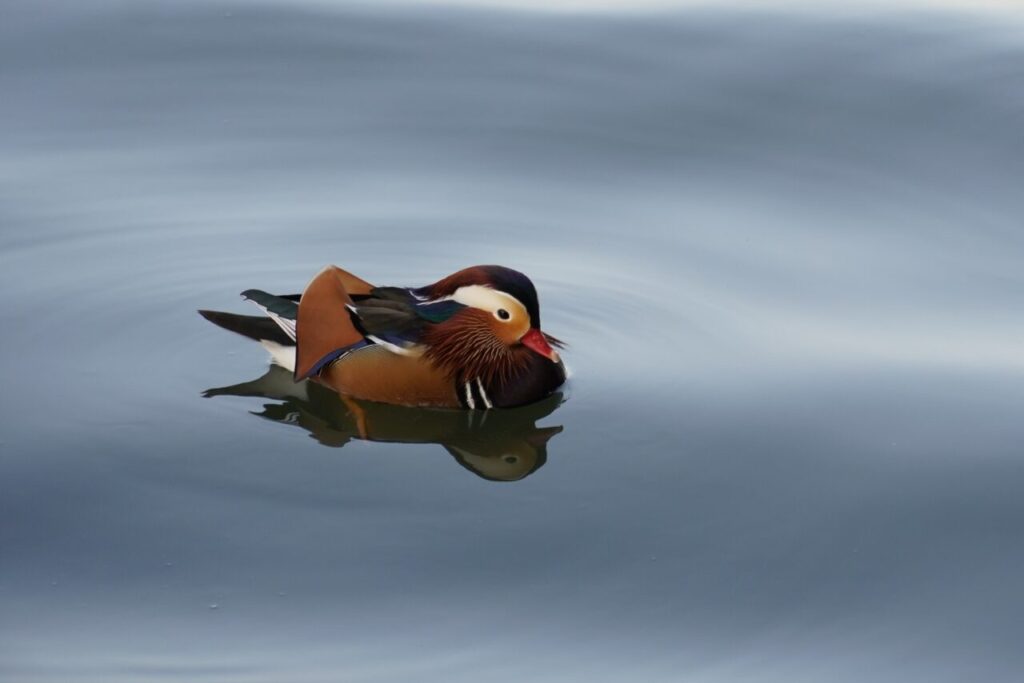
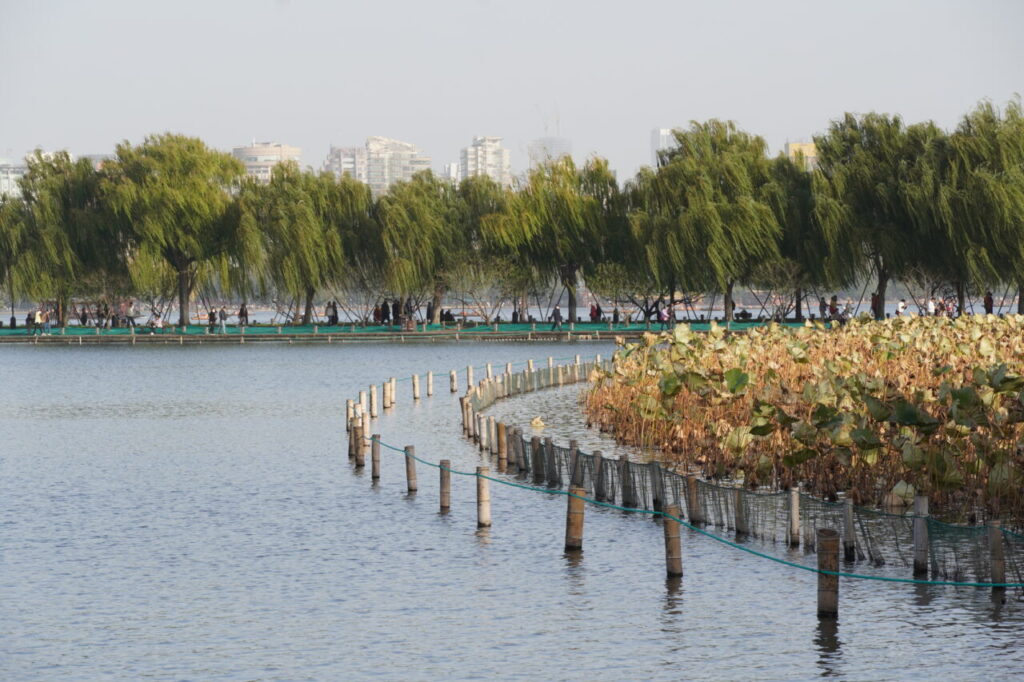
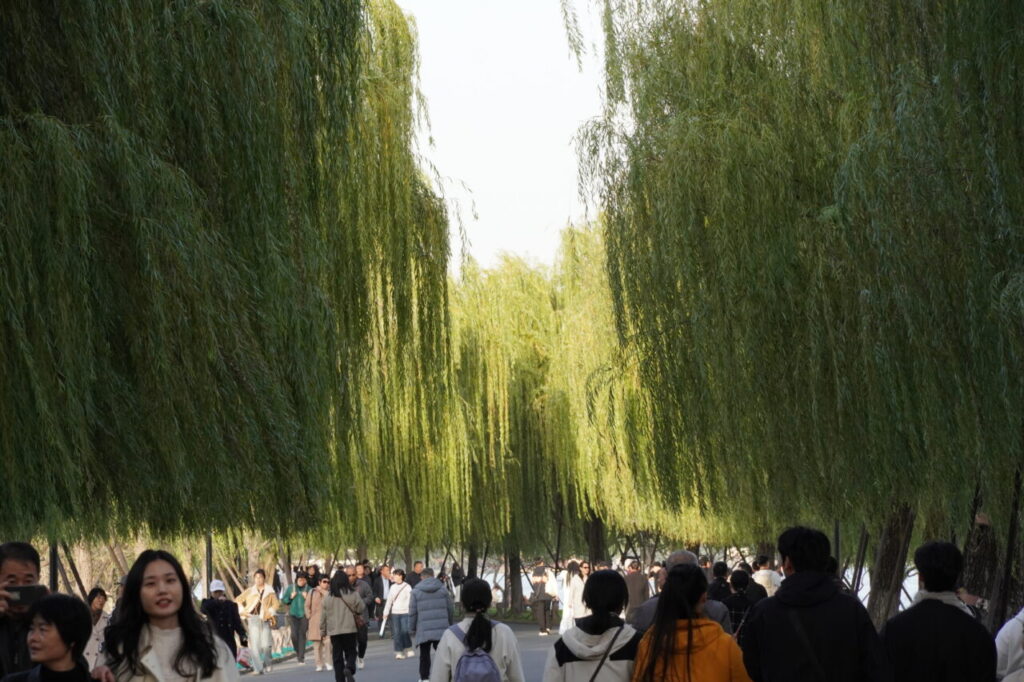
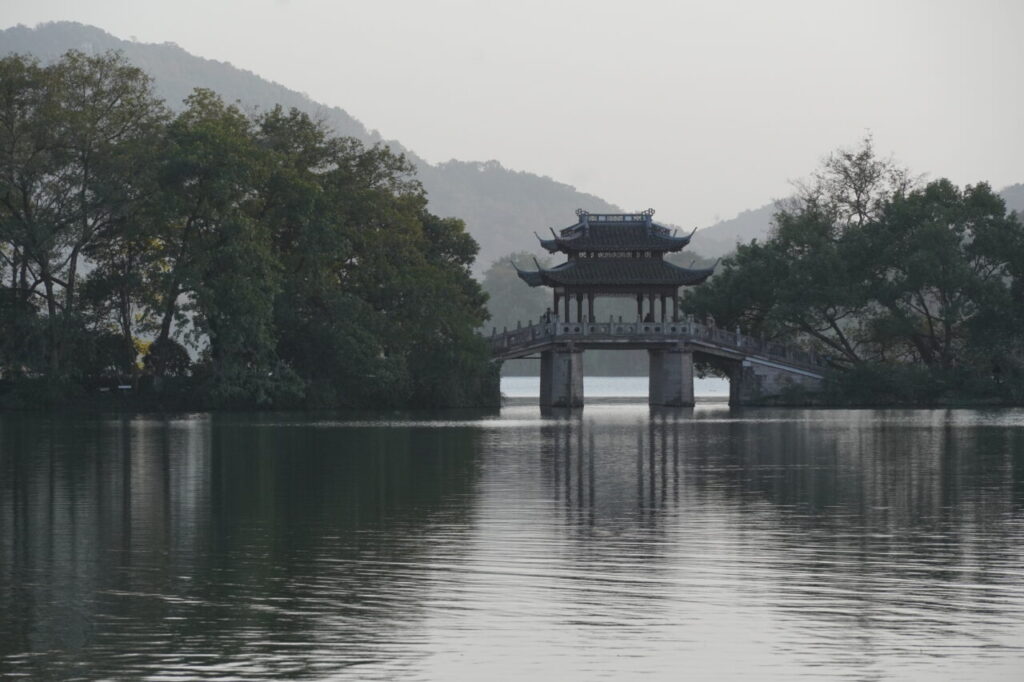
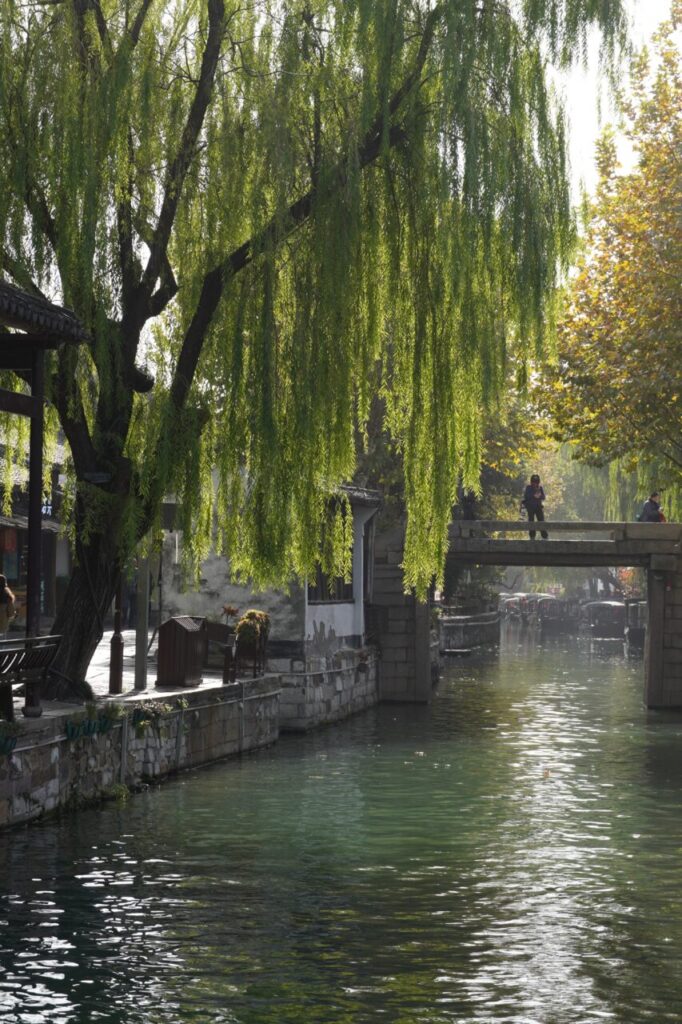
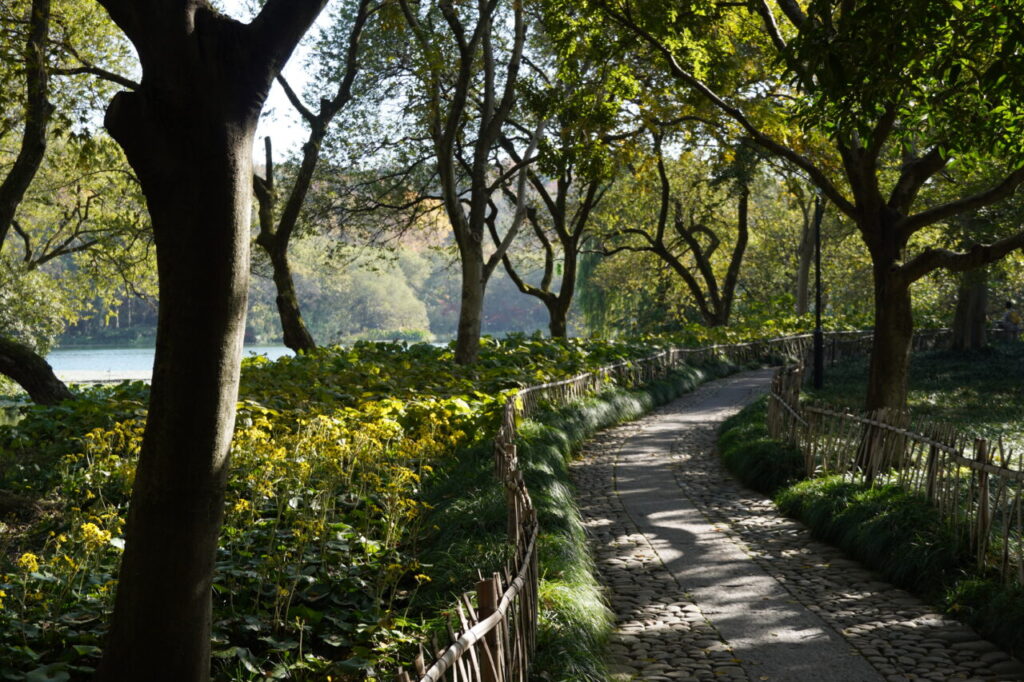
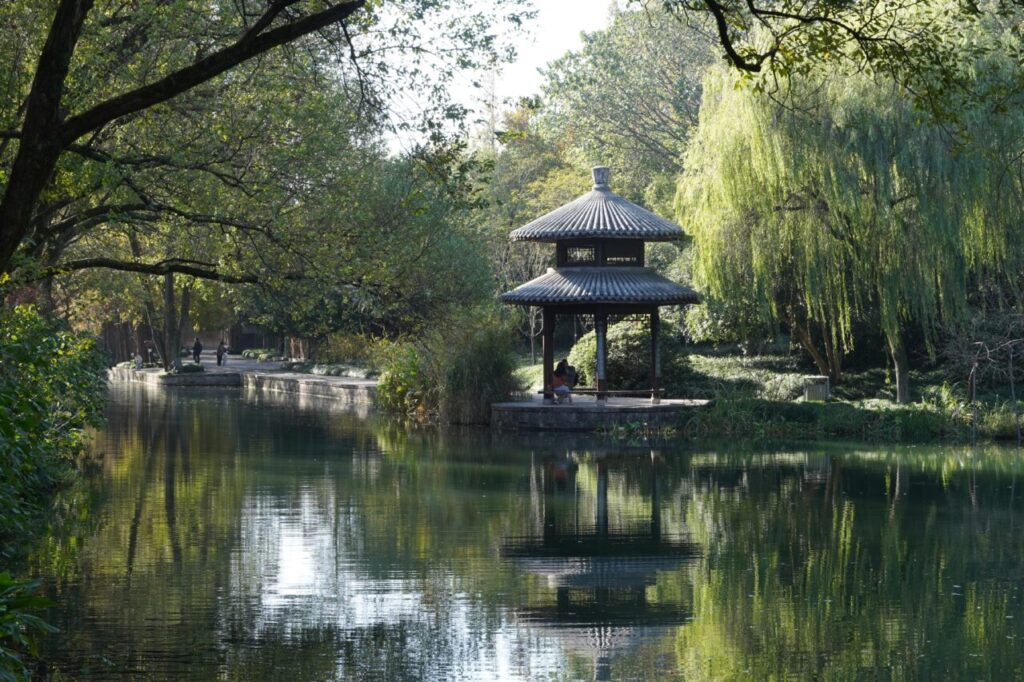
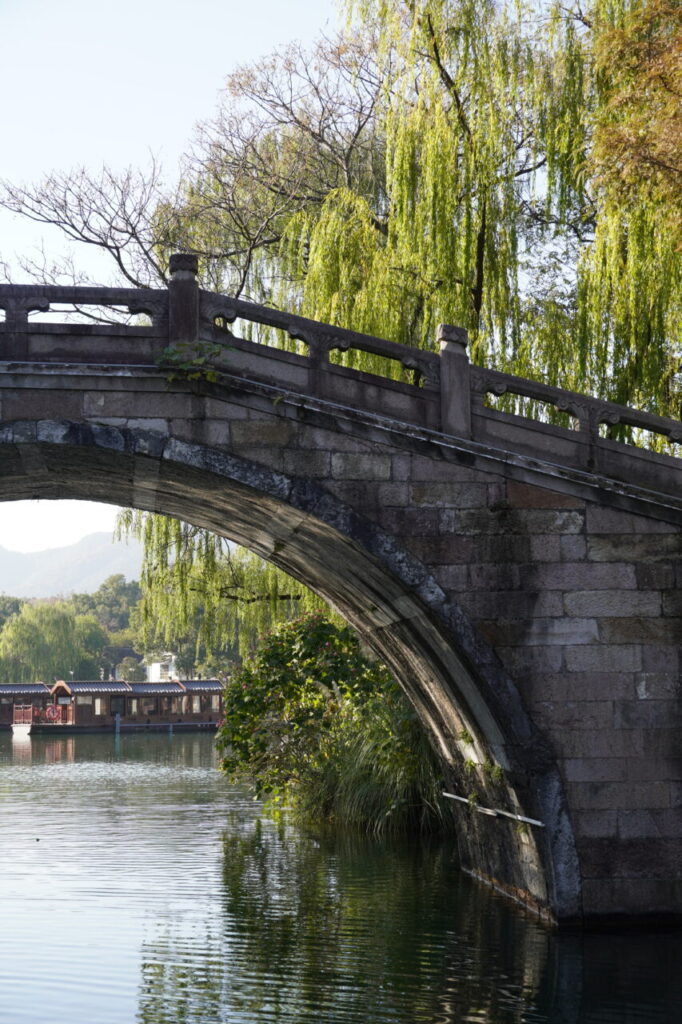
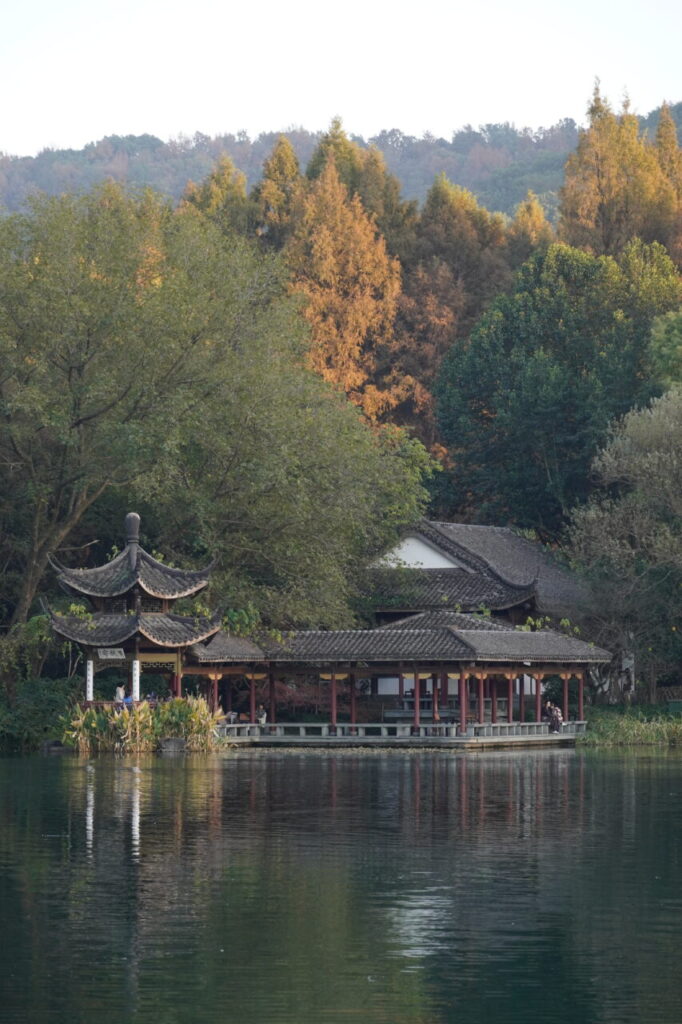
Today we wander around West Lake. Several paths wind through trees and canals. The road is never far away, yet it’s very quiet. Bridges and pavilions enhance the scenery. Hundreds of weeping willows slowly sway their branches in the breeze. I could stay here much longer!
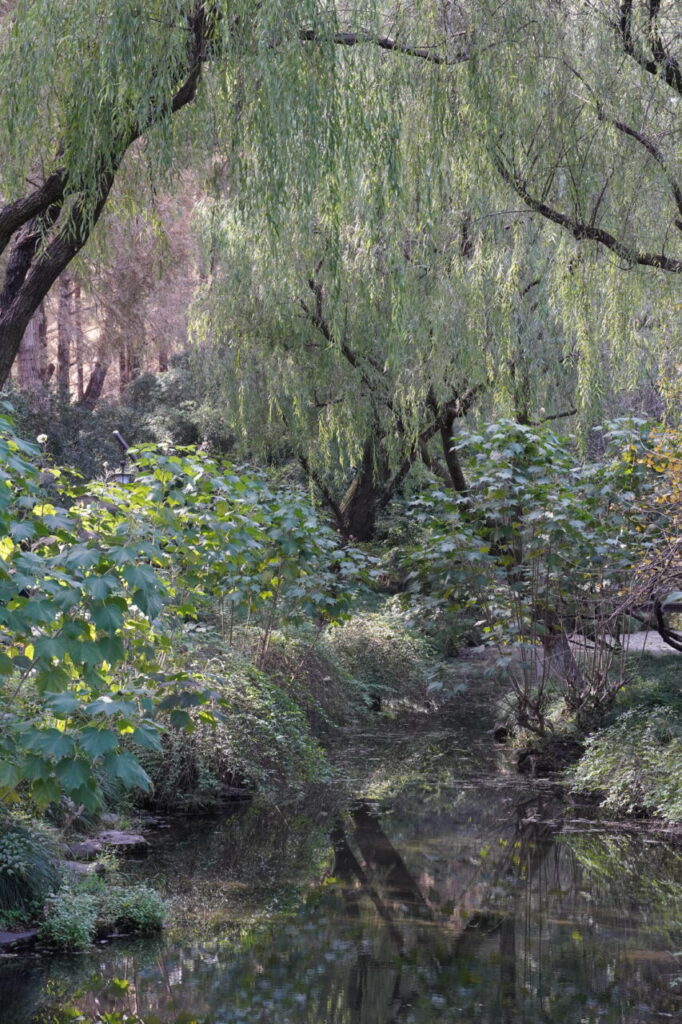
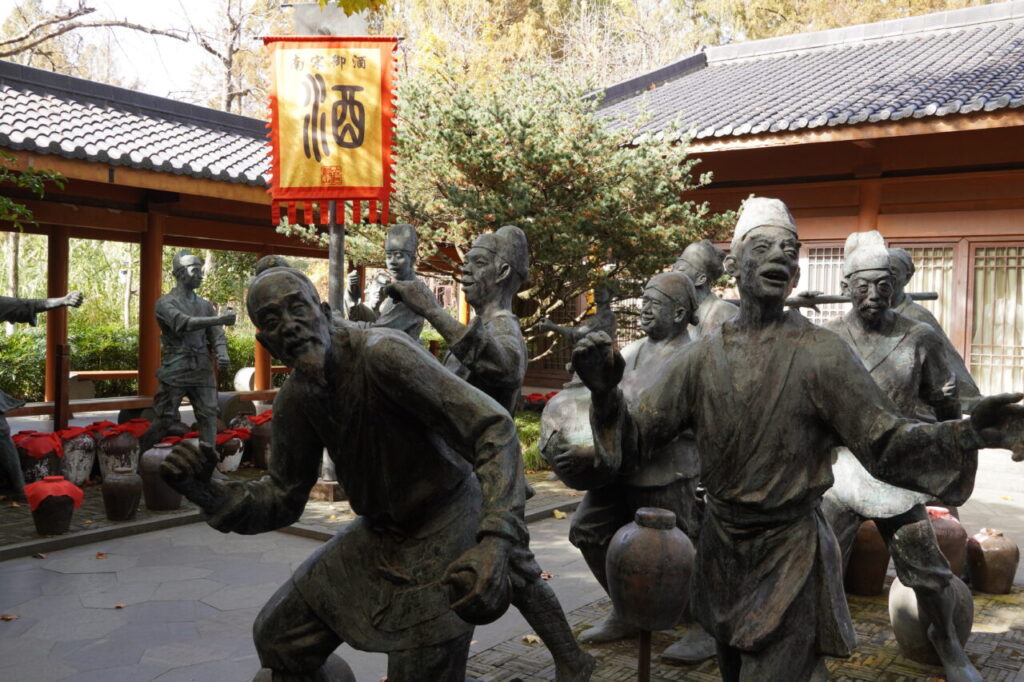
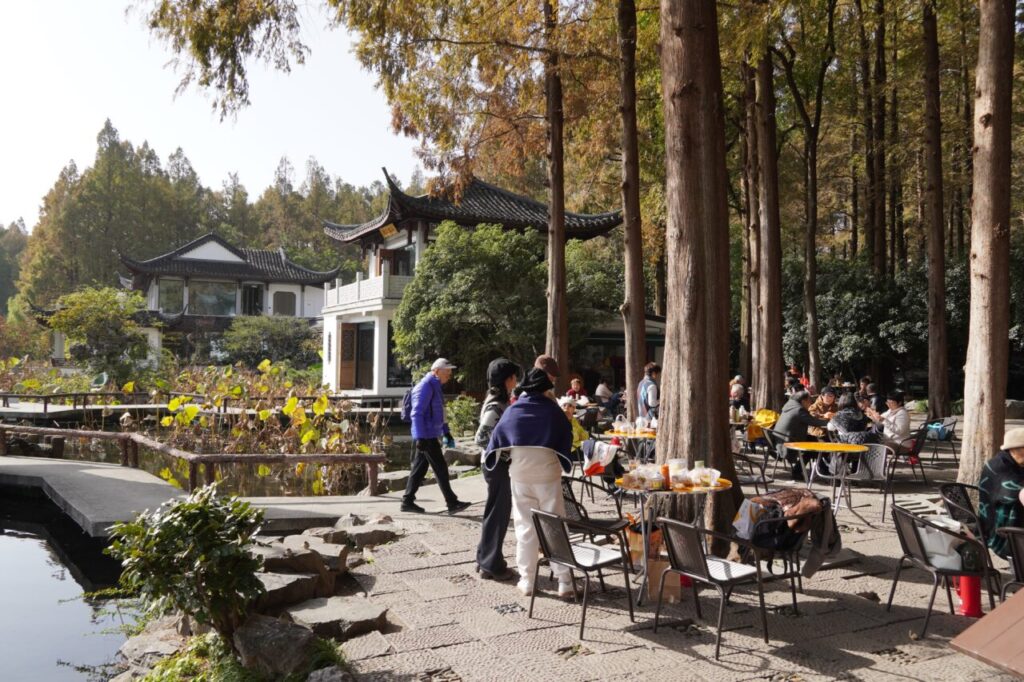
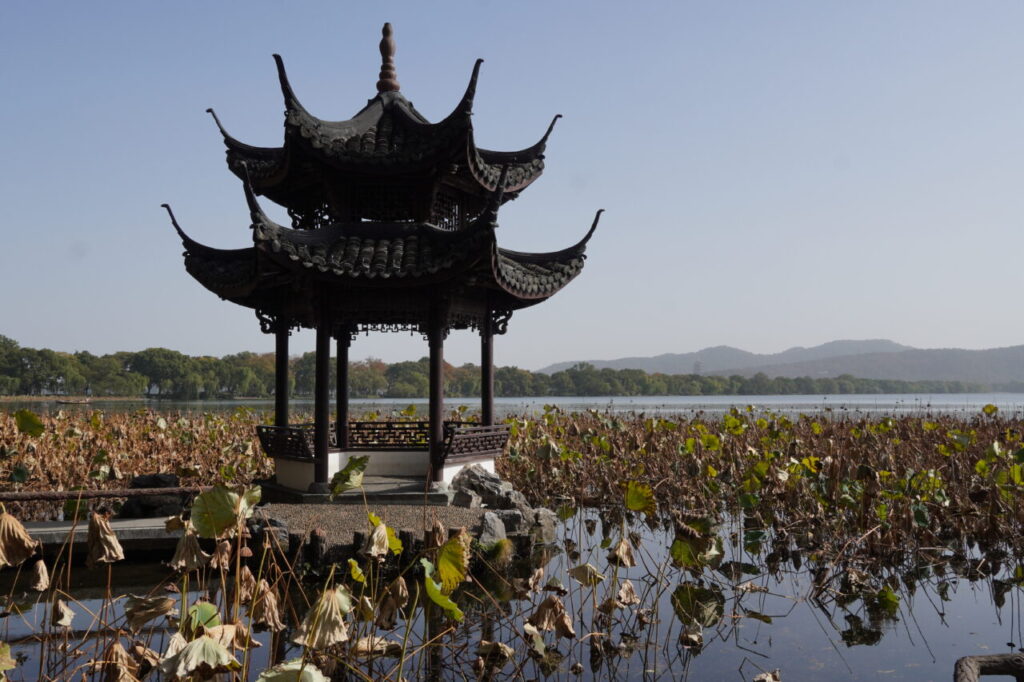
After the Su Causeway, we pass by the Xiling Seal Art Society, a place that houses ancient inscriptions and a few manuscripts.
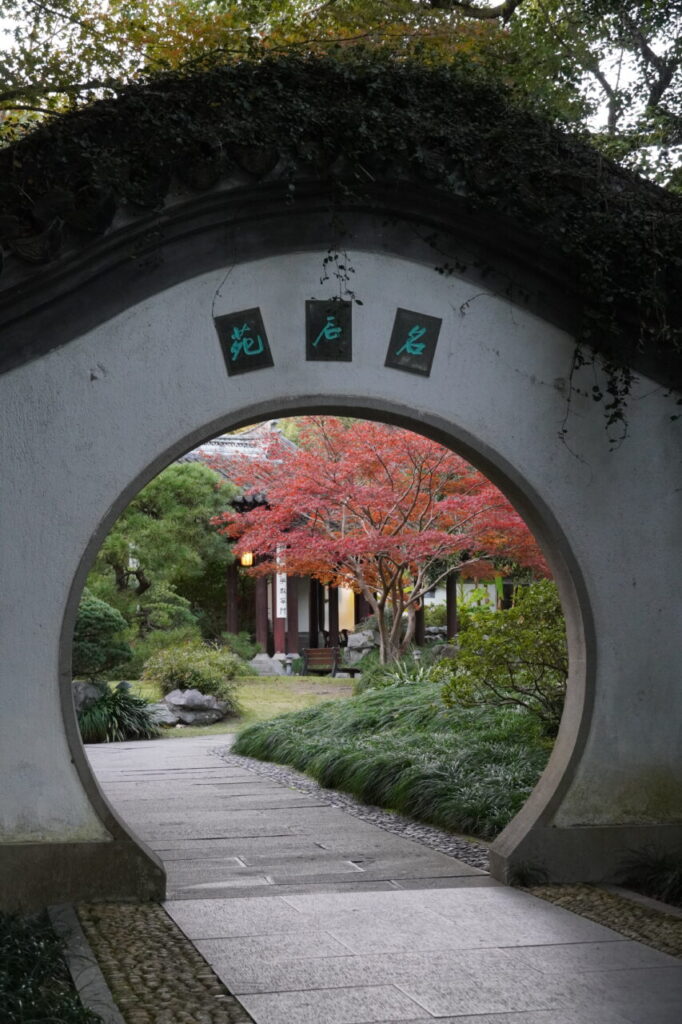
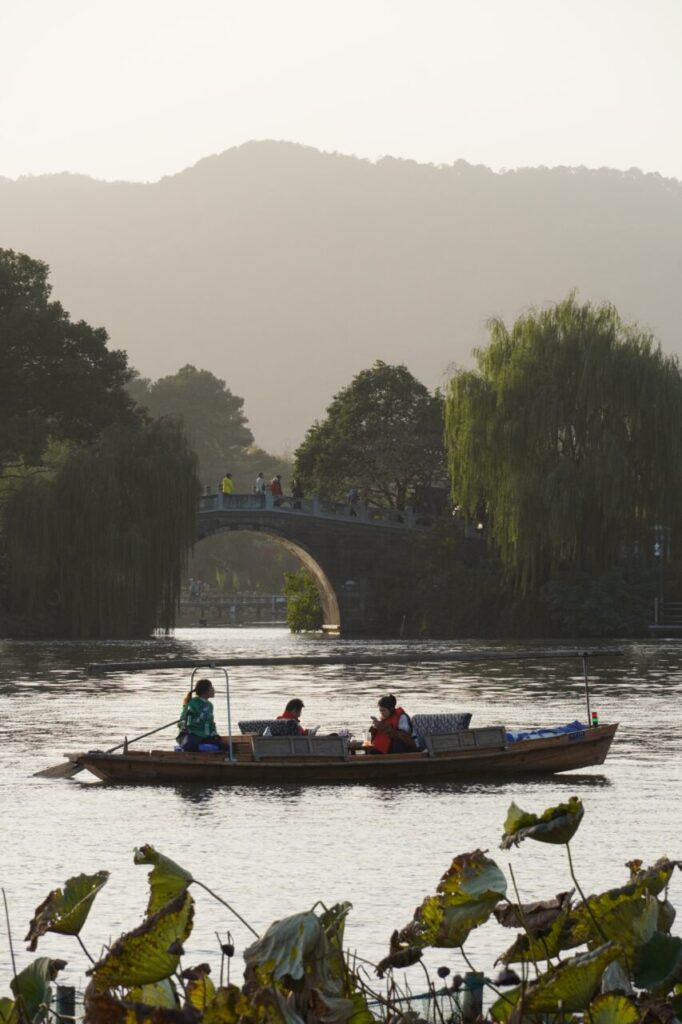
Day 4 – Around Longjing
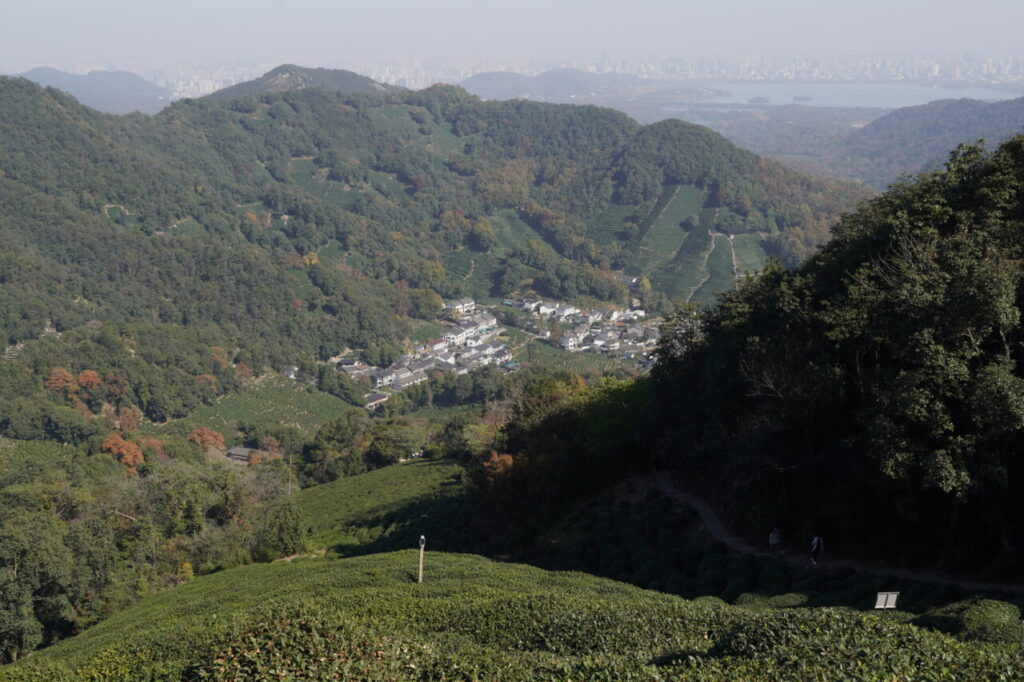
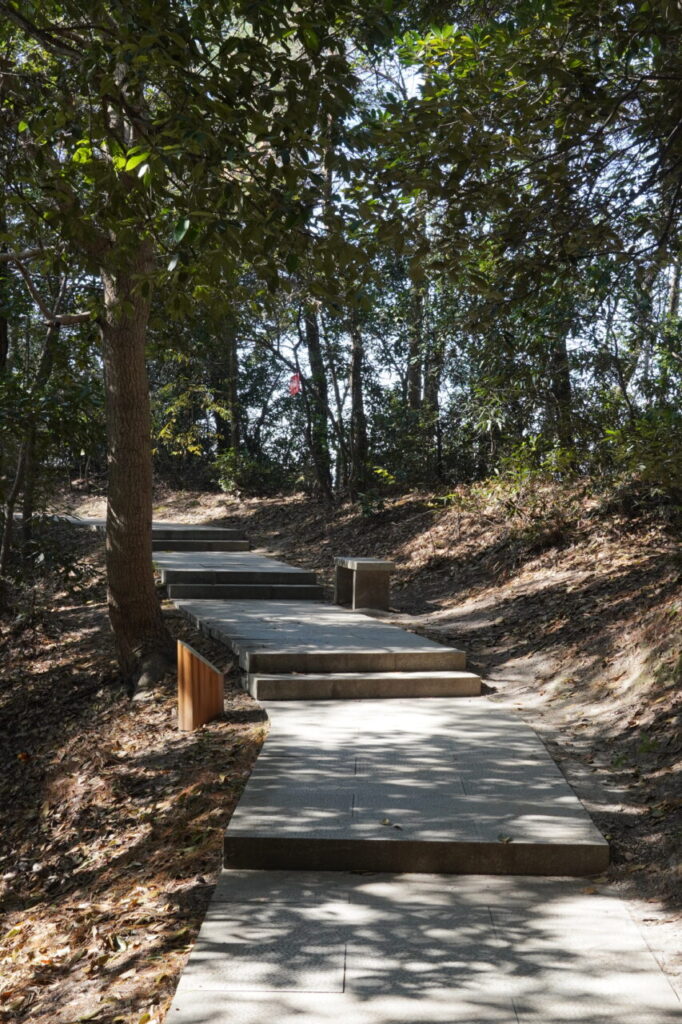
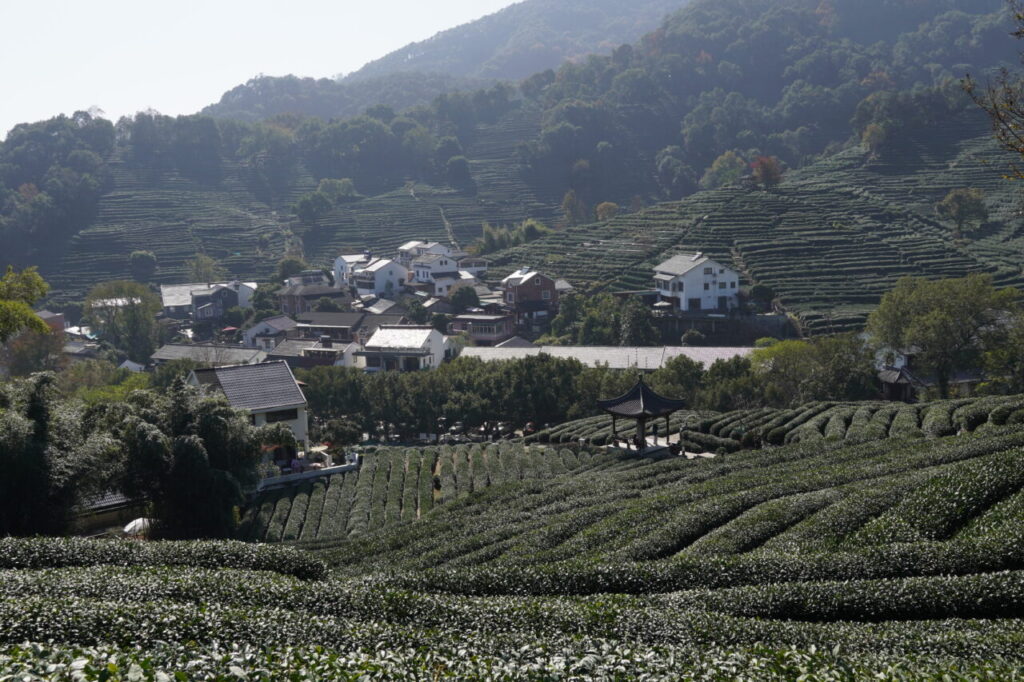
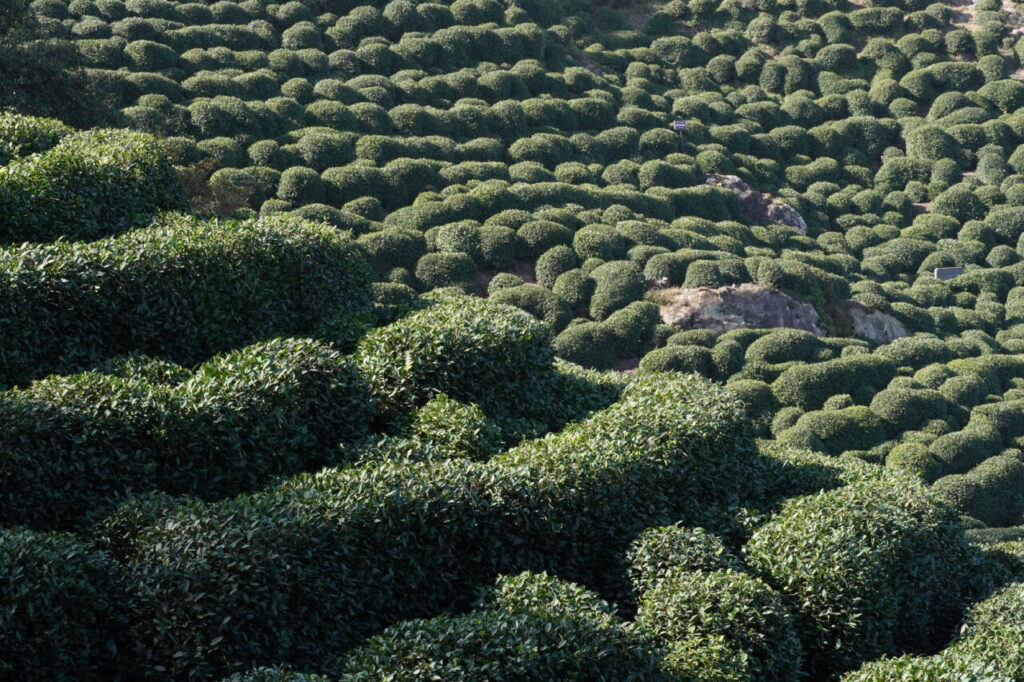
We take the bus to Meijawu, where we meet a friend. We climb a staircase winding through tea plantations. Leaving the terraced fields behind, we enter a forest and continue uphill. At the pass, we enjoy a sweeping view over the village of Longjing and the surrounding plantations. In the distance, we can make out West Lake and the towers of Hangzhou. The path is part of the Shili Langyao, a network of routes that crosses the region and once linked its main temples.
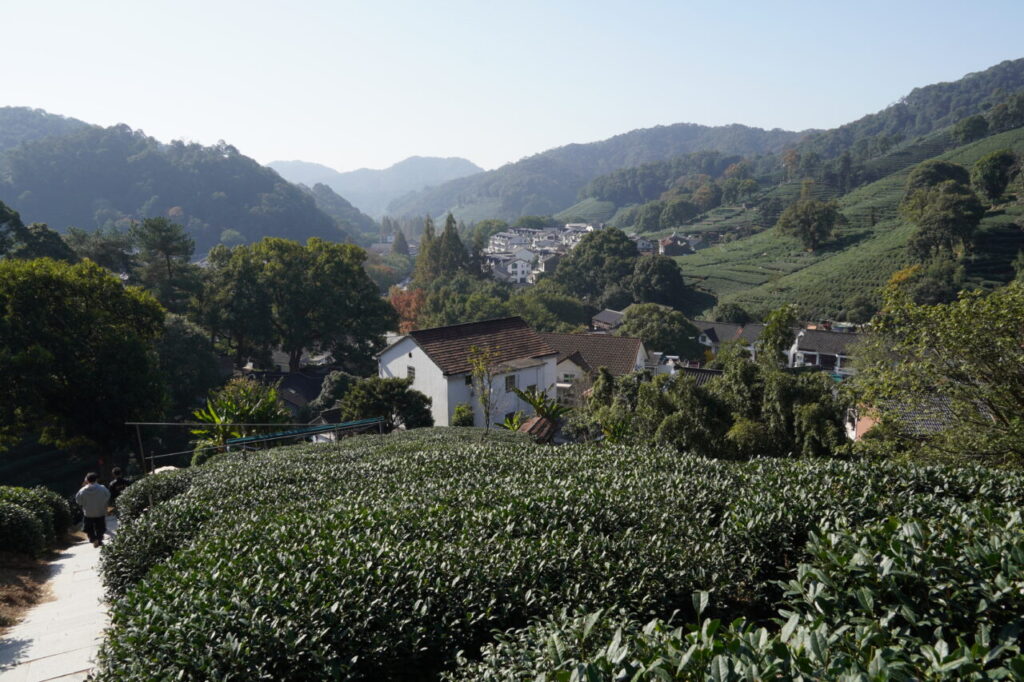
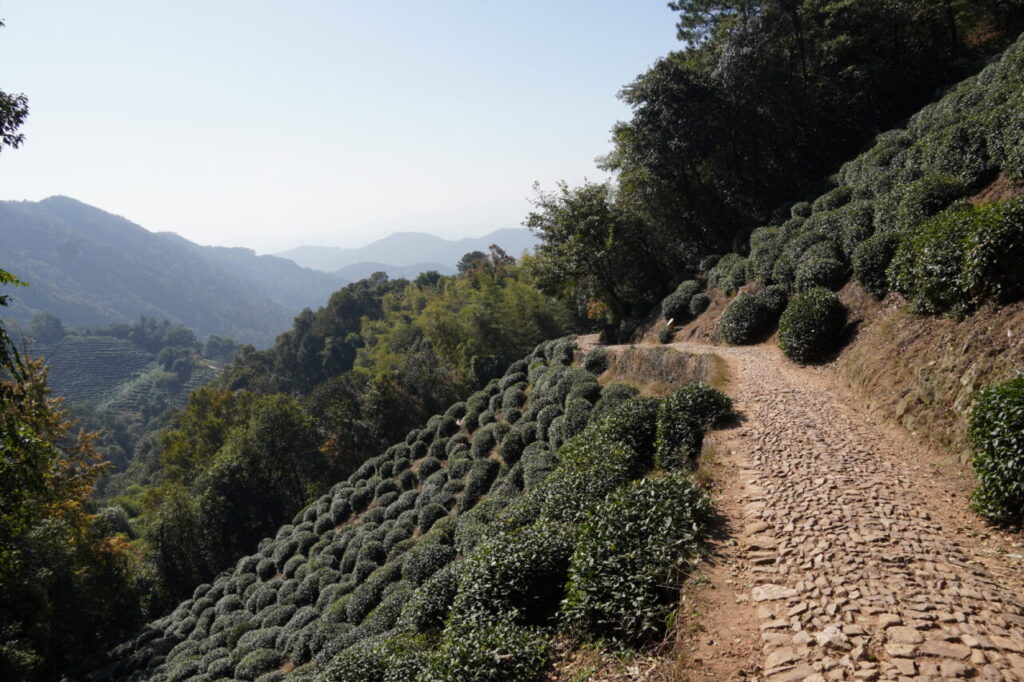
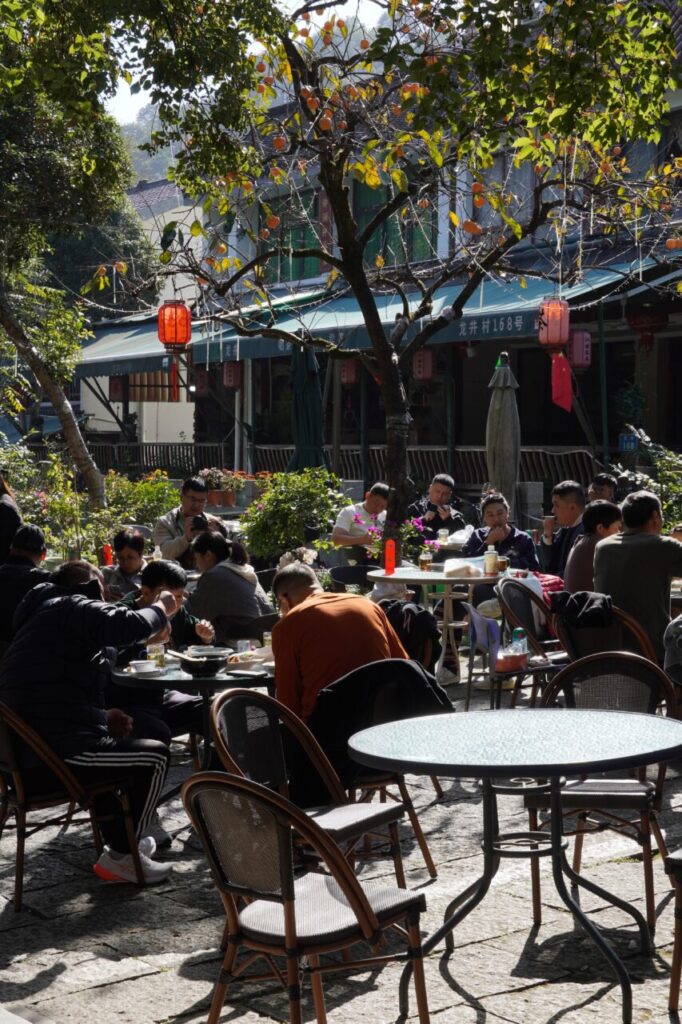
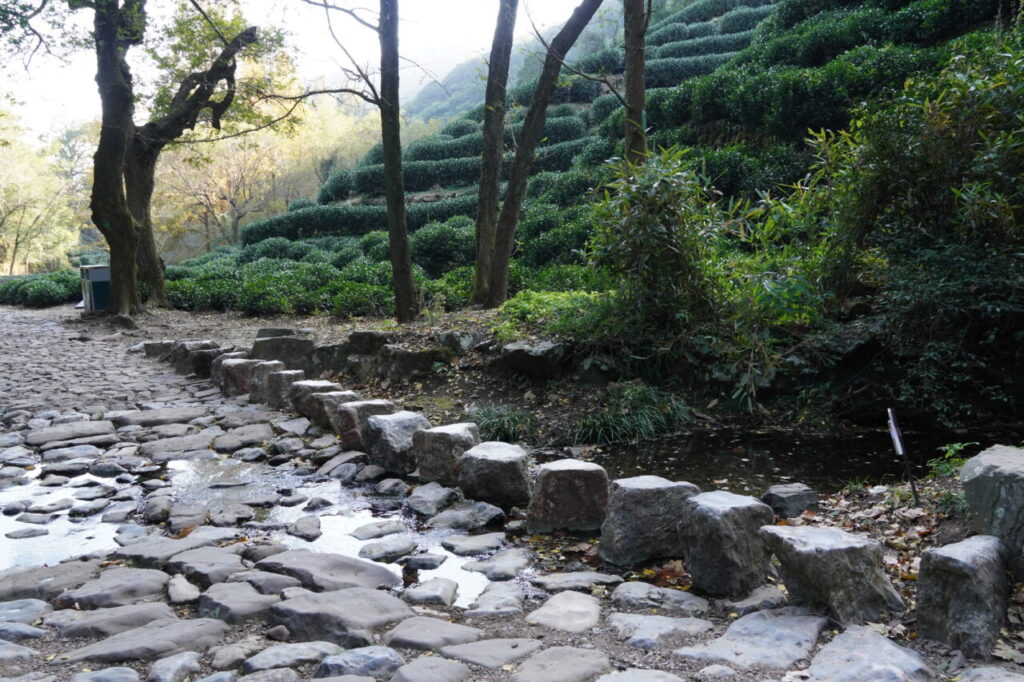
We descend quickly to the village and stop for lunch. Then we follow a path that now runs alongside a stream, sometimes on the right, sometimes on the left. The stream crosses the path nine times in total! There are no bridges—the trail literally runs through the streambed. Each time, large stones placed to the side allow you to keep your feet dry. The path opens onto a lovely pond flanked by a maple tree.
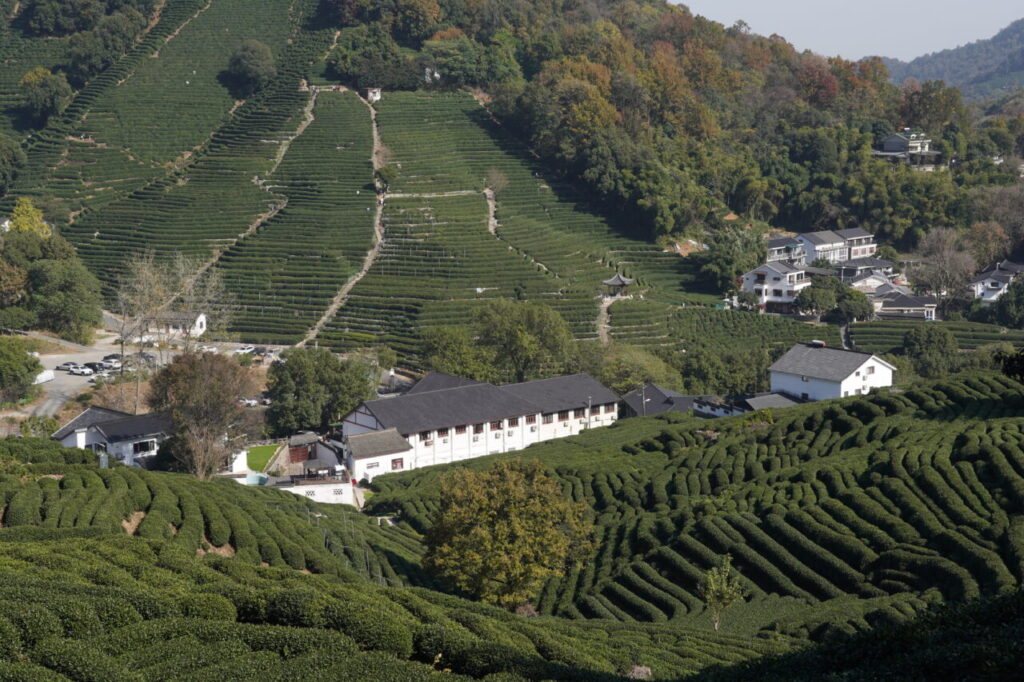
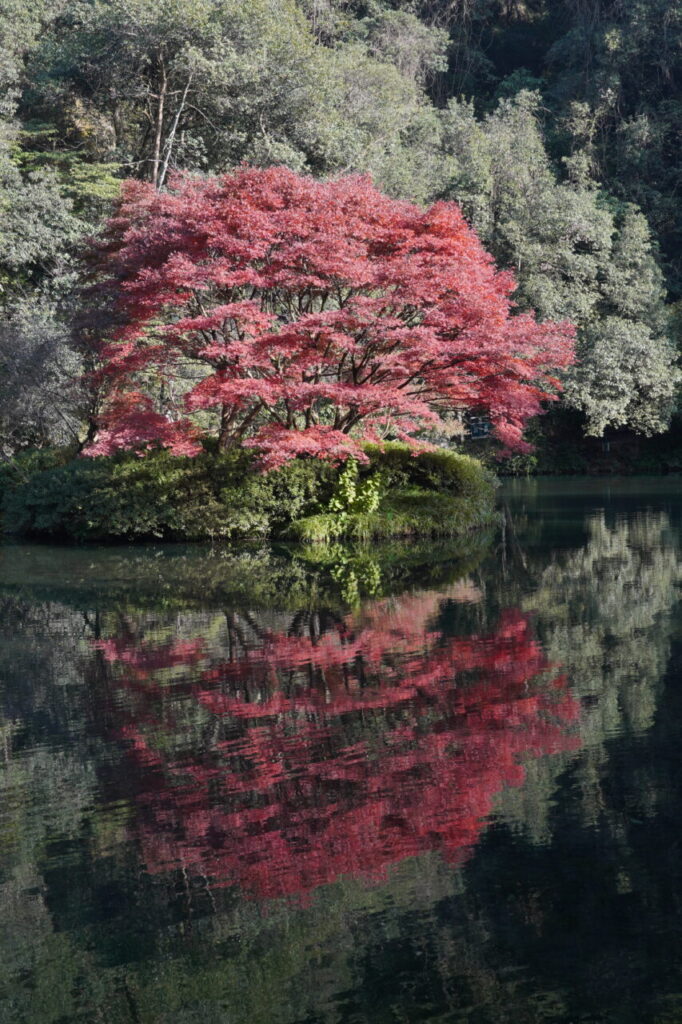
We finally reach the banks of the impressive Qiantang River, and a bus takes us back to the city center. A short urban bike ride to a restaurant, followed by some well-earned relaxation!
Days 5 and 6 – Nanxun
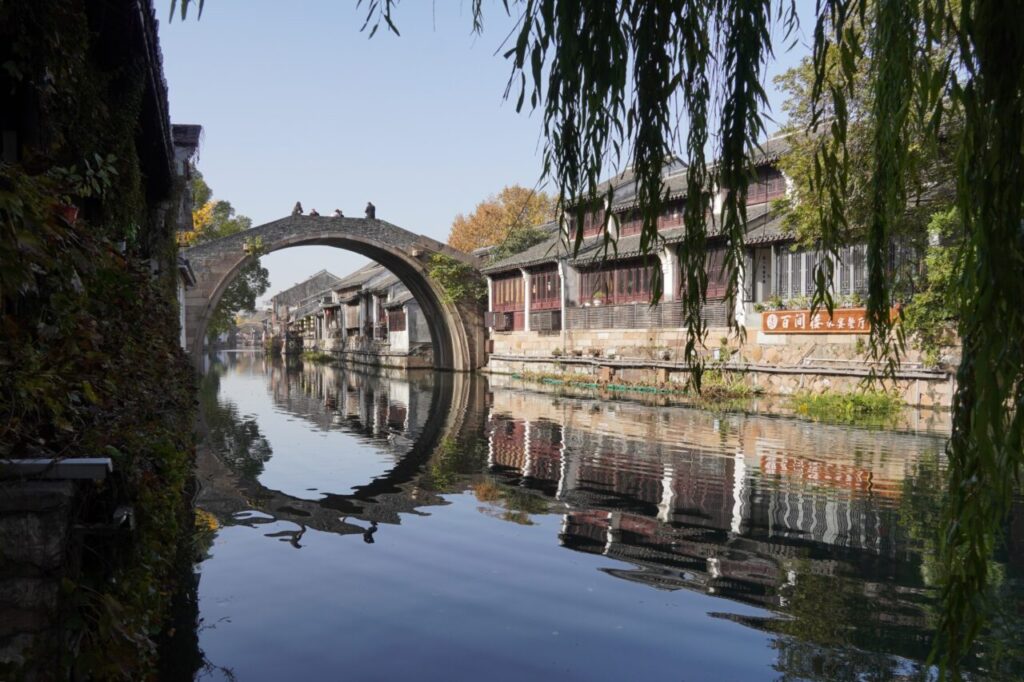
Nanxun is a town founded in the 13th century in Huzhou Prefecture. It has modernized smoothly over time, but a historic district remains at its center.
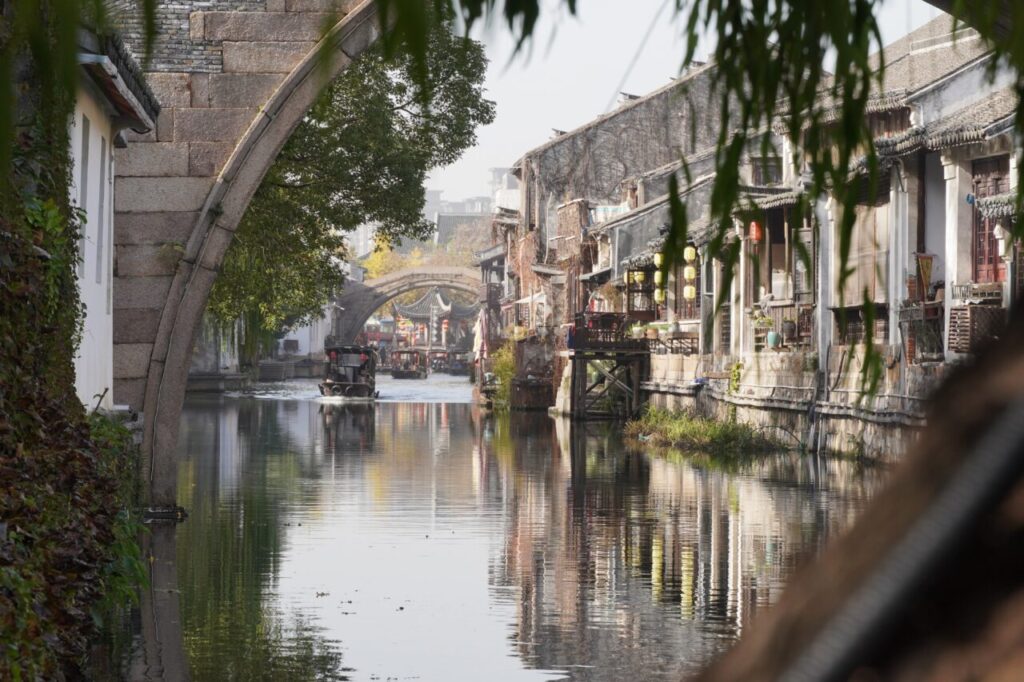
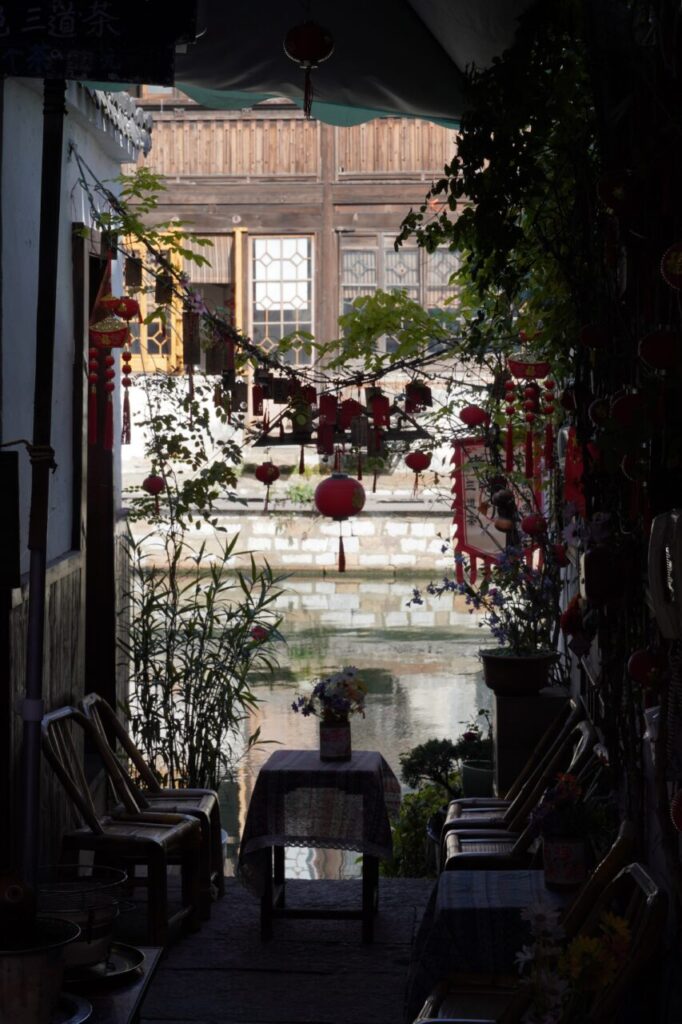
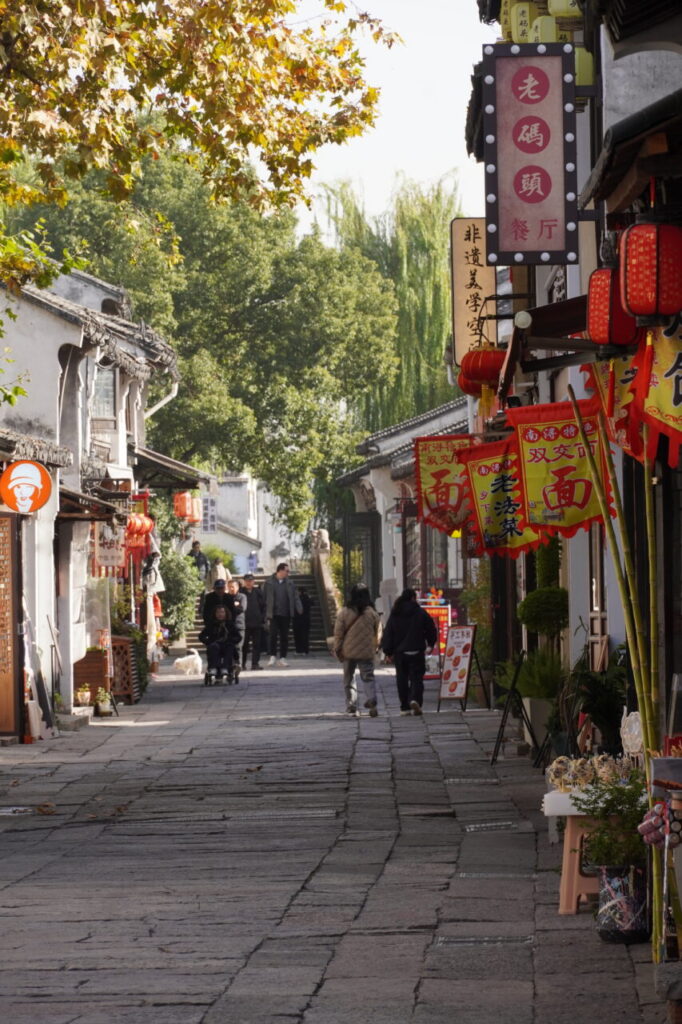
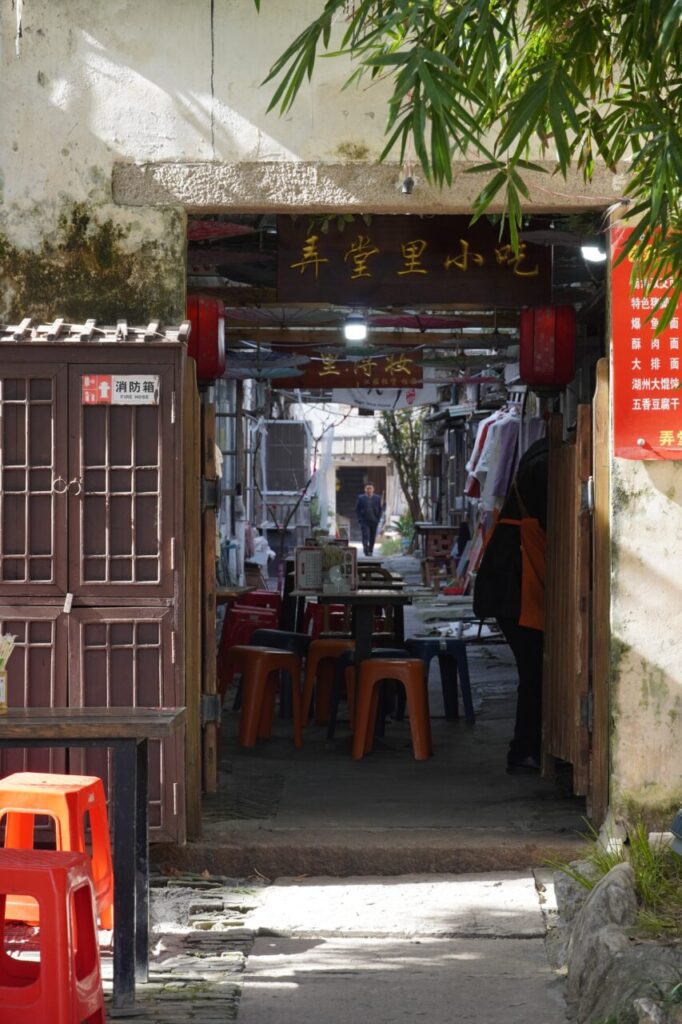
It’s already dark when we arrive after a rather eventful journey. The narrow streets along the canal are well lit, and the atmosphere is calm. We grab a hot meal, then head back to the hotel.
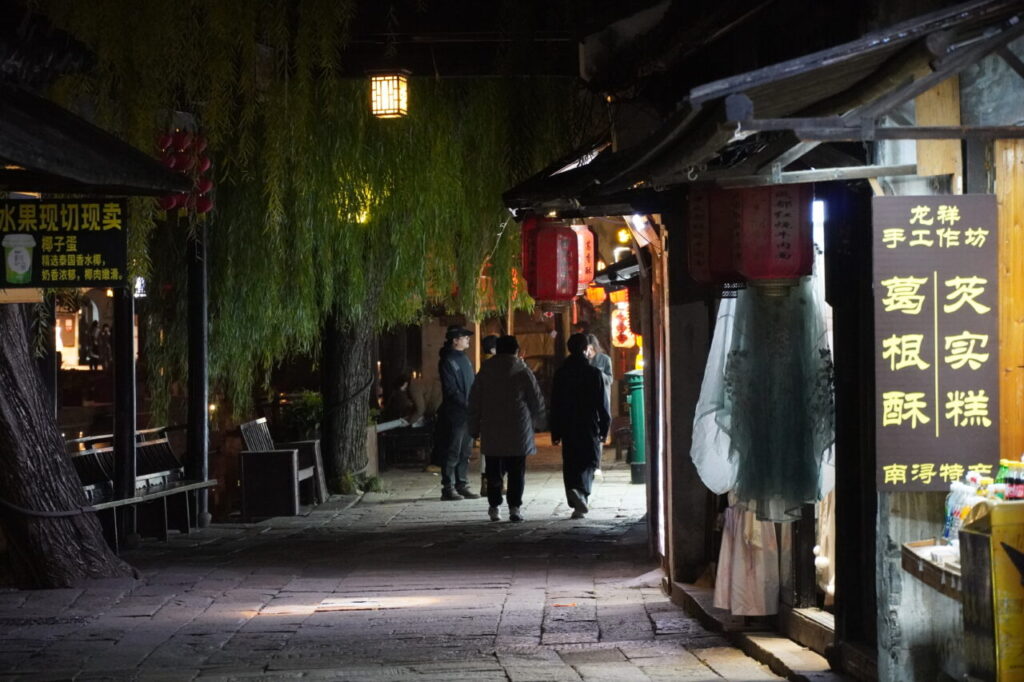
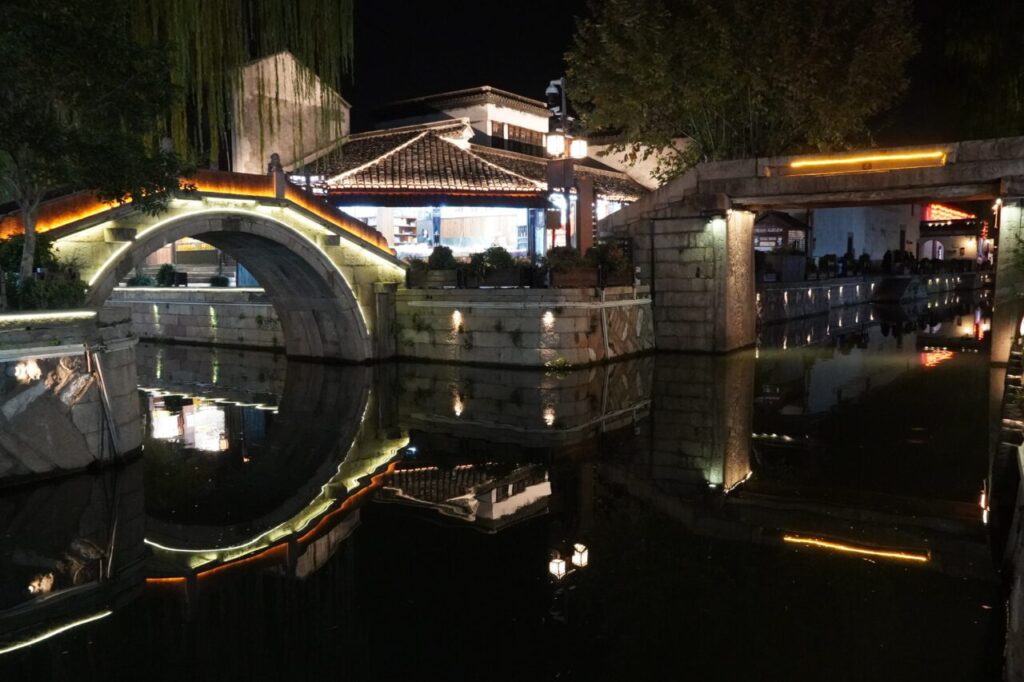
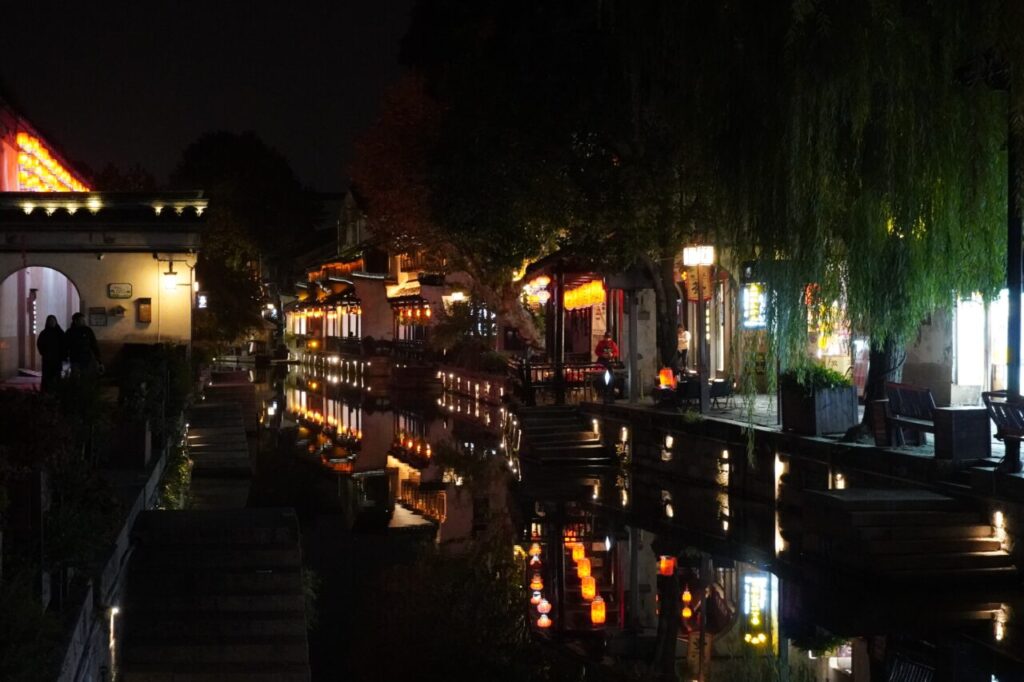
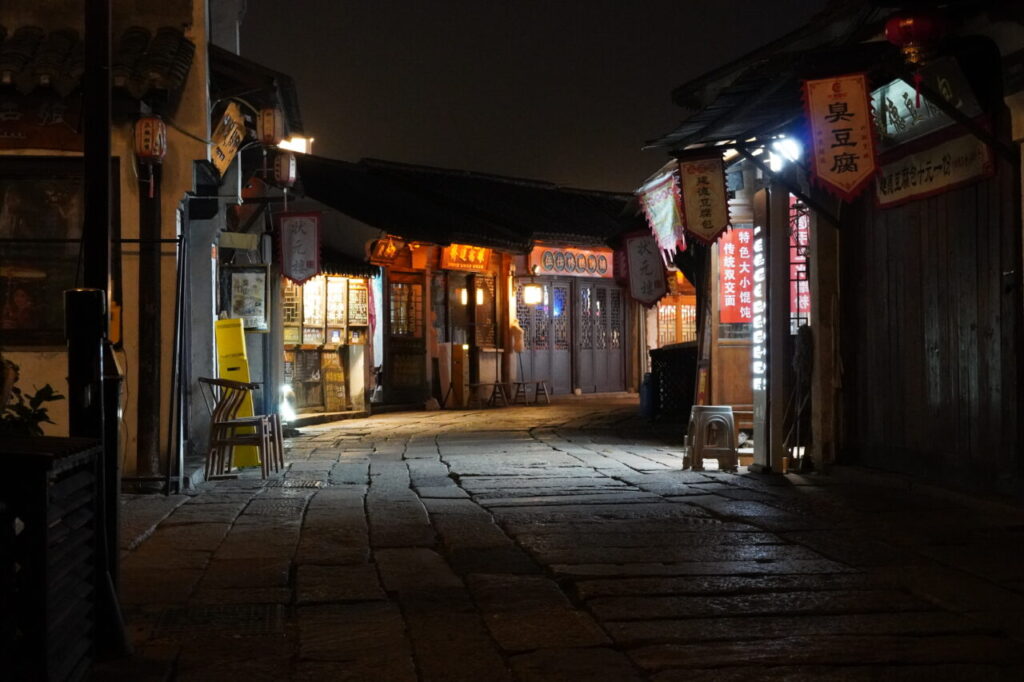
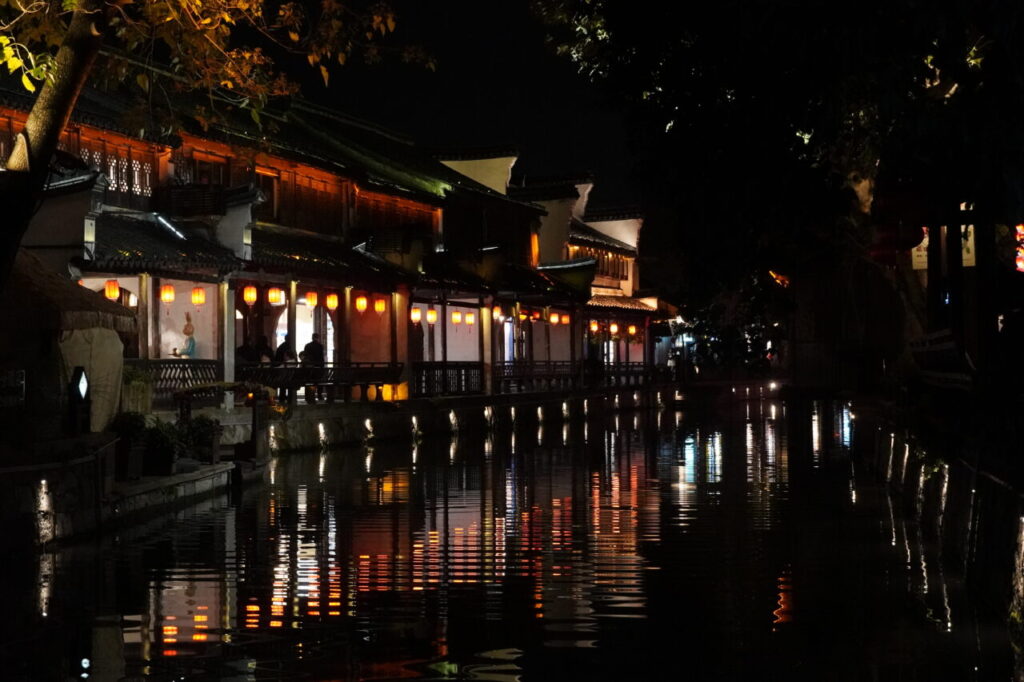
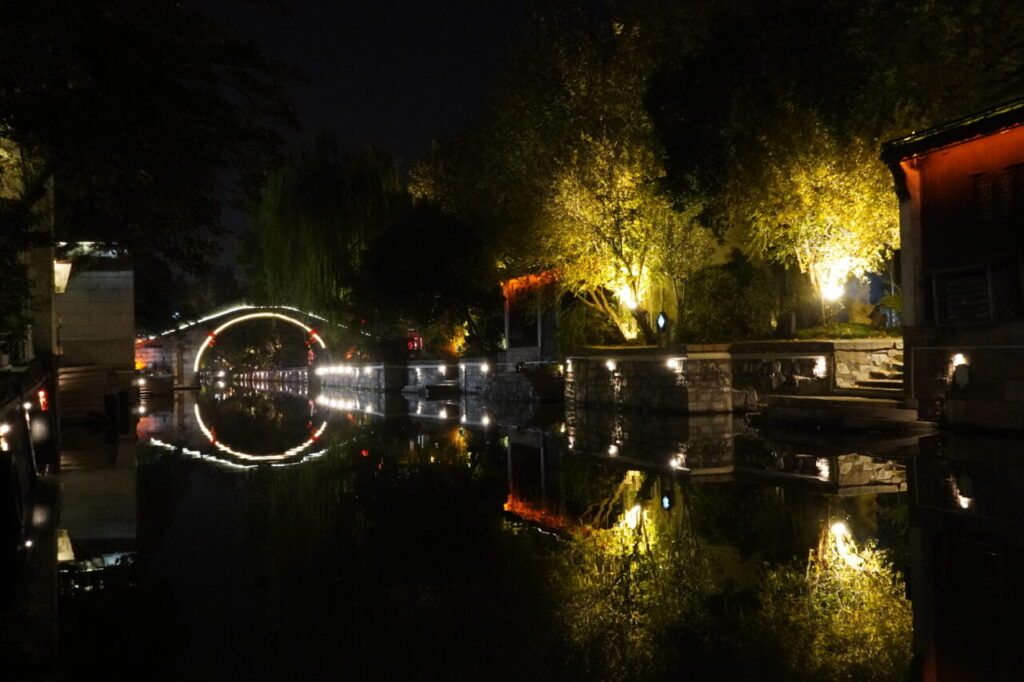
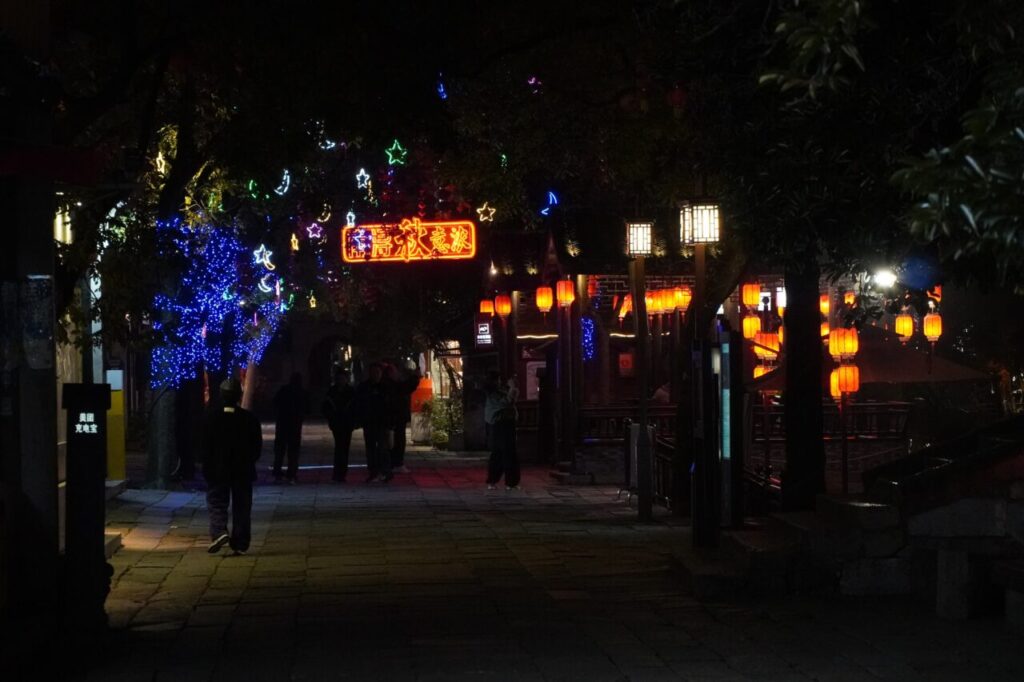
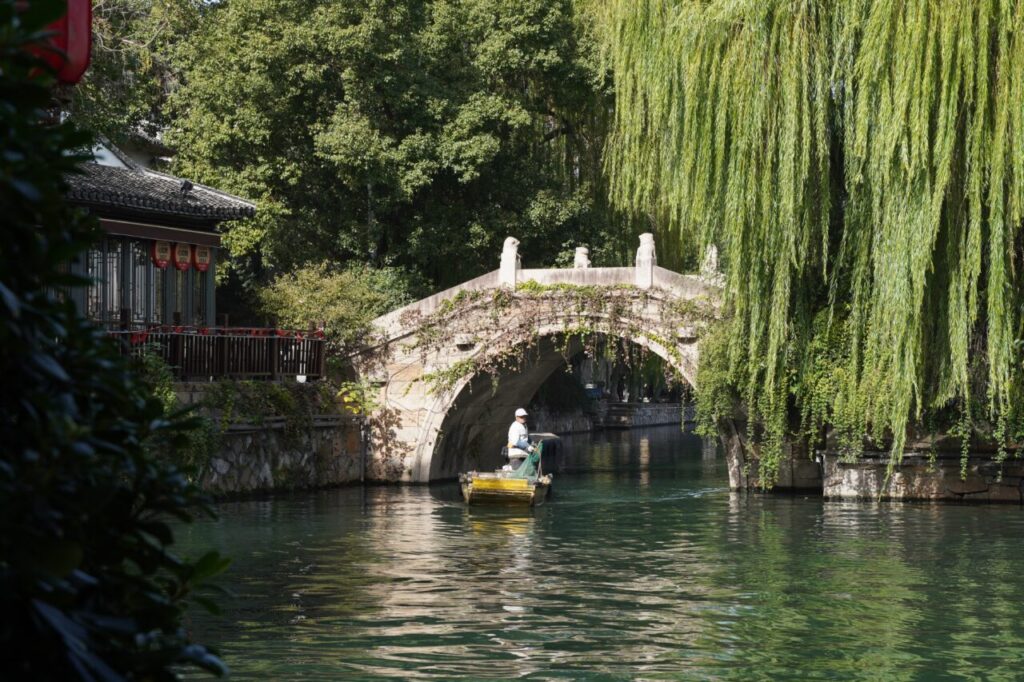
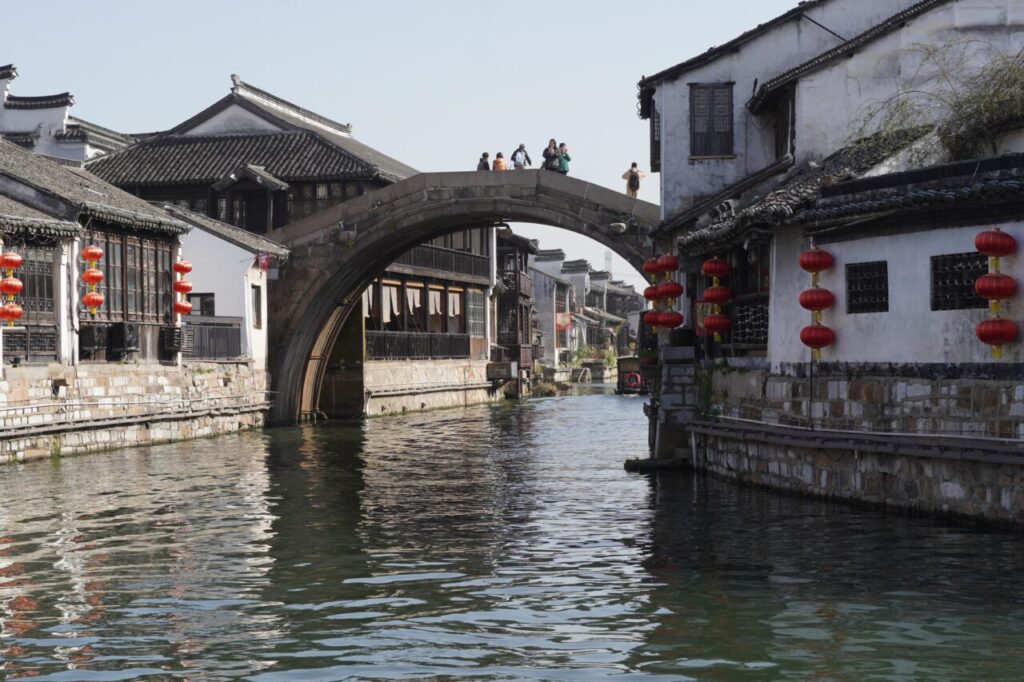
The next morning, we finish exploring what we started the day before. Bridges and façades reflect in the canal waters. It feels good to be here! Soon, however, more visitors arrive, and it becomes difficult to pass one another along the narrow embankments. Time to head back to Hangzhou.
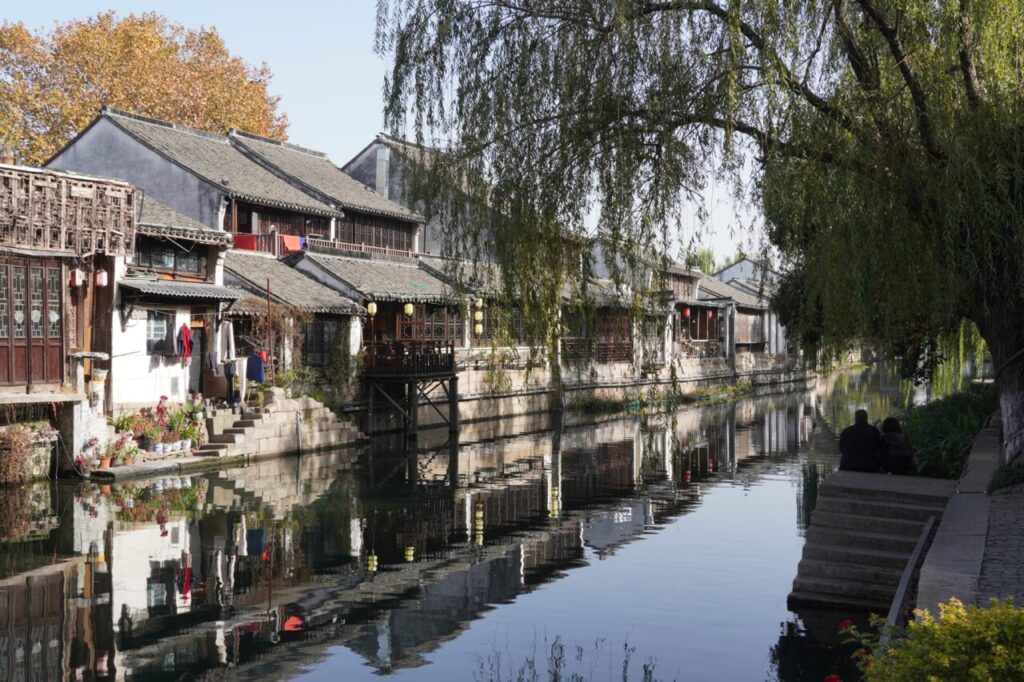
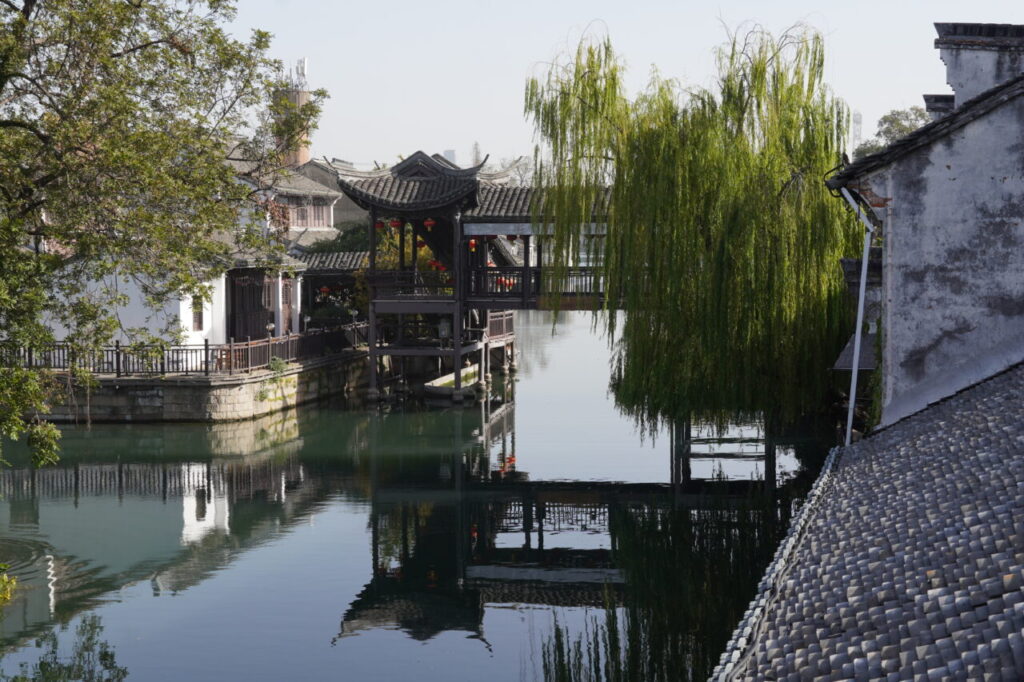
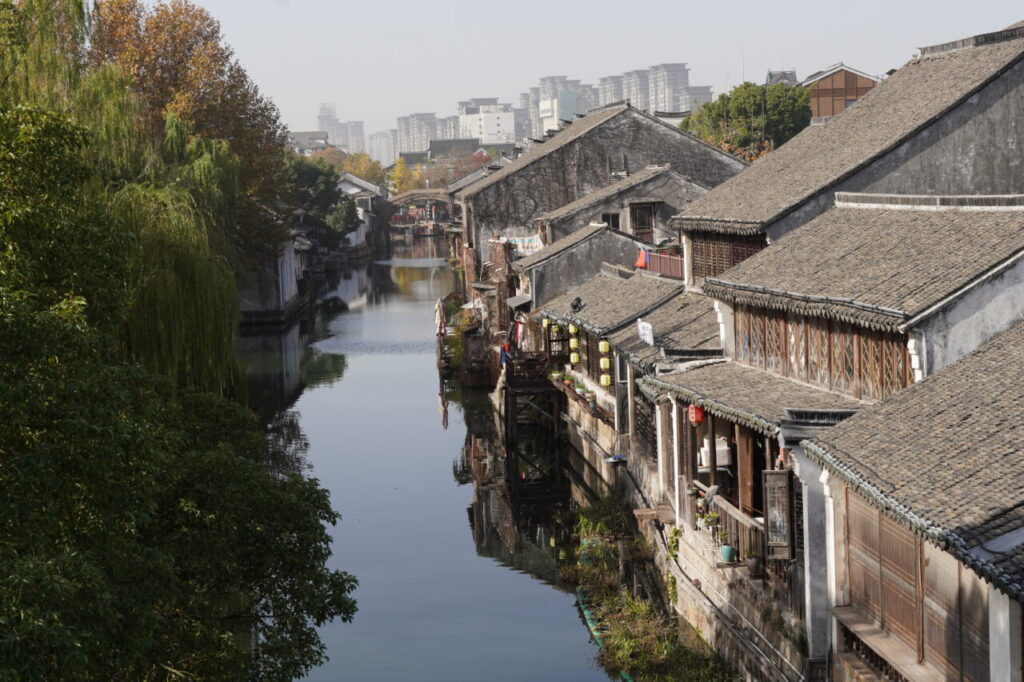
In the evening, dinner at one of the restaurants in the botanical garden.
Day 7 – Maojiabu
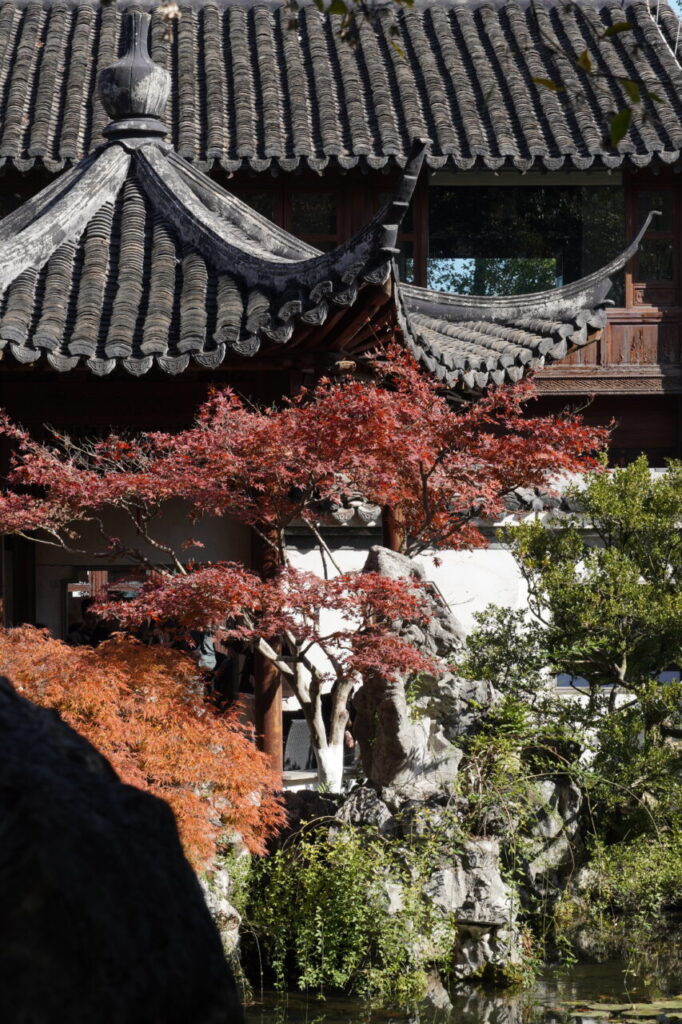
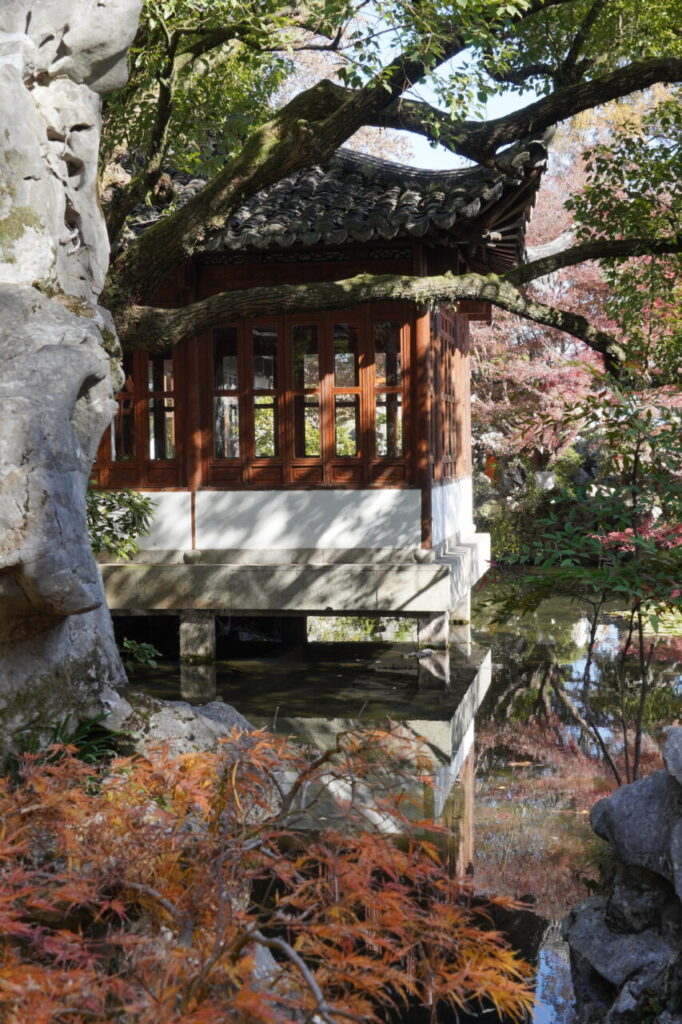
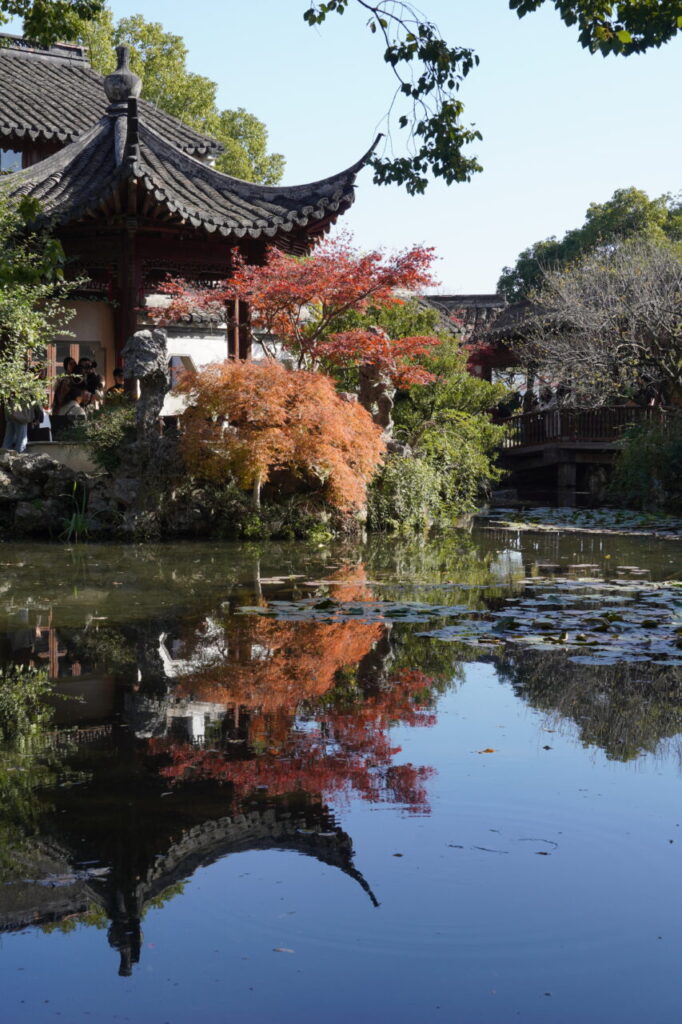
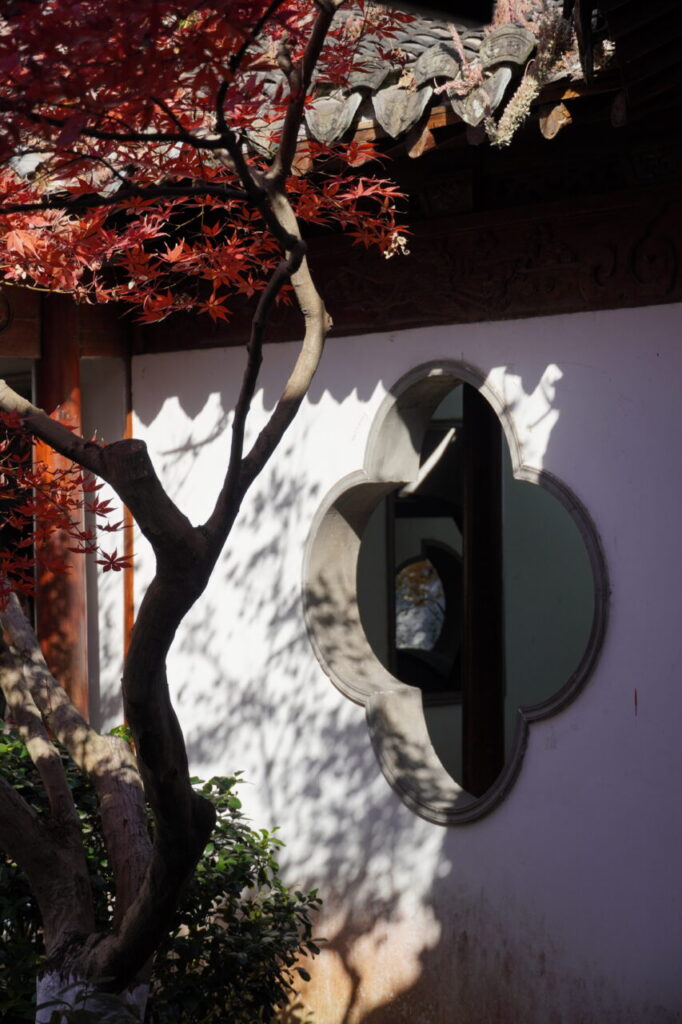
Another walk around West Lake. This time we visit the former residence of Guozhuang, then walk toward Maojiabu before reaching Yuhu Bay. How quiet it is! All these watery landscapes are captivating.
Return to Kyoto the following day.
One response
All the photos are well taken ! It truly is a case of “above is heaven, below is Hangzhou.”👏