+1350m / -1350m / 14km
We’re off work this Friday. We leave Nijo Station at 6:59 and transfer at Kyoto Station to the Thunderbird, a limited express train that runs all the way to Tsuruga, at the northern tip of Lake Biwa. From there we take a local train to Fukui. Once there, we pick up a rental car and drive to Bettodeai, the starting point of our hike. We arrive around noon.
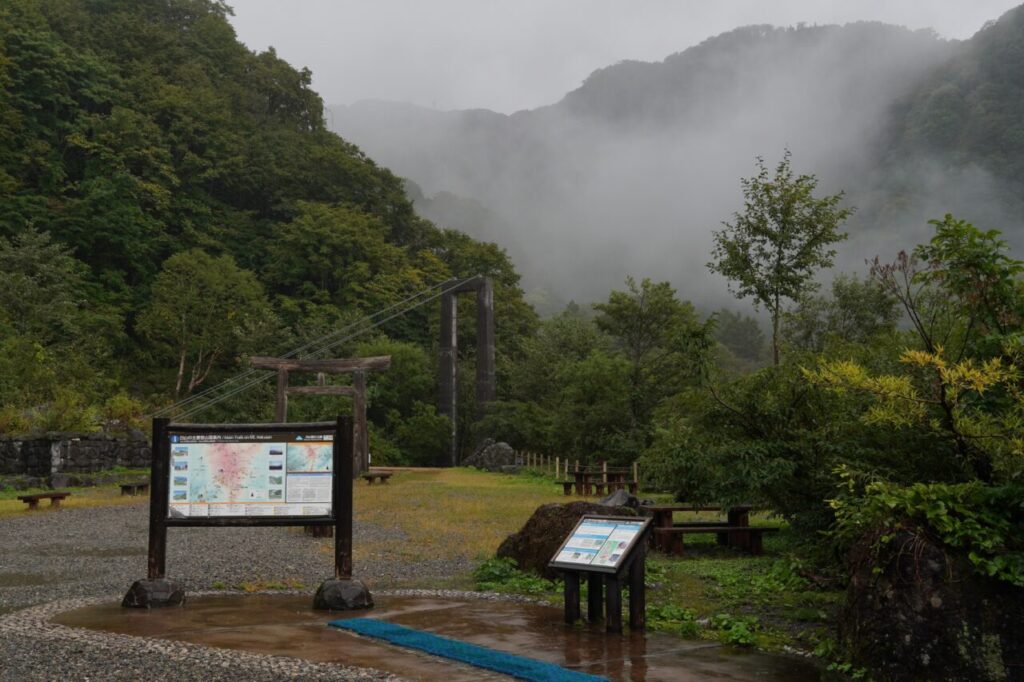
We have lunch at one of the picnic tables before setting off. The trailhead is marked by a torii gate, followed a few meters later by a long suspension bridge spanning a small valley. Then the climb begins — thankfully, no long flat sections to warm us up too much…
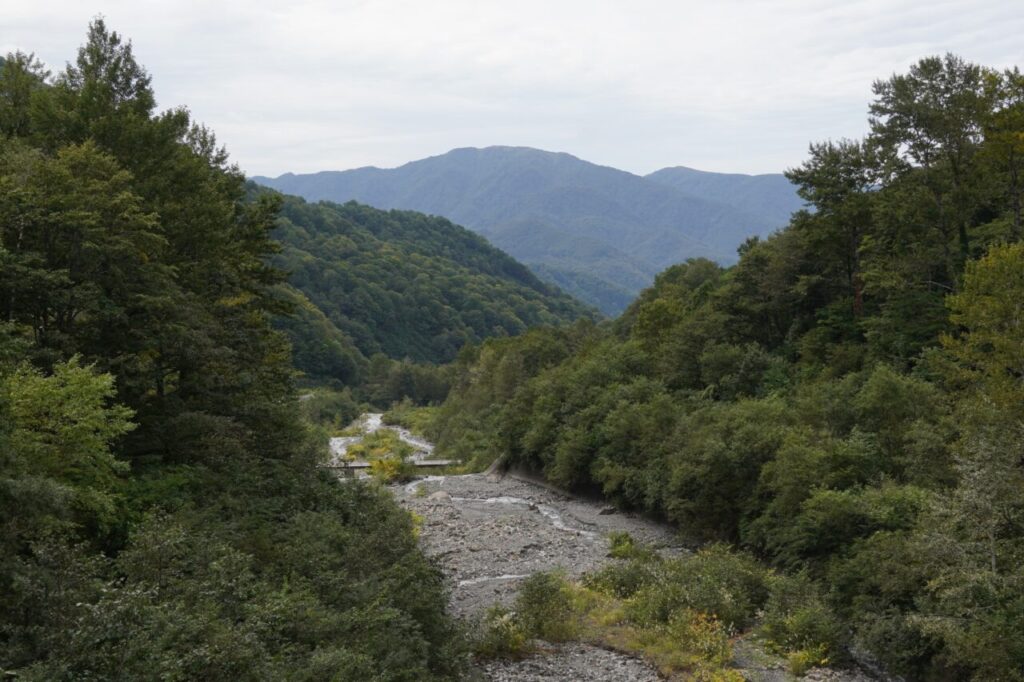
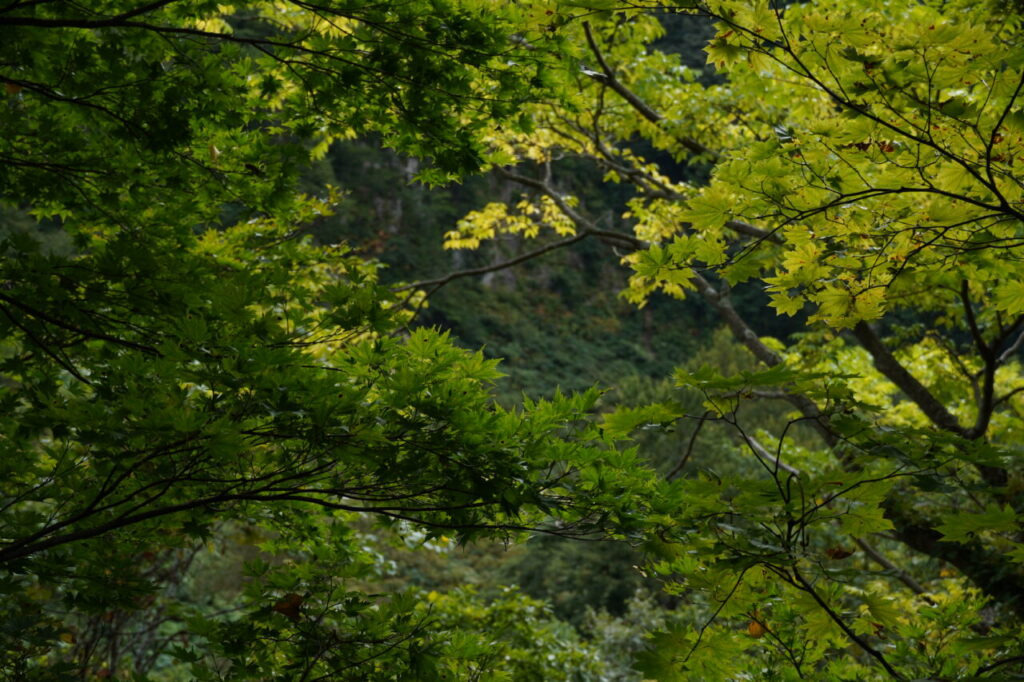
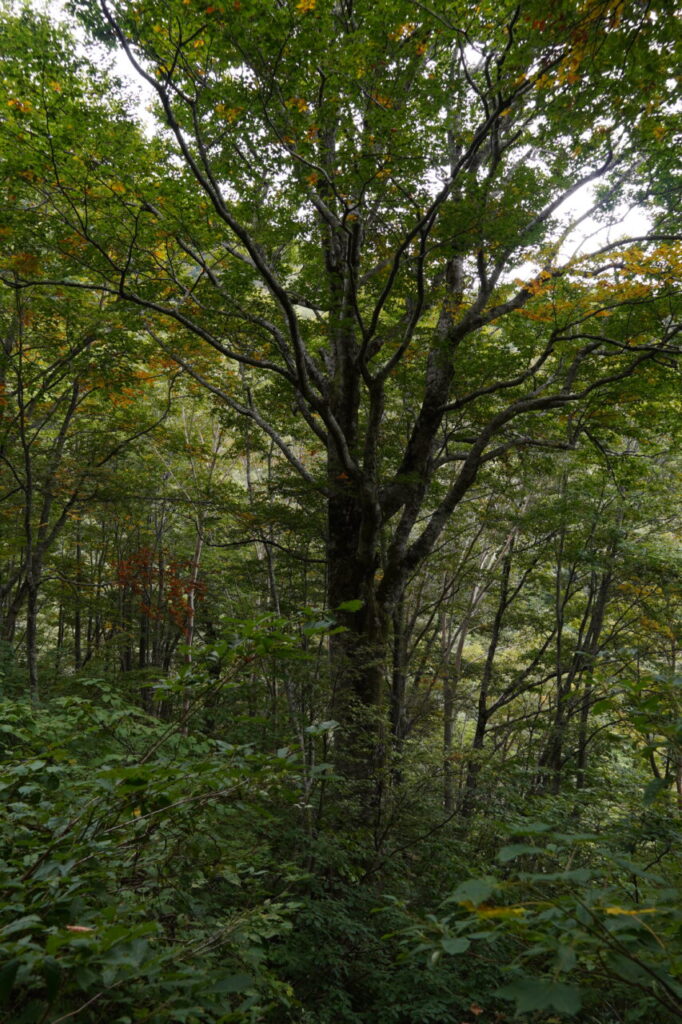
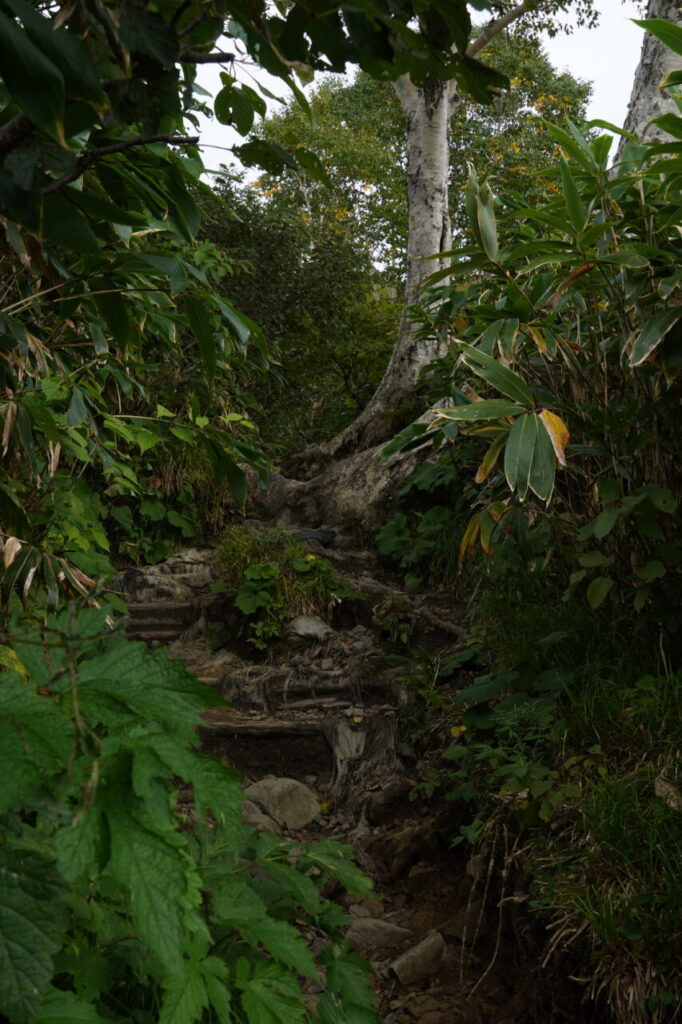
At first, the trail goes through a pleasant deciduous forest. After the Nakahanba rest area, we move into denser vegetation that completely blocks the view. The path narrows, making it harder to pass other hikers. It also becomes trickier — uneven stone steps, gnarled roots, and rocky sections that break the rhythm. It’s quite tiring, and it goes on for a while. We finally reach the Jinnosuke shelter for a short break. We were hoping for a little shop or a snack dispenser, but it’s very basic: toilets, an icy water tap, and a common room with a few wooden benches.
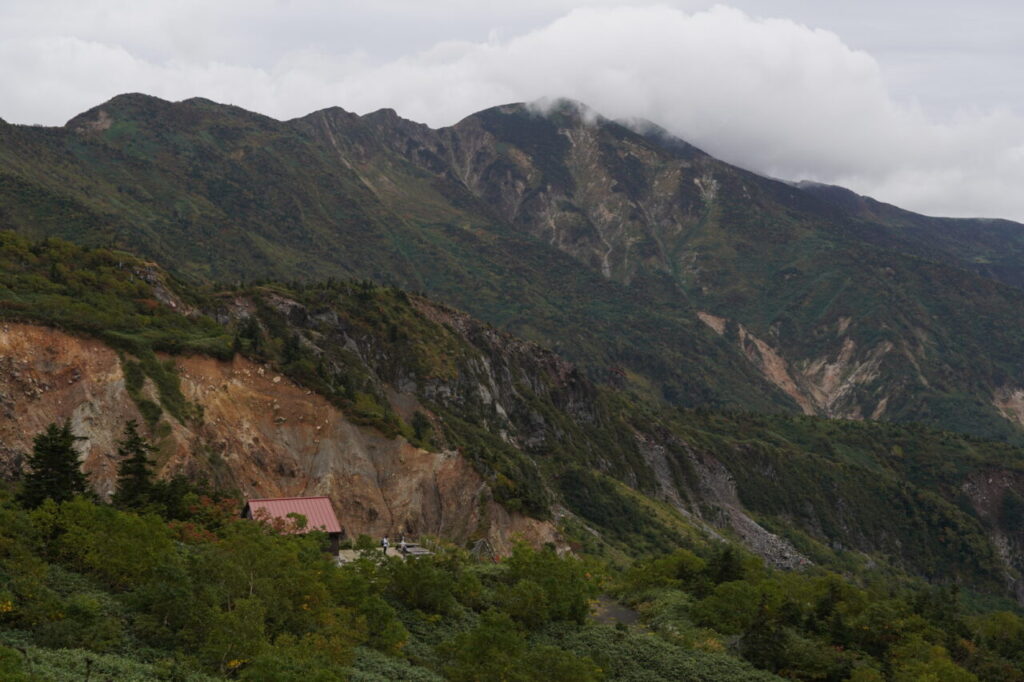
Back on the trail, the vegetation gets lower and we can finally see the surroundings. The sun stays hidden, and clouds start rolling over the neighboring peak. The slope eases a bit as we follow a pretty balcony path.
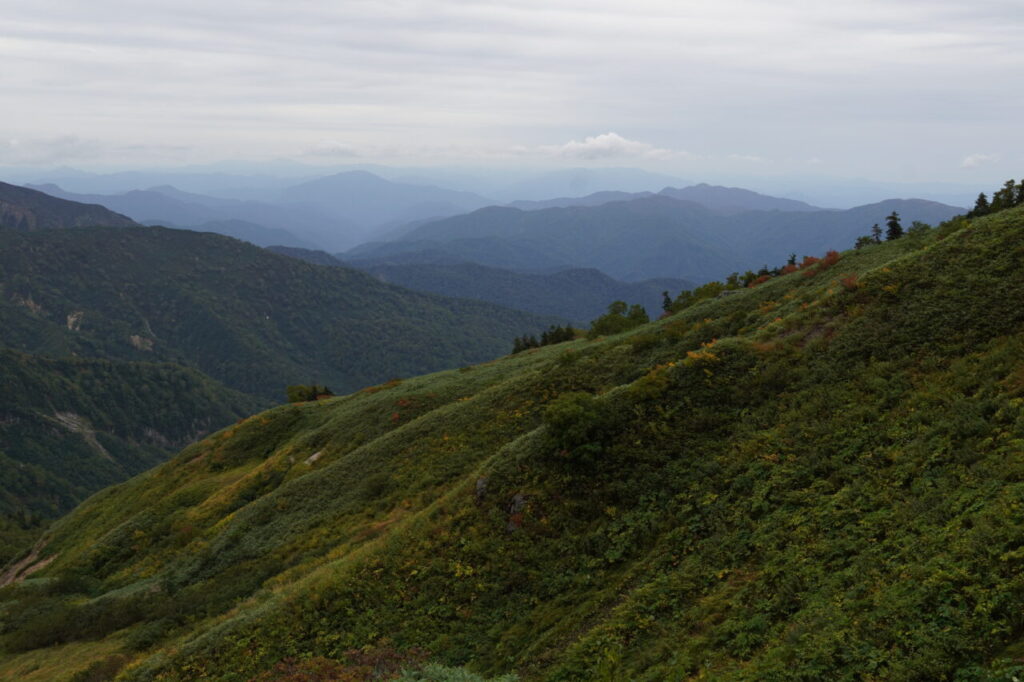
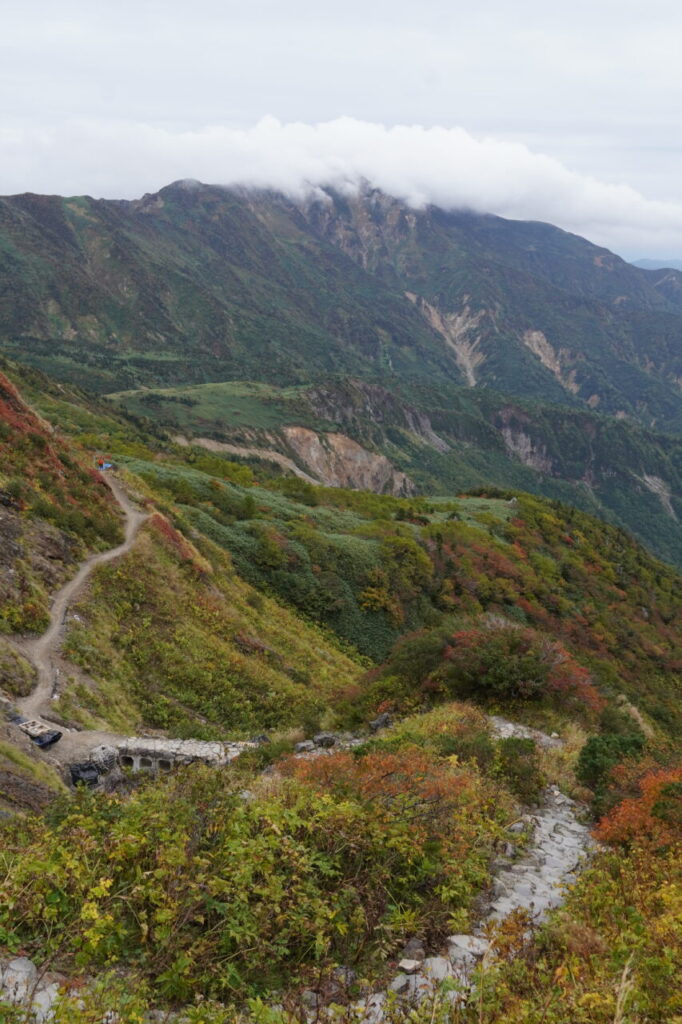
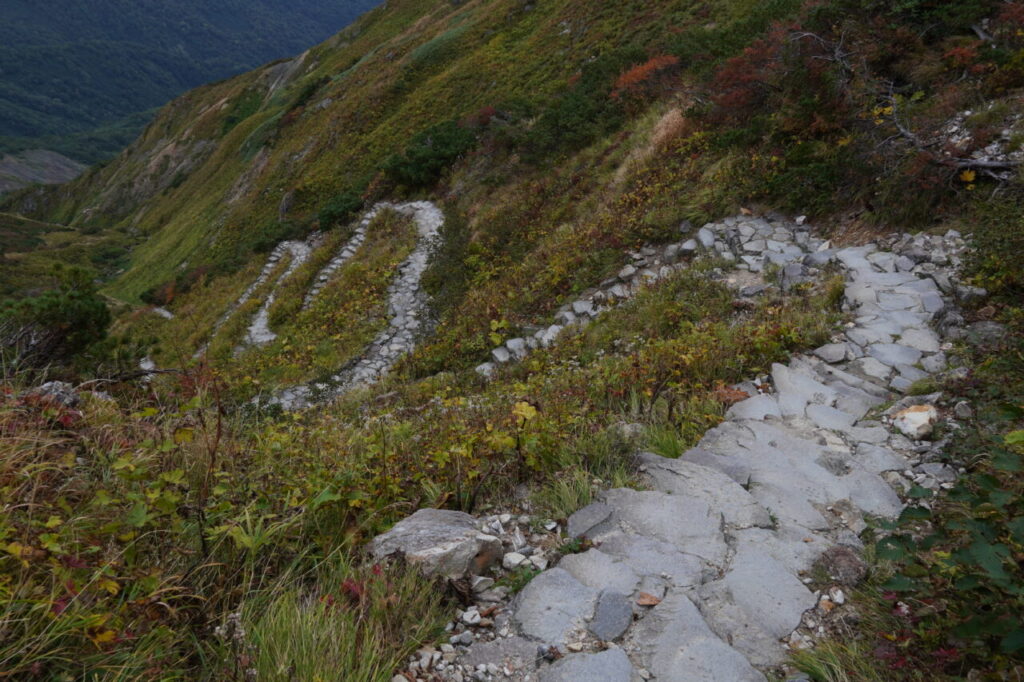
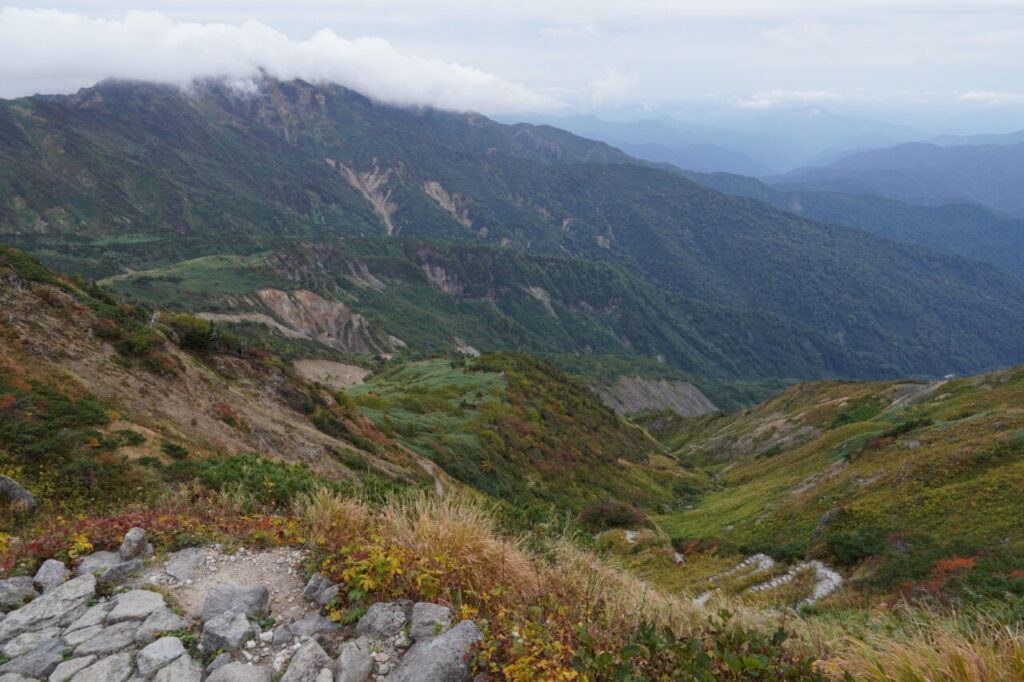
Then we climb a steep staircase that winds up to Kurobokoiwa rock, a massive boulder seemingly ready to plunge into the valley. We wait a few minutes, but it stays put, so we move on. The trail opens onto a plateau with a clear view of Mount Hakusan. The scenery is enchanting — yellow, orange, and red shrubs scattered across a lush green meadow. The arriving clouds make it even more dramatic.
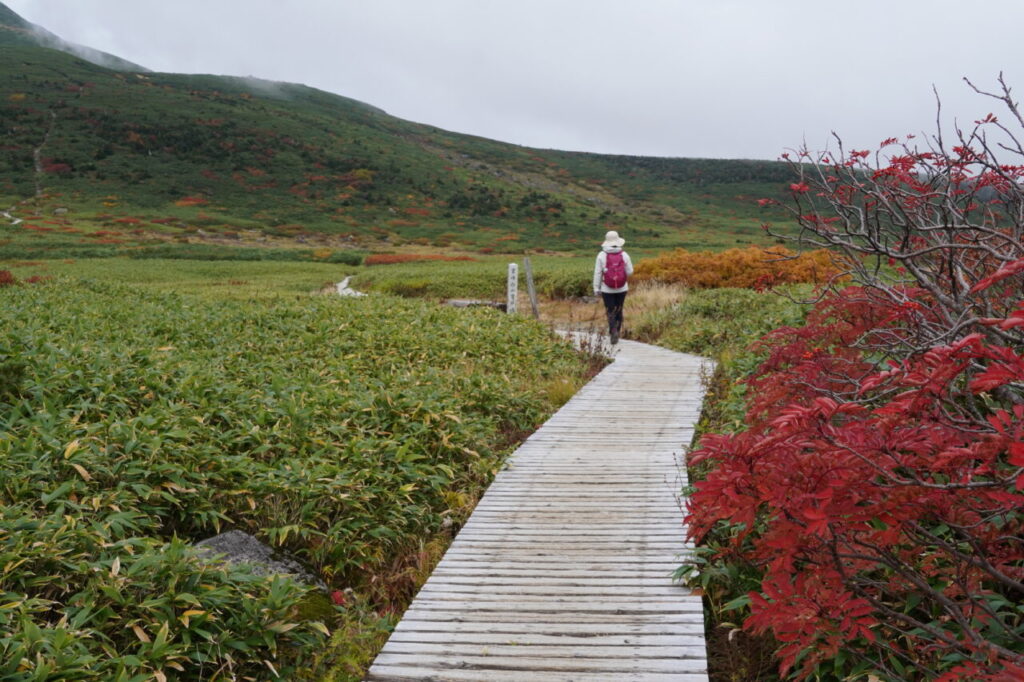
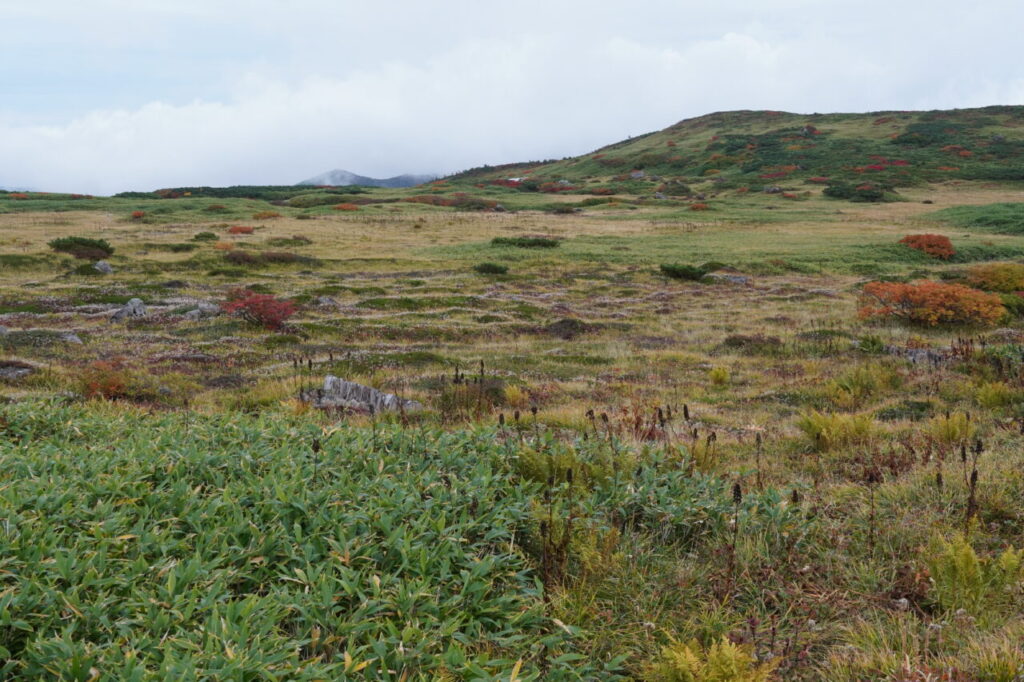
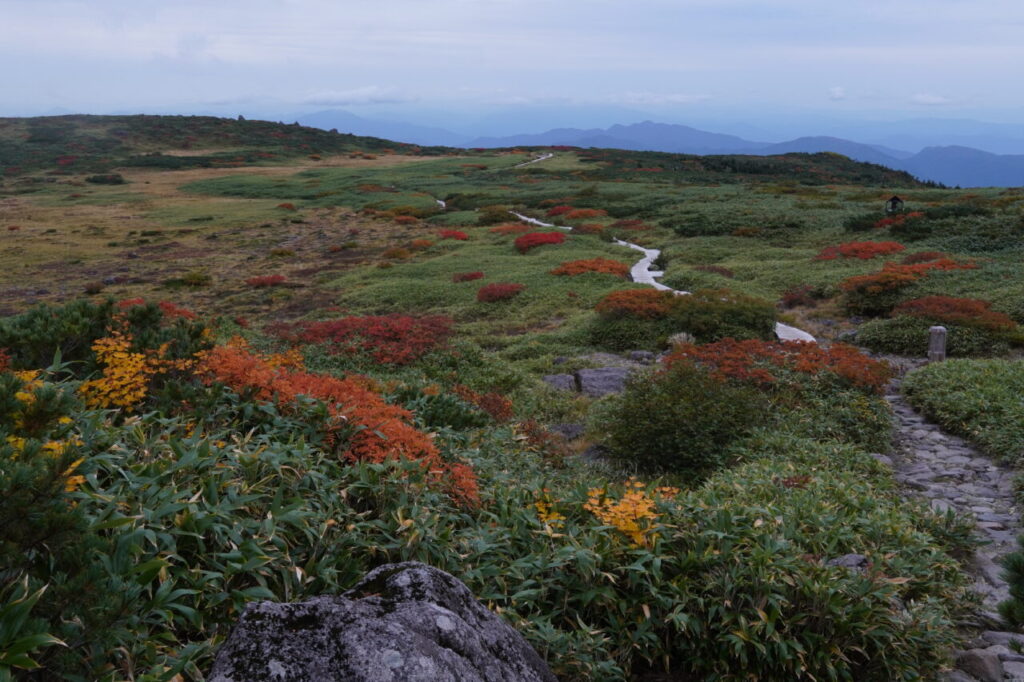
One last push and we reach the Murodo Center around 5:15pm. It’s a small complex with a cafeteria, a temple, dormitories, and toilets (separate buildings). The main building also has a tiny shop selling local souvenirs.
We eat quickly and head to our futons. We get ready for the night, spreading our sleeping bag liners between a thin mattress and three blankets. We check the weather one last time — the forecast for tomorrow has worsened. Still, we decide to try for the sunrise at the summit. We set the alarm and turn out the lights around 7:30pm. It’s cold, so I put on more clothes. The heavy sliding door leading outside (to the toilets) keeps moving back and forth. Even with earplugs, the noise from the other guests is impossible to ignore. Between the layers of clothing, the weight of the blankets, and the narrowness of the liner, it’s hard to move. Honestly, I think I hate anything that resembles a sleeping bag. Despite being exhausted, I can’t fall asleep. I think bitterly of the night spent on Mount Fuji… I get about three hours of sleep, and when the alarm rings at 4:00, I’m eager to move on. Sunrise is at 5:40, and it should take about forty minutes to reach the summit.
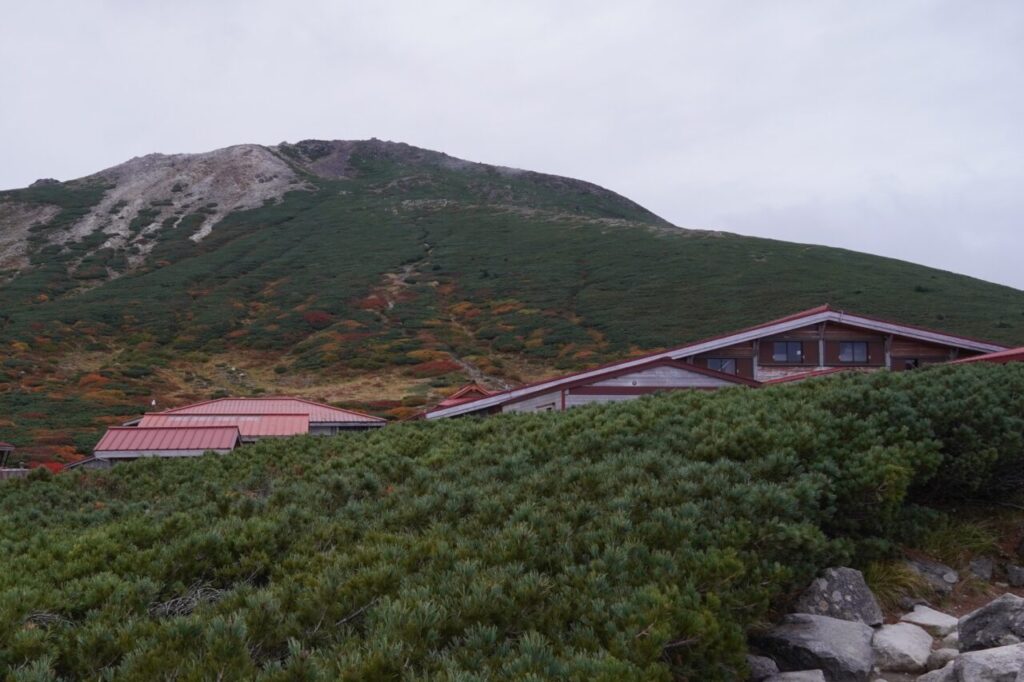
We repack and step outside. The beam from our headlamps dissolves into countless tiny droplets swirling in the air. It’s beautiful — and completely opaque. We’re inside a cloud. We feel our way through the darkness and cold toward the trailhead. We can make out the temple, but where’s the path? We check the map — not a good sign. Visibility is under three meters; there’s no way I’m climbing to the top in these conditions. Especially since we’d be alone. Aside from a couple who left five minutes before us, no one else is on the trail. So much for the sunrise — we head back inside and wait for daylight. When we step out again, everything is gray, but we can now see about twenty meters ahead. Great progress!
We try to walk toward the small lakes nestled between Mount Hakusan’s three peaks, but after thirty minutes we give up. The area looks lovely, but with the fog still thick, we can’t enjoy it. Back at the Murodo Center, we have breakfast at 6:30. It’s started to rain, and apparently it’s only going to get worse. We must head down.
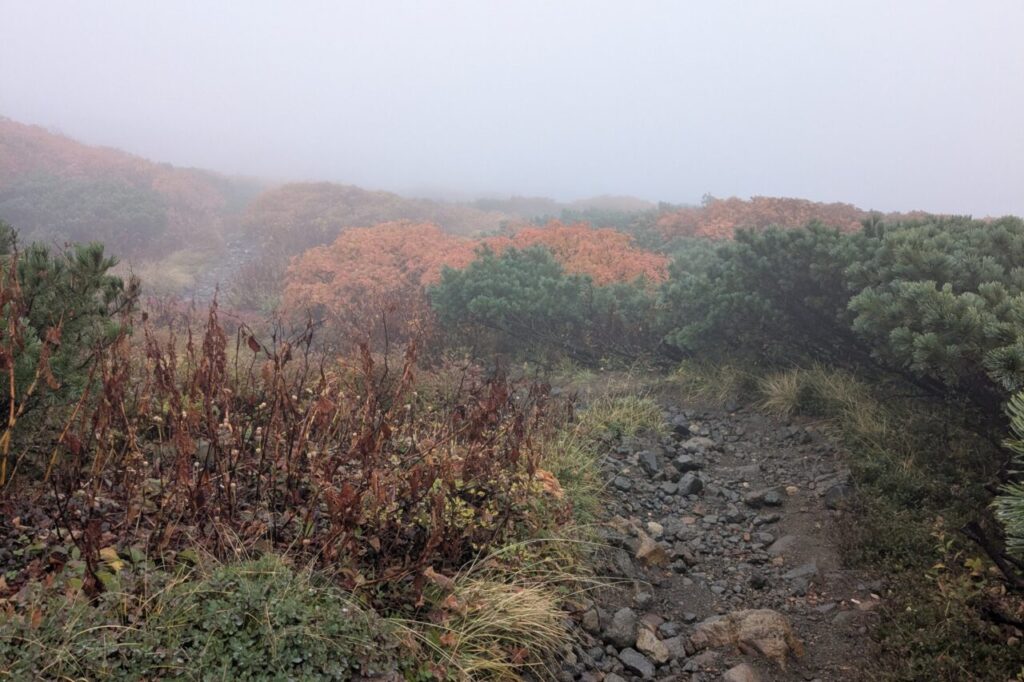
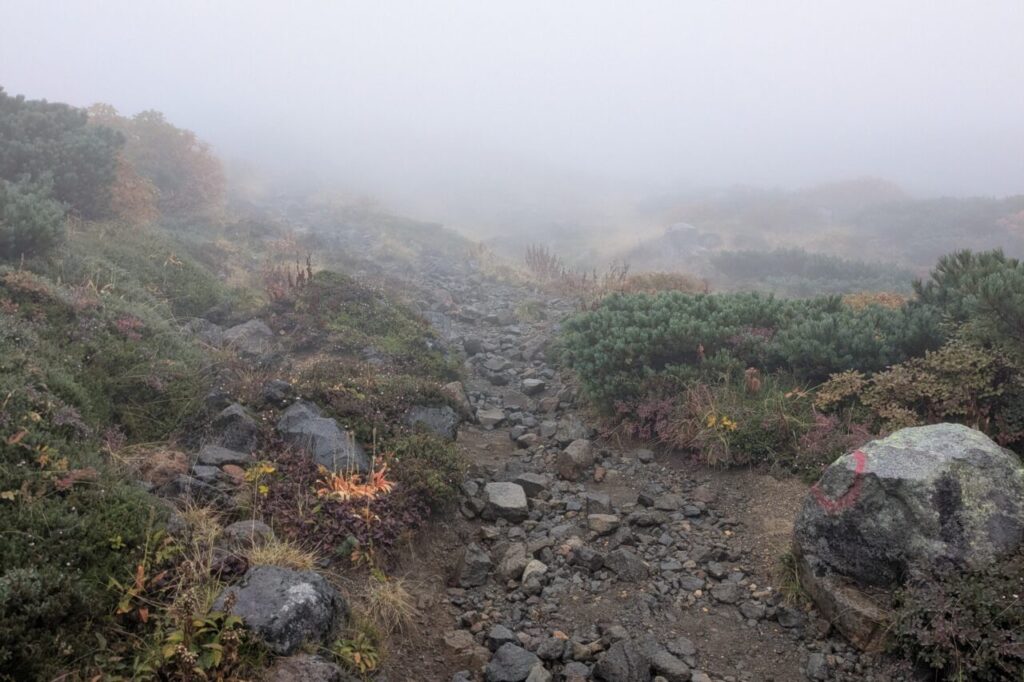
With the rain, the stones have turned slippery. We start our descent cautiously around 7:30. We pass Kurobokoiwa rock again — still holding steady — and continue down the winding, rain-battered stairs. Not ideal. The next section, along the balcony path, goes better. We take a short break at Jinnosuke, now quite crowded. We take a breath, I wring out my gloves before putting them away, and we move on.
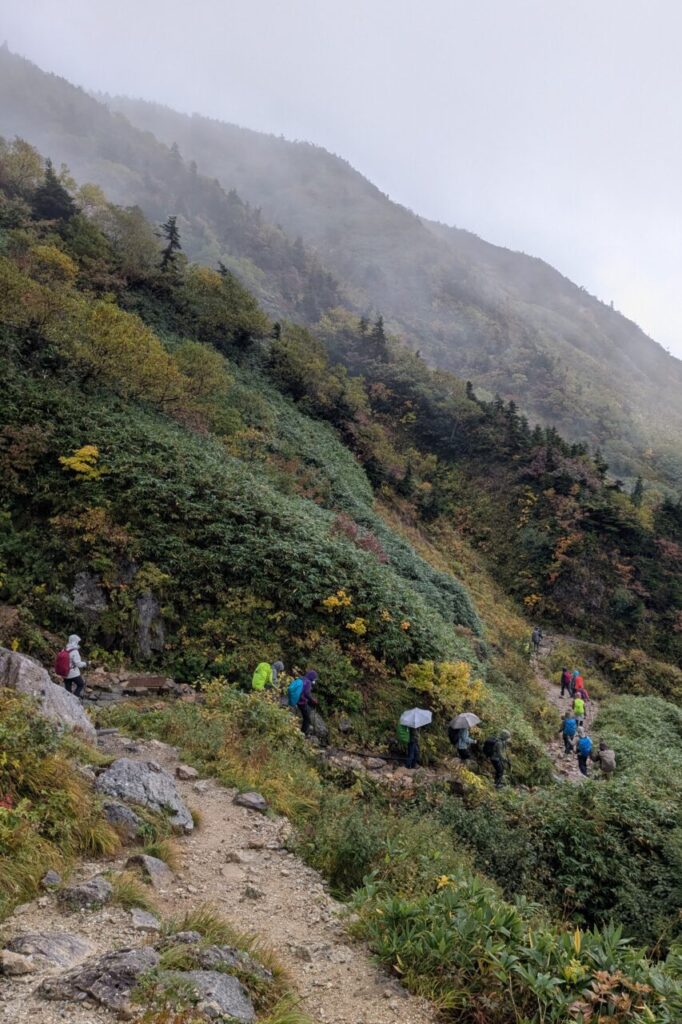
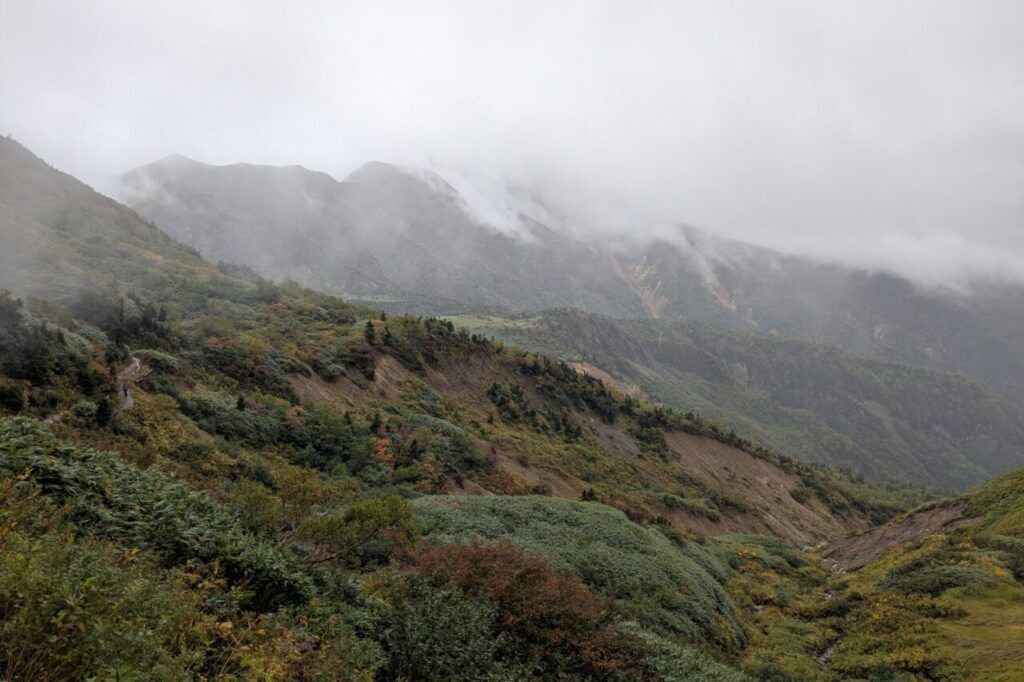
The next stretch is the hardest. The path that was tiring on the way up is dreadful on the way down. With no landmarks, everything looks the same. I feel like I’m looping through the same two or three turns over and over. The lack of sleep and constant focus to avoid slipping don’t help. It feels endless. I recently watched a video with the photographer Jérémie Villet, who told his companion as they prepared to sleep outside in the snow: “Comfort is boring — it doesn’t create emotion. Right now, you’re making a memory, aren’t you?” Fair point. I think I’ll remember this one.
Finally, I spot the roof of the little Nakahanba shelter — I’ve been longing for that sight! We take a short break. It’s still raining, but the last stretch under the trees is easier. Through the branches, we glimpse the suspension bridge below. We pass a few hikers on their way up and wonder if they know what they’re in for. We finish slowly and reach Bettodeai around 1pm. It’s pouring. We eat the bento we brought back from the Murodo Center under the visitor center’s porch.
Then we grab the car and drive back to Fukui. We spend the night there before returning to Kyoto the next day via the same route. We take full advantage of the hotel’s comforts — and its hot baths on the top floor. There’s even an outdoor bath and a sauna. Feeling the cool rain while soaking in 40°C water is bliss. That, too, I’ll remember!
Even if the hike was tough and somewhat thankless, I’m glad we spent time outside in the fresh air. Our gear kept us warm and mostly dry. And most importantly, we didn’t get hurt. I’d like to return to Hakusan under a clearer sky, to enjoy its landscapes and atmosphere more fully.
One response
Hopefully, next trip will be sunny and not as hard. But since we made it this time, there’s no need to worry about anything else.
Besides, Kurobokoiwa Rock said, “I’ve been here for hundreds of years. It’s not easy to fall down.”